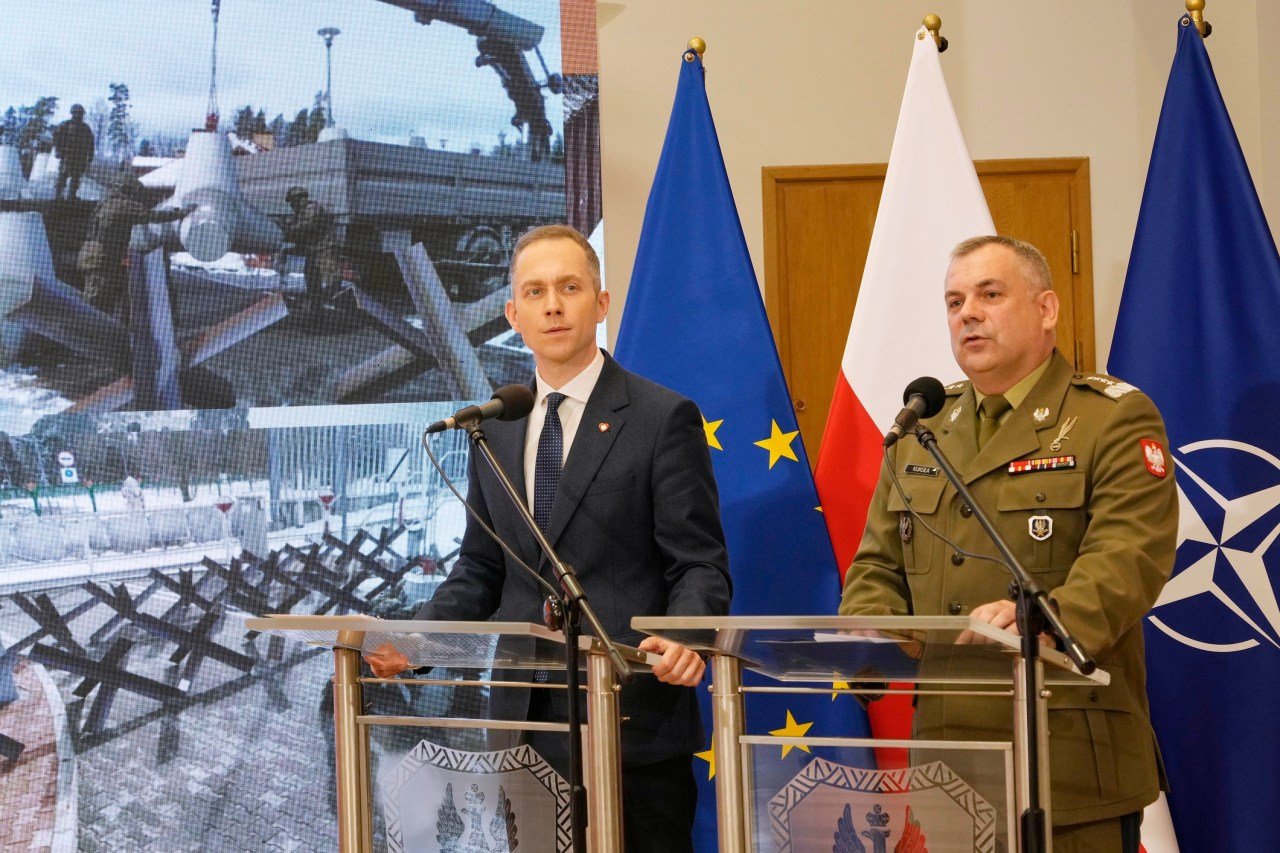
WARSAW — Poland’s deputy defense minister said Wednesday that the United States has shown interest in a Polish proposal to host a permanent American military base, a move that would mark a significant shift in NATO’s eastern defenses.
Cezary Tomczyk told The Associated Press that the Polish government’s approval of steps toward such a base on Tuesday serves as an official invitation to Washington. “The Americans are interested in the Polish offer to place a permanent base here,” Tomczyk said, noting the costs would be shared by both nations.
The remarks come as the US military re-evaluates its footprint in Europe, a process that has already seen sudden changes. In May, the Pentagon abruptly halted the deployment of 4,000 troops to Poland—a decision that puzzled allies given that the Trump administration had praised Warsaw as a “model ally” for meeting NATO’s 2% GDP defense spending target.
US Defense Department officials in Washington declined to comment on the Polish overture, saying they had nothing new to announce. Polish Defense Minister Władysław Kosiniak-Kamysz acknowledged that “the decision will always be on the side of the Americans,” but insisted Warsaw is doing everything possible to secure a permanent garrison.
Currently, roughly 10,000 US troops are stationed in Poland, most on rotational deployments. Warsaw wants thousands more to be based permanently, especially as the US rethinks both personnel and equipment levels across Europe. The push for a permanent base is also tied to broader geopolitical tensions, including the fallout from the Trump administration’s Iran policy and its impact on NATO cohesion. Trump’s Iran deal defense sparked fury among hawks, further complicating transatlantic relations.
Tomczyk was part of a Polish delegation that rushed to Washington for talks after the troop deployment halt. While in the US capital, President Trump posted on social media that he would send an additional 5,000 troops to Poland—a reversal that left officials on both sides of the Atlantic confused. Since then, the Pentagon has confirmed it is reorganizing its European presence but has offered no specifics on which units will move where.
Polish officials remain optimistic. “Sometimes a rotating model can change into a permanent model and this is always much better,” Kosiniak-Kamysz said in mid-May. Tomczyk described the current phase as a “working dialogue,” adding that “the next step, after the two sides confirmed they are interested in this, is the official offer from the Polish state.”
The Polish government’s resolution is part of a broader effort to lock in US security guarantees amid shifting American priorities. The base proposal also comes as NATO confronts challenges on multiple fronts, from Russia’s war in Ukraine to internal disputes over burden-sharing. Ukraine’s top official has urged Trump to act on Russia’s child abductions, underscoring the region’s volatility.
Tomczyk cautioned against reading too much into the timing. “We can’t tell fortune from tea leaves,” he said. “But we are a serious state which is presenting a serious offer to the Americans, in connection with the dialogue we are having with the Americans.”