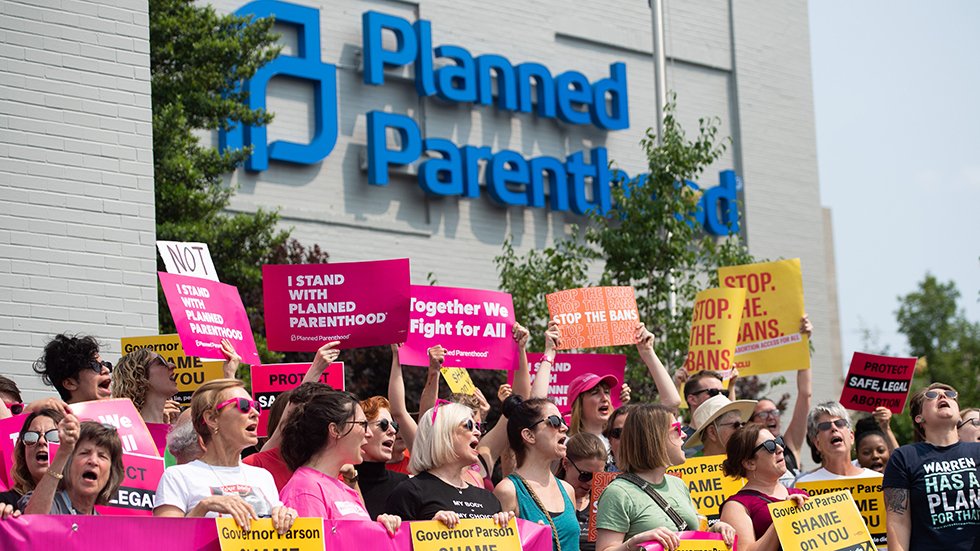
Planned Parenthood clinics across the country will once again receive Medicaid reimbursements starting Saturday, July 4, as a Republican-backed ban on federal funding expires. The one-year prohibition, enacted through the party-line One Big Beautiful Bill, marked a long-sought victory for conservatives but fell short of their hopes for a decade-long block.
The ban denied Planned Parenthood access to Medicaid payments for non-abortion services like cancer screenings and birth control. While the Hyde Amendment already prohibits federal funds for most abortions, Republicans argued that cutting all funding would pressure patients to seek care elsewhere. The strategy, however, caused significant disruptions, particularly in underserved areas.
According to a new report from Planned Parenthood Action Fund and Planned Parenthood Federation of America, the defunding forced 30 clinics to shut down. Two-thirds of those closures occurred in rural, medically underserved, or primary care shortage regions. The impact was most severe in so-called contraceptive deserts, where few providers offer a full range of birth control options.
Nora Walsh-DeVries, vice president of political and legislative affairs at Planned Parenthood Action Fund, said the consequences will linger. “Tens of thousands of patients have been denied access to services like cancer screenings and birth control and STI testing and treatment. These are things that just can’t be undone,” she told The World Signal.
In September 2025 alone, Planned Parenthood provided free care to 100,000 Medicaid patients, covering roughly $45 million in costs. Walsh-DeVries called that “deeply unsustainable” and noted that not every affiliate could manage it. Eleven states used state-only funds to keep Planned Parenthood operational for Medicaid enrollees, but that approach also proved difficult to maintain over time.
Now that the federal ban lifts, those states can again tap federal Medicaid matching funds instead of relying on their general budgets. However, Walsh-DeVries warned that the restoration isn’t seamless. “There’s no clear framework for how affiliates can actually get that money,” she said, adding that some states may continue to exclude Planned Parenthood from their Medicaid programs. The Supreme Court ruled last year that states can bar certain providers, and patients cannot challenge those decisions in court.
The defunding provision was always a temporary measure due to Senate budget rules. Anti-abortion groups like Susan B. Anthony Pro-Life America are already pressuring GOP leaders to extend the ban in a third reconciliation bill later this year. President Marjorie Dannenfelser said in a statement, “Defunding Big Abortion is now the default expectation of the pro-life movement.”
House Speaker Mike Johnson has signaled interest in another reconciliation bill, and the House Freedom Caucus is demanding the defunding provision be renewed. But Senate Republicans are more cautious, wary of reigniting an abortion fight so close to the midterms. Polling shows a majority of voters oppose defunding Planned Parenthood, and some vulnerable GOP lawmakers resisted last year’s measure, even though most ultimately voted for it.
Meanwhile, the expiration of the ban comes as the Trump administration faces legal challenges on other fronts, including a federal judge halting a Philadelphia mask ban targeting federal agents and a judge blocking USPS plans to restrict mail-in ballot delivery. The defunding fight also echoes broader debates over federal health policy, such as the freeze on New York's Medicaid fraud unit funding.
As clinics prepare to resume Medicaid billing, Walsh-DeVries stressed that the damage from the ban is not easily reversed. “Patients have totally borne the cost of this politically motivated attack on care,” she said. “And unfortunately, that’s happening disproportionately in rural areas where there isn’t necessarily any alternative.”