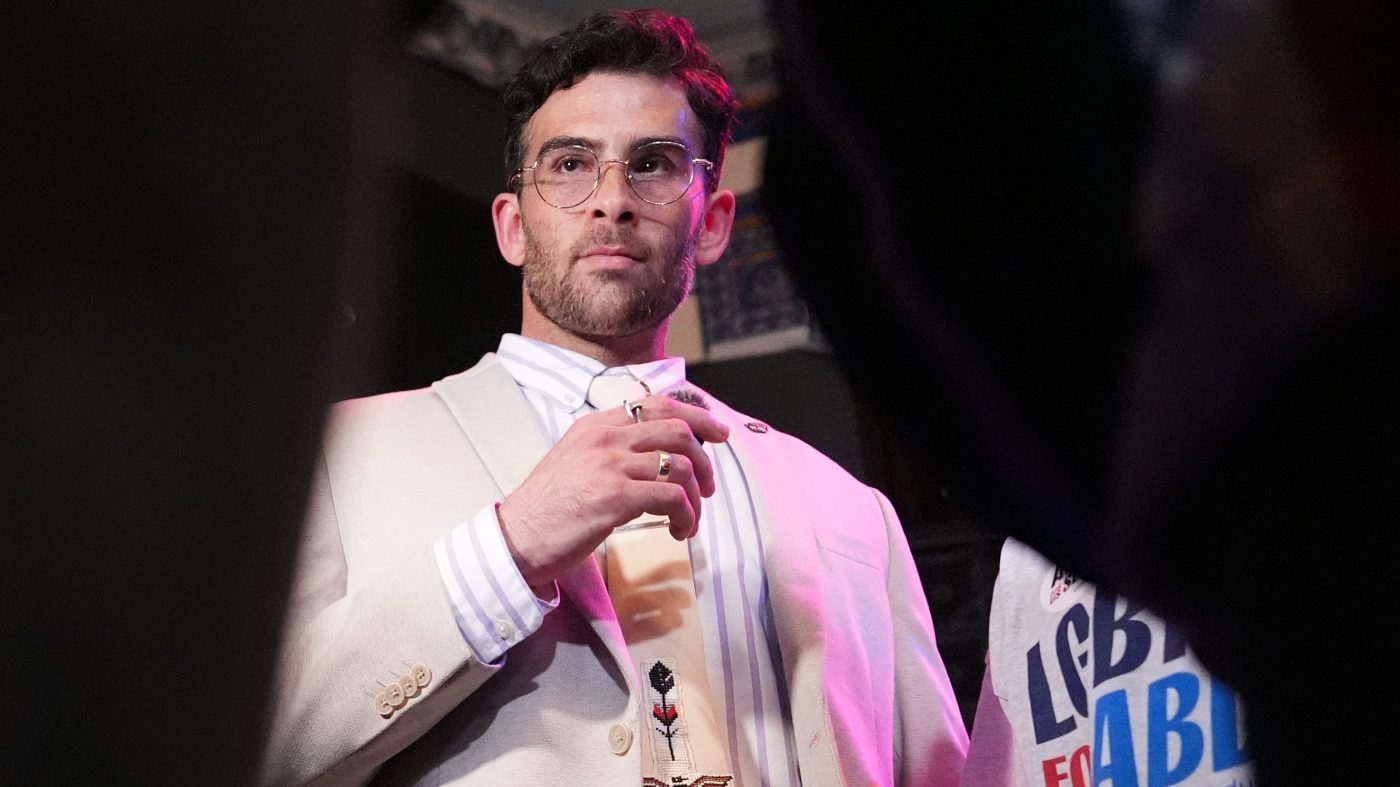
Progressive commentator Hasan Piker has ignited a political firestorm by asserting that the United States is responsible for more terrorism worldwide than al-Qaeda, a claim that has drawn swift condemnation from both Republicans and Democrats.
During an appearance on The Axios Show, journalist Alex Thompson pressed Piker on his previous statement that America is the "top dog" in terrorism, asking whether he believes the U.S. is worse than the Islamic extremist group. Piker responded, "Pound for pound as far as the number of deaths, yes," adding that the U.S. has "caused tremendous terror all around the world."
He elaborated that American actions terrorize not only foreign civilians but also have "consequences on ourselves." As a prime example, he cited the bombing of a school in Minab, Iran, earlier this year, which was reportedly hit by U.S.-supplied weapons, though the Pentagon has not claimed responsibility. "If you're killing 140 schoolgirls, that is an act of terror," Piker said, calling for accountability to prevent such incidents.
The remarks have sparked an immediate online backlash. Rep. Josh Gottheimer (D-N.J.) took to X, accusing Piker of building "a brand on anti-American hate," and referenced past controversies, including Piker's alleged comment that America "deserved" 9/11 and his use of a framed newspaper with the Twin Towers as a backdrop. The official Republican X account posted a clip of the interview, demanding that "every single Democrat who is supported by this garbage can of a human being must condemn him immediately."
Alyssa Farah Griffin, a political strategist and co-host of ABC's The View, wrote that Piker is "an absolute soundbite machine for Republican ads," suggesting his comments are a gift to the GOP.
Piker fired back on social media, dismissing the clip as clickbait and insisting he gave a "nuanced answer about acts of terror this admin has caused." He argued that the U.S. has "armed al Qaeda since 9/11" and "made its former commander the president of syria," referring to recent developments in the region.
In a series of posts, he expanded on his critique, saying, "Our elites terrorize the entire world while ordinary Americans continue to foot the bill. we spent trillions 'fighting' the terror we created to provide cover for our oil barons stealing 3rd world resources." He linked U.S. foreign policy to domestic woes, citing "more death overseas, more poverty at home" and a "growing crisis of homelessness, underemployment and diseases of despair."
The controversy comes as Piker remains a influential figure among young progressives, a demographic that Democrats have courted. However, his rhetoric has repeatedly put him at odds with party leadership, and this latest incident is likely to intensify scrutiny. The episode also highlights the ongoing tension within the Democratic coalition over foreign policy and the use of military force, a debate that has been simmering in primary races and national discourse.
While some progressives have defended Piker's right to criticize U.S. actions, the bipartisan condemnation underscores the political sensitivity of comparing the United States to terrorist groups. As the 2024 election cycle heats up, such statements are likely to be used as ammunition by both parties, potentially complicating Democratic efforts to maintain youth engagement.
Piker's comments also come amid broader debates over U.S. military involvement abroad, including recent missile strikes in Ukraine and ongoing tensions in the Middle East. Whether his remarks will have lasting political consequences remains to be seen, but they have already become a flashpoint in the culture wars over patriotism and foreign policy.