OpenAI, the company behind ChatGPT, is finding it hard to shake off its connection to the pro-artificial intelligence super PAC Leading the Future, as the industry's midterm election donations provoke a backlash. CEO Sam Altman is facing renewed questions about the firm's relationship with the group, which has received backing from OpenAI co-founder and president Greg Brockman and his wife.
While the Brockmans contributed $25 million from their personal funds, Brockman's role at OpenAI has blurred the lines, with many media outlets and politicians dubbing it an "OpenAI-linked PAC." The company has repeatedly denied any formal affiliation, but the confusion persists.

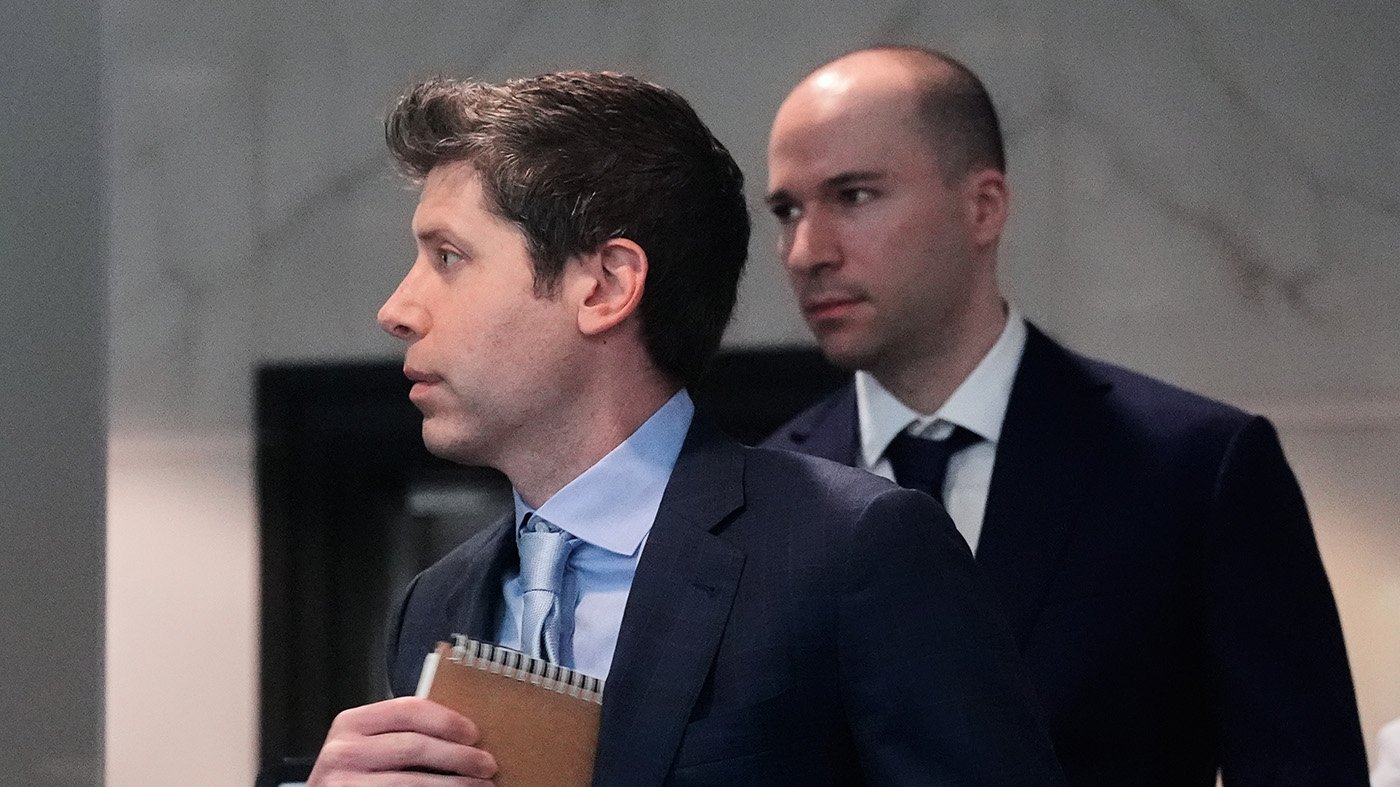
Last week, OpenAI issued a statement distancing itself from Leading the Future, but Altman still faced heat during a meeting with lawmakers on Capitol Hill. When asked about the company's involvement in a lobbying campaign and multiple primaries, Altman told reporters, "I don't think we've been involved in a massive lobbying campaign. Maybe you know something I don't." He added, "We've done some for sure, but relative to other companies in our industry, I think we do much less."
Two days prior, OpenAI had stated that "no outside political group speaks or represents our company's views" and insisted it "does not direct the activities" of Leading the Future nor has "visibility into their operations." But political strategists argue that OpenAI and Altman may struggle to convince voters of their separation from the heavy election spending.
"I don't think any of the folks that support AI, any of the companies that are involved, could, at this point, assure voters that they've really been hands off," political strategist Basil Smikle told The Hill, calling it an "unreasonable position." He added, "Voters are very aware of the role of the super wealthy in elections."
The controversy comes as OpenAI plans an initial public offering with an estimated valuation of $852 billion, competing with firms like Anthropic and Elon Musk's SpaceX, which now owns xAI. The AI industry is also facing a broader public relations crisis over concerns about jobs, national security, and the environment, with recent polls showing growing unease among Americans.
Leading the Future, which has also received millions from venture capital firm Andreessen Horowitz, AI firm Perplexity, and venture capitalist Joe Lonsdale, is at the center of the AI sector's push to become a top spender in this year's races. Altman, who has donated to federal races before, said he "would love to see money out of politics in general," but defended the spending, arguing, "You can't hold us to a different standard than all of our competitors. If they're trying to use money to gang up on us, we have to be able to fight back."
Other AI firms are also spending big: Anthropic has launched its own corporate PAC, AnthroPAC, while Meta has poured tens of millions into super PACs supporting industry-friendly candidates. The main opposition to Leading the Future is Public First, a super PAC that backs candidates who "defend the public interest" against light-touch regulation; its nonprofit arm received $20 million from Anthropic earlier this year.
The millions flowing from the AI industry to support pro-innovation candidates have become a key grievance for critics. Cooper Teboe, a Democratic strategist based in Silicon Valley, called the attempts to distance from Leading the Future "too cute by half," adding, "Voters have grown too savvy. I think that where they should be focusing their resources is on improving their own likability and how AI is perceived."
Sen. Bernie Sanders (I-Vt.), after meeting with Altman, pointed to the role of money in politics. "One of the problems we have is when folks like Mr. Altman, and not just him, sit down and they talk to senators and members of the House about how we can work together," Sanders said. "The problem is it's not quite a fair and honest discussion because what they have behind them is unbelievable amounts of money to put into campaigns."
Sanders has become a leading voice on AI risks, proposing a moratorium on data centers—a hot topic in this year's elections—and advocating for the public to have a 50 percent stake in AI companies. The debate over AI's influence is only intensifying as the industry's spending continues to grow.
For more on political spending and influence, see our coverage of Sen. Hawley's frustration over blocked voter ID amendment and Nashville's fight against a data center plan.