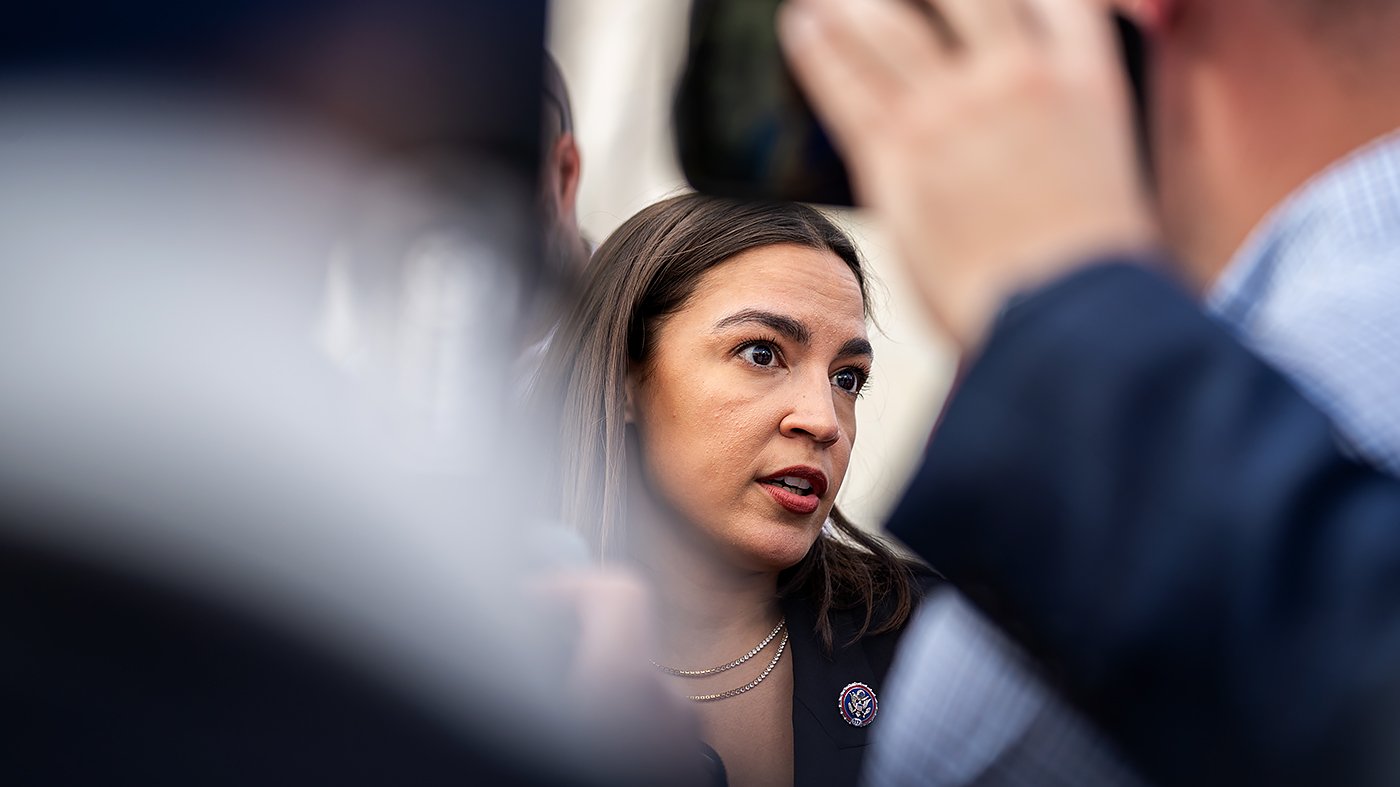
Rep. Alexandria Ocasio-Cortez (D-N.Y.) is confronting a career and personal inflection point that many women encounter at 36, even without the added weight of a possible presidential campaign. The congresswoman, who has yet to complete a decade in office, is now deliberating her next move—options that range from a White House bid to a Senate challenge against Democratic leader Chuck Schumer.
In a rare, wide-ranging interview on ABC's "This Week" on Sunday, Ocasio-Cortez left the door open for a presidential run, saying, "I haven't ruled out the possibility. And I'm very humbled to the tremendous amount of support out there." When pressed about a 2028 Senate race against Schumer, she responded, "I think that anything is possible at this juncture."
The congresswoman is also navigating a delicate balancing act with the left flank that propelled her to prominence. She recently endorsed Abdul El-Sayed, a progressive, in Michigan's Senate primary over Rep. Haley Stevens, yet she has not backed Francesca Hong, a democratic socialist running in Wisconsin's gubernatorial primary. In the interview, she quipped that "woke 1 was crazy," signaling a subtle shift toward moderation while still embracing the Democratic Socialists of America as "fundamentally pro-Democracy," though she declined to endorse its more radical proposals like abolishing the Senate.
On a personal note, Ocasio-Cortez announced on social media that she is freezing her eggs, a decision she said she wanted to "normalize" for other women. Her Instagram posts, showing her administering injections in a navy pantsuit, have drawn attention to the trade-offs many women face between career and family—a theme that resonates with voters, according to Democratic strategist Christy Setzer. "It's an incredibly canny move," Setzer said. "By revealing that she's freezing her eggs, she reminded people that she's not the caricature Republicans have made her out to be; she's a 36-year-old woman who's engaged, planning a family, and rightly worried about her reproductive rights under the Trump administration."
Democratic operatives say the coming months will test Ocasio-Cortez's ability to manage her progressive base while expanding her appeal. "She's got a high ceiling, and she's probably legitimately conflicted about how to cash in the political capital she has right now," said one strategist, speaking anonymously. "That's her biggest challenge right now: Managing this thing of not alienating the people who are her foundation while sitting at the big kids table."
Veteran New York consultant Susan Del Percio echoed that sentiment, noting the stakes. "Until now it's been easy, but there's a lot on the line," Del Percio said. "She's worked so hard to become a better legislator, she's worked so hard to be a force in Democratic politics, and she's worked very hard not to be a lightning rod for either. It's all coming at once, and I can only imagine she's asking, 'What do I want? Where do I want to pivot and what can I take off the board.'"
The congresswoman's trajectory is closely tied to the broader battle over the Democratic Party's identity. If the left wing scores victories in the midterms, she could be emboldened to enter the presidential race. But setbacks could complicate her path. "The Democrats are generally reluctant to make risky bets right now, given the stakes of another MAGA Republican administration," said Julian Zelizer, a professor at Princeton. "She will also have to contend with parts of the base who feel she has been too political and too pragmatic."
As Ocasio-Cortez weighs her options, her decisions are being watched not only by voters but by party insiders who see her as a potential standard-bearer. Her ability to navigate these pressures—while planning a family—will likely shape her political future. For now, she remains a central figure in the Democratic Party's ongoing tug-of-war between its progressive and moderate wings, with implications that extend well beyond her own ambitions.