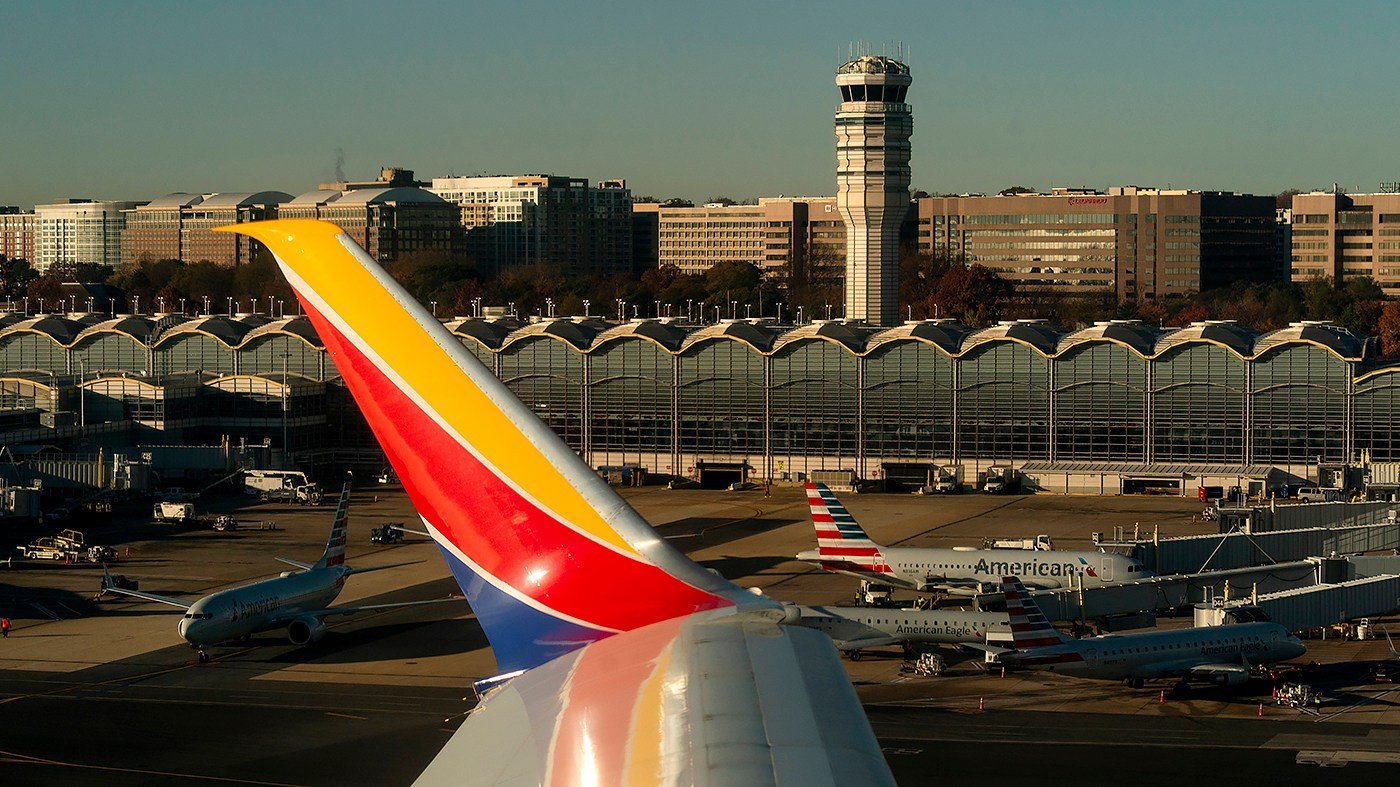
The head of the National Transportation Safety Board said Tuesday that federal regulators are still waiting on formal details from the U.S. Army about its intention to restart helicopter training flights near a major Washington airport, nearly two years after a deadly midair collision that killed 67 people.
NTSB Chair Jennifer Homendy said she was briefed on the Army's proposal to resume operations as soon as Dec. 1, but she indicated that the Federal Aviation Administration has not yet received a formal request. In a statement, Homendy said the NTSB has not seen the Army's concept of operations and looks forward to reviewing it once it is officially submitted to the FAA for evaluation.
Homendy stressed that the agency will not lose sight of the 47 open safety recommendations stemming from the investigation into the Jan. 29, 2025, crash, when an Army Black Hawk helicopter collided with an American Airlines passenger jet approaching Ronald Reagan Washington National Airport. The crash, which killed all 67 people aboard both aircraft, was partially attributed to Army failures, according to the NTSB's findings.
The FAA suspended military helicopter flights near the airport after a separate incident in which an Army helicopter flew too close to commercial traffic, forcing diversions. At the time, Transportation Secretary Sean Duffy criticized the Defense Department after reports that the helicopter was on a so-called scenic route when it caused the disruption.
Rep. Don Beyer (D-Va.), whose district includes Reagan National, said on social media Tuesday that he had been assured no flights would resume without FAA approval. Beyer has been a vocal advocate for stricter safety measures around the airport.
The NTSB's investigation recommended, among other things, the installation of a cockpit traffic alert system that could have warned pilots of the impending collision. Congress responded with the ROTOR Act, a bipartisan bill aimed at overhauling safety protocols, which passed the Senate unanimously but stalled in the House after the Pentagon withdrew its support.
Homendy used her statement to renew her call for congressional action, urging lawmakers to pass bipartisan, bicameral legislation that addresses the serious safety vulnerabilities identified in the investigation. She noted that nearly two years have passed since the tragedy and that the flying public has waited long enough.
The Army's request to resume flights comes as the FAA continues to review its own procedures and as lawmakers debate broader aviation safety reforms. The Army's request for FAA clearance is expected to face scrutiny from both safety advocates and local officials who remain concerned about the risks of mixed military and civilian traffic near the busy airport.
Meanwhile, the FAA is also dealing with other operational challenges, including a recent FAA outage that grounded flights, which has drawn attention to the agency's infrastructure and staffing issues. The NTSB's push for action on its recommendations comes as the agency also faces questions about its own oversight role.
The Army has not yet publicly commented on the timeline for resuming flights, but the NTSB's statement suggests that the service is moving forward with its plans despite the unresolved safety recommendations. Homendy's remarks underscore the tension between military training needs and the safety of commercial aviation in one of the nation's busiest airspaces.