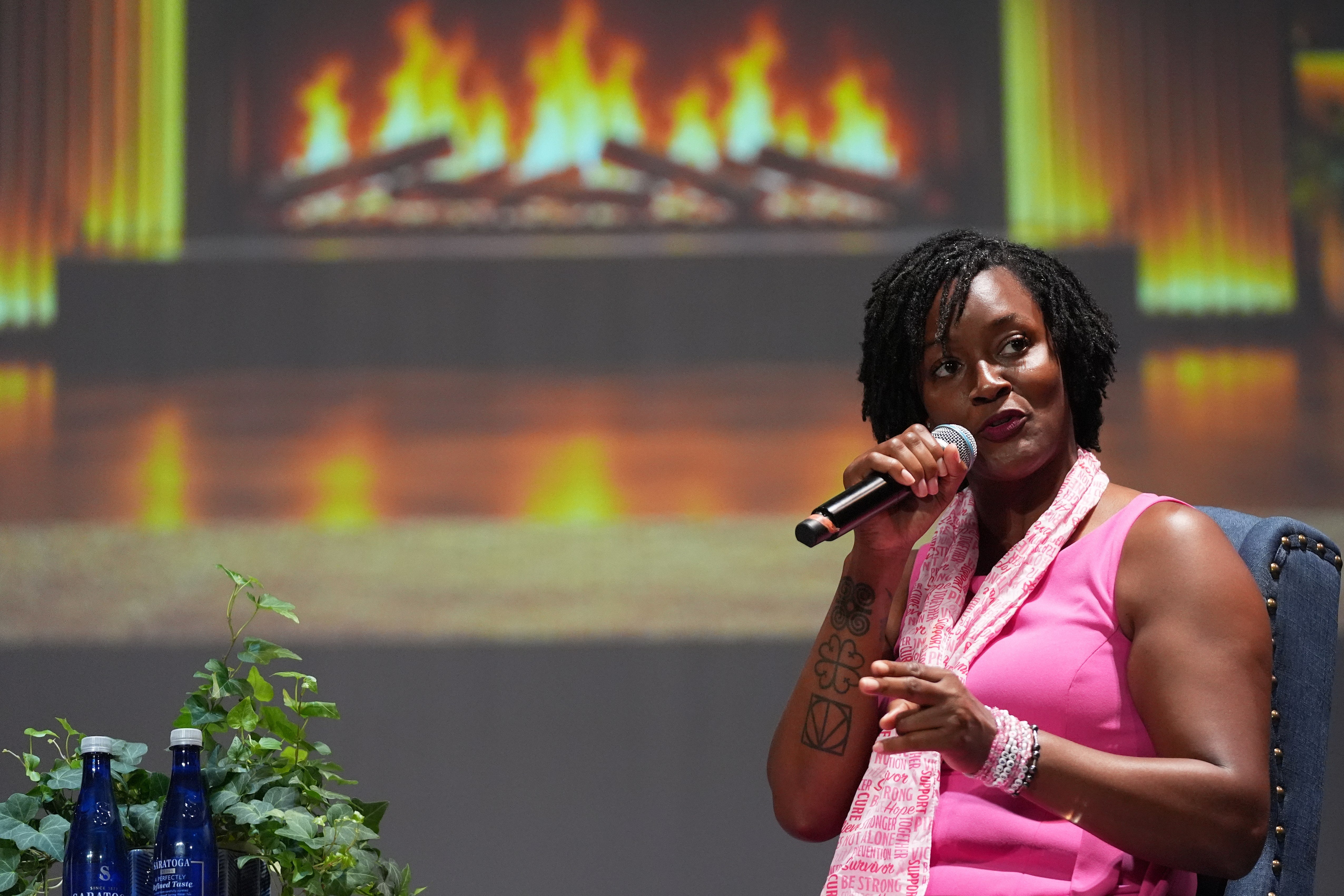
Florida Senate candidate Angie Nixon is under fire after her evasive response to a question about Cuba's political system, a misstep that critics say reveals a troubling lack of preparedness for national office.
In an interview with CBS News reporter Cristian Benavides, Nixon, a Democrat backed by the Democratic Socialists of America, was asked if she considers Cuba a dictatorship. Her reply: "That is what people have told me. I have never been to Cuba, and so I will have to take their word for it."
The comment, coming from someone seeking statewide office in a state with over a million Cuban Americans, drew immediate rebukes from Republicans and even some fellow Democrats. The backlash underscores the political sensitivity of Cuba policy in Florida, where anti-Castro sentiment runs deep.
Nixon's ignorance stands in stark contrast to the recent presentation by U.S. Ambassador to the United Nations Mike Waltz, who used his address to the General Assembly to detail the Cuban regime's corruption and human rights abuses. Waltz displayed photographs of Fidel Castro wearing two Rolex watches and noted that, according to regime statistics, the cost of one watch would cover 55 years of an average Cuban salary. He also showed an image of current President Miguel Díaz-Canel sporting a similar luxury timepiece, emphasizing that the problem persists beyond the Castro era.
Waltz further exposed the lavish lifestyle of Cuba's leadership, including a 14,000-square-foot seaside retreat owned by the Castro family, and revealed that GAESA, the military-run conglomerate, has amassed an estimated $18 billion in looted funds. He accused the Havana government of profiting from forced labor and confiscating businesses, farms, and homes to enrich its rulers.
Cuba's delegates attempted to disrupt Waltz's remarks, but he stood firm, saying, "I know that you don't like to hear these hard truths, but I am speaking for the Cuban people."
The episode highlights a broader debate about socialism's failures, a topic that resonates with younger voters who may be drawn to leftist ideals without understanding their real-world consequences. As global political trends shift, the contrast between socialist rhetoric and economic reality is increasingly relevant.
Critics point to Venezuela as a cautionary tale. Once the richest nation in Latin America, Venezuela has seen its economy collapse under socialist policies, with over 70% of its population now living in poverty. Transparency International ranks it among the most corrupt countries, ahead of only Sudan and Somalia.
Cuba's own history mirrors this decline. Before the 1959 revolution, Cuba ranked seventh in GDP per capita among 47 Latin American economies. After decades of communist rule, it fell to third-poorest, with only Nicaragua and Haiti below it. The country has lost up to a quarter of its population since 2020, as young Cubans flee repression and lack of opportunity.
Nixon's failure to grasp these basic facts raises questions about her judgment and readiness. As she campaigns for a Senate seat, her stance on Cuba will likely remain a liability, particularly in a state where anti-communist sentiment is a political touchstone. The Democratic primary battles ahead may test how much her party's leftward tilt costs candidates in Florida.