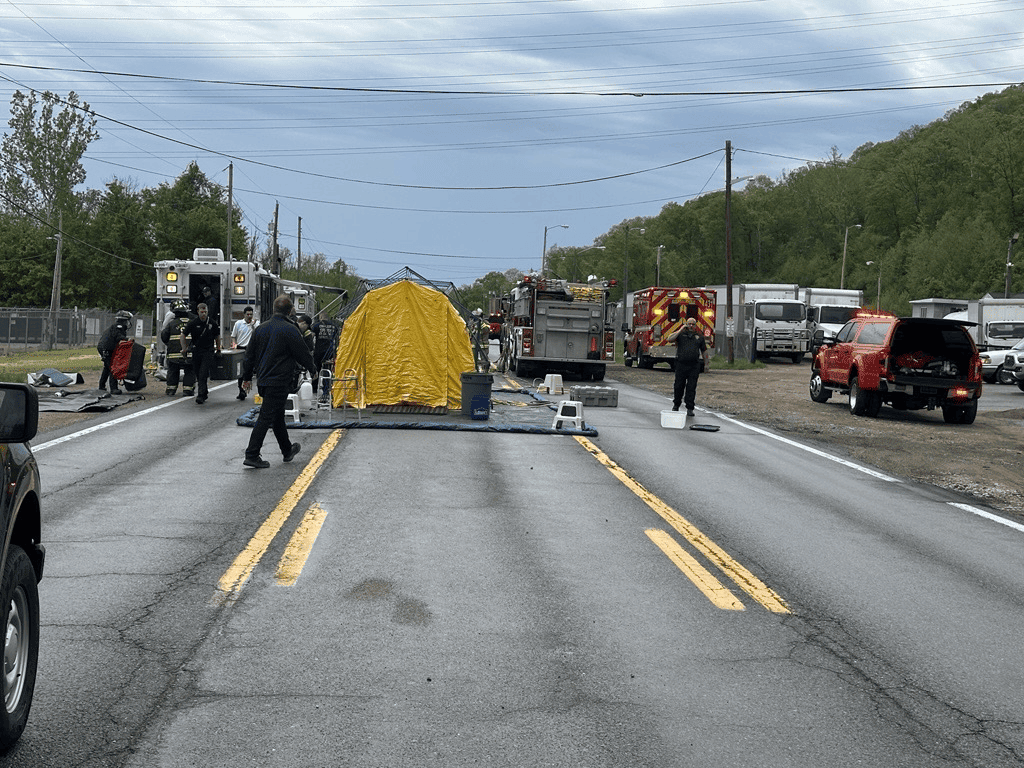
Emergency Response Activated After Hazardous Material Release
A hazardous chemical spill at an industrial facility in West Virginia on Wednesday resulted in multiple people requiring medical treatment and prompted a swift emergency response. The incident occurred at the Ames Goldsmith Catalyst Refiners plant in Institute, located just outside Charleston, with authorities being notified around 9:30 a.m.
Kanawha County Emergency Services Director C.W. Sigmon identified the spilled substance as nitric acid, a highly corrosive and reactive chemical, which had mixed with another, currently unidentified compound. The release created a noticeable odor in the area, described by local news crews as reminiscent of a skunk.

Hospitalizations and Evacuation Procedures
Governor Patrick Morrisey confirmed in an official statement that “a number of individuals” were transported to local hospitals for evaluation and care. Initial reports from Kanawha County Metro 911 indicated that several people were potentially found unresponsive at the scene, though official conditions were not immediately detailed.
Sigmon stated that both ambulances and buses were deployed to evacuate patients from the site to awaiting medical facilities. The scale of the response underscores the seriousness with which officials treated the potential exposure risks from the nitric acid mixture.
Community Impact and Safety Orders
The spill triggered brief but critical shelter-in-place orders for the immediate vicinity, a standard protocol for hazardous material incidents intended to limit public exposure. The facility specializes in refining ethylene oxide catalyst, a chemical used in manufacturing products ranging from antifreeze and cleaning supplies to cosmetics.
While the shelter order has been lifted, the incident spotlights ongoing concerns about industrial safety and emergency preparedness in regions with significant chemical manufacturing footprints. Such events often reignite debates over regulatory oversight, much like the political ramifications seen after significant policy shifts, such as the recent redistricting victories in Virginia that are poised to alter the congressional landscape.
Context and Political Implications
Industrial accidents involving chemicals frequently draw scrutiny from policymakers and regulators, intersecting with broader discussions on energy policy, environmental protection, and workplace safety. The response and aftermath will likely be monitored by state and federal agencies, potentially influencing future legislative or regulatory actions.
This incident occurs against a backdrop of intense political maneuvering on multiple fronts, where substantive policy outcomes can have immediate, real-world consequences. The focus on operational safety and community protection echoes the high-stakes nature of governance, similar to the fallout witnessed when key administration officials depart under pressure, as seen with the resignation of Labor Secretary Chavez-DeRemer amid federal probes.
Authorities continue to investigate the cause of the spill and the full extent of its impact. The event serves as a stark reminder of the complex balance between industrial activity, community safety, and the regulatory frameworks designed to manage risk—a perennial issue in American political and policy discourse.