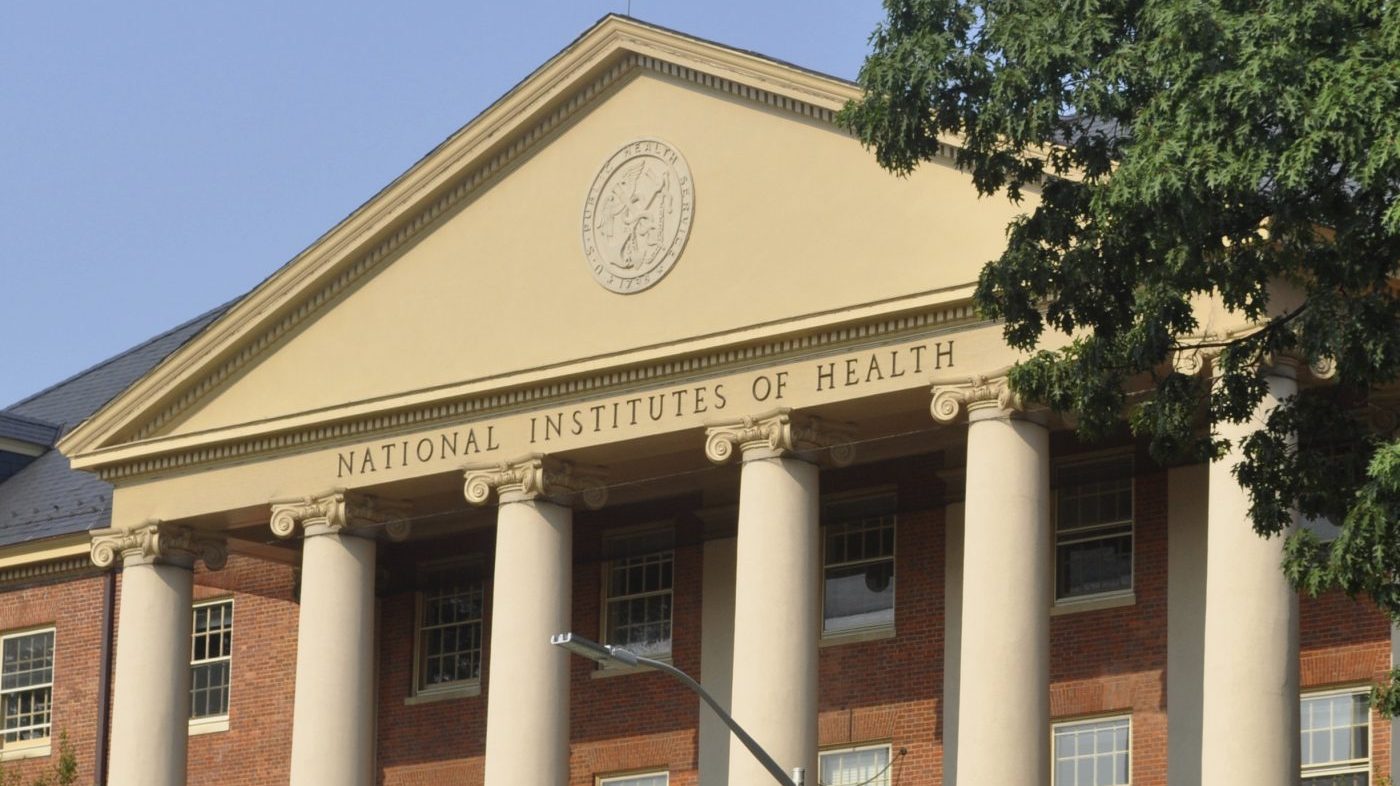
The National Institutes of Health (NIH) announced Monday the creation of a new office dedicated to scaling back animal-based research and accelerating the adoption of testing methods that more closely mimic human biology. The move aligns with a broader push within the Department of Health and Human Services (HHS) under Secretary Robert F. Kennedy Jr., who has made reducing animal testing a signature priority.
Dubbed the Office of Research Innovation, Validation, and Application (ORIVA), the new entity will focus on validating and promoting alternatives such as 3D human tissue models, advanced computational simulations, and other emerging technologies. NIH Director Jay Bhattacharya said these tools have advanced significantly in recent years and could transform the research landscape.

“Complex computational models, 3D human tissue models, and other emerging technologies have improved by leaps and bounds in recent years and may hold the key to a more effective research enterprise,” Bhattacharya said in a statement. “By strategically capitalizing on these tools and encouraging further innovation, NIH aims to steer biomedical research in this direction.”
The initiative is part of a coordinated federal effort. In April 2025, the Food and Drug Administration launched its own program to reduce animal use in preclinical safety trials. Earlier this month, the Environmental Protection Agency announced steps to expand alternatives to animal studies. Kennedy has publicly committed to working with major federal agencies to phase out animal testing entirely, telling Fox News in December that “all the major agency heads are committed to ending animal experimentation.”
ORIVA will serve as a central hub for evaluating and implementing non-animal methods across NIH-funded research. The office will also work to validate these approaches to ensure they meet rigorous scientific standards before wider adoption. Supporters argue that human-relevant models could not only reduce ethical concerns but also improve the predictive power of biomedical research, potentially speeding drug development and reducing costly failures in clinical trials.
The announcement comes amid a broader political climate where animal testing has drawn scrutiny from both animal rights advocates and some policymakers who question its scientific value. Critics of animal testing have long argued that many animal models fail to accurately predict human responses, leading to wasted resources and delayed treatments. The new NIH office is seen as a concrete step toward addressing those concerns.
While the move has been praised by advocacy groups, some researchers caution that transitioning away from animal models will require significant investment in validation studies and infrastructure. ORIVA is expected to collaborate with academic institutions, private industry, and other government agencies to accelerate this shift.
In related developments, the administration's focus on reducing animal testing has intersected with other policy areas. For instance, the Department of Justice under Trump has backed Elon Musk's xAI in a Memphis air pollution case, citing national security, a move that underscores the administration's willingness to leverage federal authority in science-related disputes. Meanwhile, a federal judge recently ordered the Trump administration to restore removed national park displays, highlighting ongoing tensions over federal agency actions.
Kennedy's broader agenda includes reshaping federal research priorities, and the NIH's new office represents a tangible outcome of that vision. As ORIVA begins its work, the scientific community will be watching closely to see whether these alternative methods can deliver on their promise of more effective and ethical research.