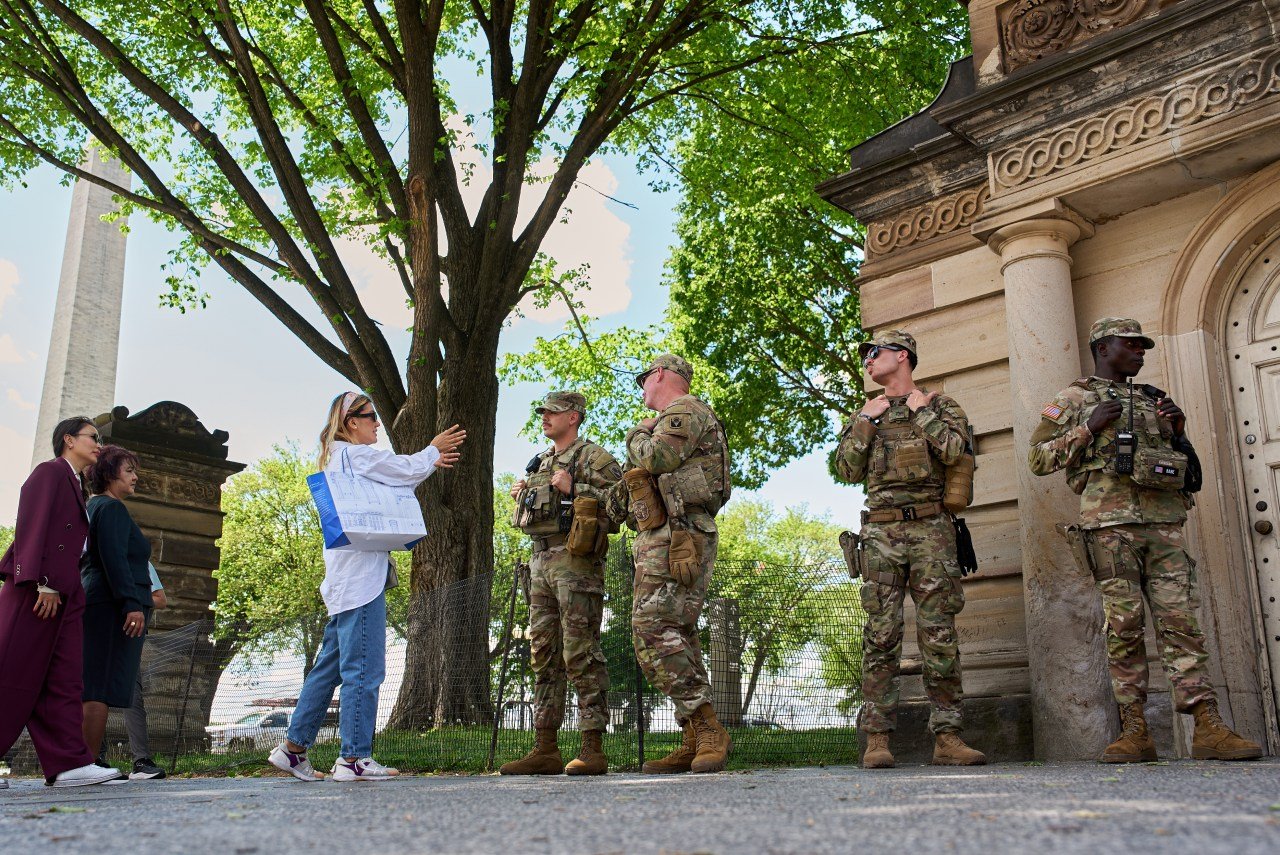
Amid the annual spring crowds viewing Washington's cherry blossoms, a different presence now mingles with tourists along the National Mall: armed National Guard troops in camouflage uniforms. This visual underscores a prolonged and increasingly routine military deployment within the nation's capital that shows no sign of concluding.
An Open-Ended Mission
Eight months following an executive order by former President Donald Trump declaring a crime emergency, approximately 2,500 Guard members remain stationed throughout the District of Columbia. While similar deployments in other major cities like Chicago have been halted by courts, the Washington contingent continues to patrol metro stations, neighborhoods, and iconic parks. The operation is projected to continue at least through the end of the year, absent judicial intervention.
"Taxpayers are paying more than a million dollars a day to have them walk around," said D.C. Council Chairman Phil Mendelson. "And the presence of armed soldiers on American streets is not a good look." The White House defends the mission, citing over 12,000 arrests and the seizure of thousands of illegal firearms by the broader federal task force the Guard supports. A spokesperson said the initiative has "yielded tremendous results for local communities."
A Muted Political Issue
Despite the scale and cost of the deployment, it has not emerged as a central issue in the city's upcoming elections. Candidates for mayor and the District's congressional delegate have largely focused on affordability, statehood, and other federal accountability matters. This reflects both competing local priorities and a recognition of the District's constrained autonomy in challenging federal actions. The ongoing strain on constitutional checks and balances is evident as local authorities find their pushback options limited.
Public sentiment has also shifted following a tragic incident in which two West Virginia Guard members were ambushed near the White House, resulting in one death and a severe injury. "That was just horrible," said neighborhood commissioner Kevin Cataldo, noting the attack deepened local sympathy for the troops. Council member Brianne Nadeau stated that while constituents still question the ongoing presence, complaints have diminished since the deployment's start.
Legal and Financial Stalemate
The D.C. Attorney General's office is actively challenging the deployment in court, but the lawsuit remains pending. With the White House offering no timeline for withdrawal, the legal battle represents the most probable avenue for ending the mission. The political context surrounding such federal actions remains charged, often intersecting with broader national debates about security and executive power, reminiscent of controversies where the Trump administration invoked national security to justify substantial expenditures.
Local officials criticize not just the principle of the deployment but its opportunity cost. "It would be great if the federal government would use its money and resources to help the District on the things we need help with and not act like an invading army," Nadeau said. Council members and mayoral candidates Janeese Lewis George and Kenyan McDuffie have echoed concerns about the high daily expense, which could otherwise address pressing local needs.
The deployment's future is now entangled in broader political currents. As the nation moves toward another election cycle, the sight of uniformed troops performing routine patrols in the capital presents a complex tableau of security, federal overreach, and normalized emergency measures. The outcome may depend on judicial rulings or shifts in federal policy, but for now, the Guard's indefinite stay is a settled, if contentious, feature of life in Washington.