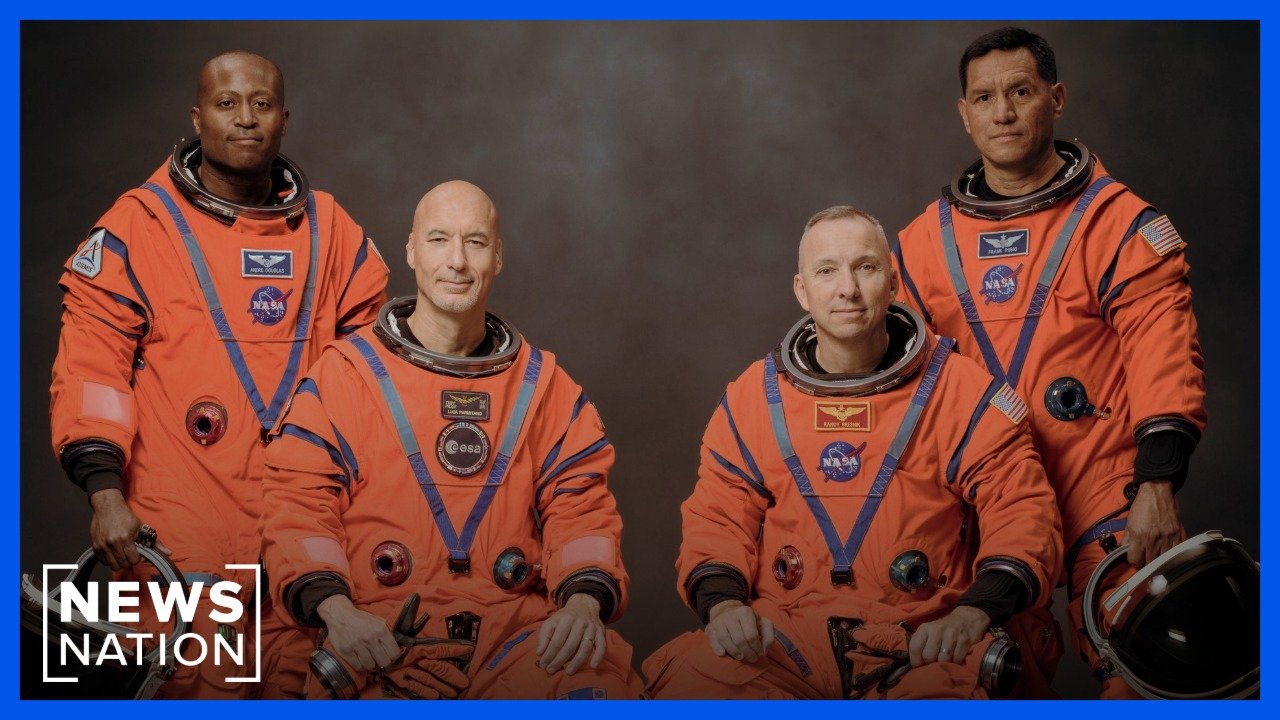
NASA has selected the four astronauts who will fly the Artemis III mission, now slated for late 2027, but the mission's focus has shifted from a lunar landing to testing commercial landers in Earth orbit. The crew includes Commander Randy Bresnik, Pilot Luca Parmitano, and Mission Specialists Andre Douglas and Frank Rubio, with Bob Hines serving as backup.
“The NASA astronauts… are ushering in the golden age of discovery,” said NASA Administrator Jared Isaacman during a Tuesday press conference. “They are carrying forward the hopes and dreams of the next generation just as the Apollo astronauts did for so many of us.” The mission is expected to last roughly two weeks.

Crew Profiles
Commander Randy Bresnik, a Marine Corps colonel and two-time ISS commander, logged 7,000 flight hours. Pilot Luca Parmitano, the first Italian space station commander, has over 2,000 hours of flying time and previously served as a European Space Agency astronaut. Mission Specialist Andre Douglas, a Coast Guard reserve commander and test engineer, will make his first spaceflight. Frank Rubio, a colonel and mission specialist, holds the record for the longest single U.S. spaceflight at 371 days aboard the ISS.
Backup crew member Bob Hines, a NASA astronaut since 2017, piloted the SpaceX Crew-4 mission to the ISS, logging 170 days in space.
Mission Redesign
Originally, Artemis III aimed to land astronauts near the moon's south pole for about a week—the first crewed landing since Apollo 17 in 1972. However, concerns about the Orion spacecraft's heat shield and delays in developing the SpaceX Starship HLS prompted NASA to alter the mission. Instead, the crew will travel to Earth orbit aboard Orion, where they will rendezvous with one or both commercially built lunar landers—SpaceX's Starship HLS and Blue Origin's Blue Moon—to test rendezvous and docking operations. There is also a possibility they will test the Axiom Extravehicular Mobility Unit spacesuit.
The first crewed lunar landing is now expected with Artemis IV, targeted for 2028.
Building on Artemis II's Success
The Artemis III crew follows the historic Artemis II mission, which saw astronauts Reid Wiseman, Victor Glover, Christina Koch, and Jeremy Hansen fly around the far side of the moon. That mission, the first lunar voyage since the 1970s, generated a wave of public engagement through live updates and social media, showcasing modern connectivity in space.
Lunar Base Ambitions
The broader Artemis program aims to reestablish a human presence on the moon and eventually build a lunar base capable of supporting long-term habitation. Such a base would serve as a launchpad for deeper space exploration, including crewed missions to Mars. NASA's commercial partnerships, like those with SpaceX and Blue Origin, are central to this effort, as highlighted in recent SpaceX IPO filings that emphasize Starship and AI as key revenue drivers.
Isaacman concluded, “We wish you Godspeed on the journey ahead.”