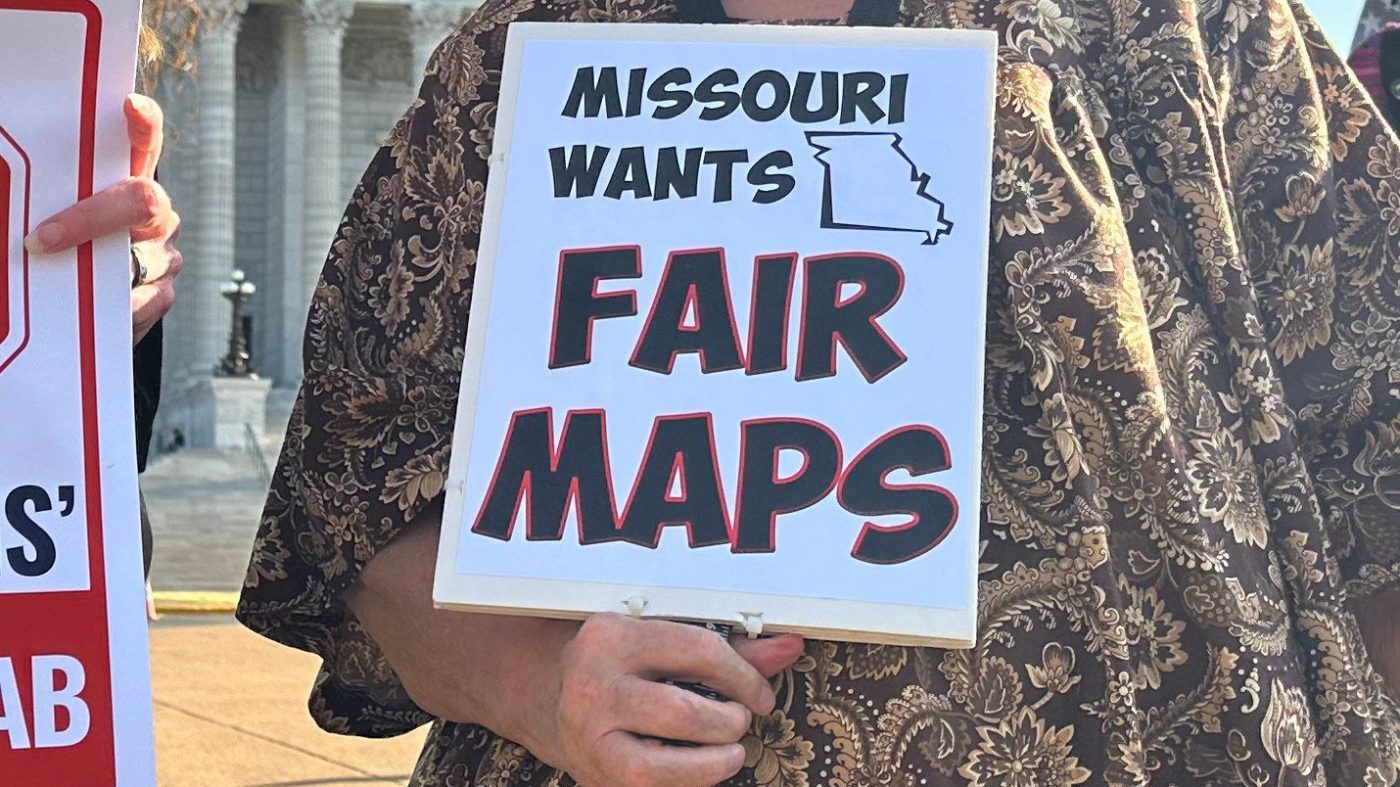
The legal battle over Missouri's congressional districts has landed back at the Supreme Court for the third time in recent weeks, as Republicans push to use a map that could give them an extra seat in the upcoming elections. The latest filing came late Tuesday, with less than 50 days until November's vote and ballots already in the mail.
The high court has twice declined to let the GOP's new boundaries take effect, but those decisions were temporary. On Monday, the 8th U.S. Circuit Court of Appeals issued a permanent ruling in favor of Republicans, concluding that forcing officials to revert to the previous map would be unconstitutional because the primary had already been conducted under the new lines.
Without another emergency intervention from the Supreme Court, the 8th Circuit's decision would take effect next week, locking in the GOP's preferred map—which splits a Democratic-leaning area in Kansas City and shifts the delegation from a 6-2 split to a likely 7-1 Republican advantage.
Chaos on Both Sides of Election Day
The referendum organizer challenging the map argues that the 8th Circuit's order would create chaos, since absentee voting has already begun and ballots have been distributed under the old districts. Their attorneys wrote to the justices: “The result is chaos on both sides of Election Day: confusion over how to conduct the election now, and uncertainty over the rules governing its results.”
The dispute stems from a state Supreme Court ruling earlier this month that said the Missouri Constitution guarantees the organizer a chance to put the GOP's map before voters in a referendum before it takes effect. That ruling forced officials to return to the previous 6-2 configuration, which had been in place before the mid-decade redistricting fight.
In the first round at the U.S. Supreme Court, Justice Brett Kavanaugh declined to disturb that state court ruling. The second and third rounds involve a separate federal lawsuit, where Republicans successfully argued that changing maps so close to the election would violate the U.S. Constitution.
The 8th Circuit's Monday decision instructed the federal judge to replace a preliminary order with a permanent one—effectively endorsing the GOP's map. The referendum organizer now insists that the Supreme Court's previous stays should not be treated as a green light for the lower court to repackage the same relief.
“This Court's stays are not invitations for a lower court to repackage the same relief and try again,” the organizer's attorneys argued. They added that “the law does not permit the unprecedented disruption the Eighth Circuit injects here—particularly not on such a faulty basis.” With voting already underway, they urged the justices to act before the situation becomes irreversible.
The case adds to a growing list of election-related legal disputes heading to the courts as the midterms approach. In other recent developments, the Supreme Court rejected a mail ballot scheme that critics said could undermine the election, and concerns about midterm sabotage have intensified. Meanwhile, GOP figures are weighing their options amid the broader political uncertainty.
Missouri's situation is unique because the state's own constitution allows for referendums on redistricting plans, a provision that has become a flashpoint in the fight. The organizer's legal team maintains that the 8th Circuit overstepped its authority by overriding state law, while Republicans argue that federal constitutional concerns about election integrity take precedence.
The Supreme Court's decision—whether to grant the emergency stay or let the 8th Circuit's ruling stand—could have immediate consequences for how Missouri's votes are counted in November. With early voting already underway, the clock is ticking for the justices to provide clarity.