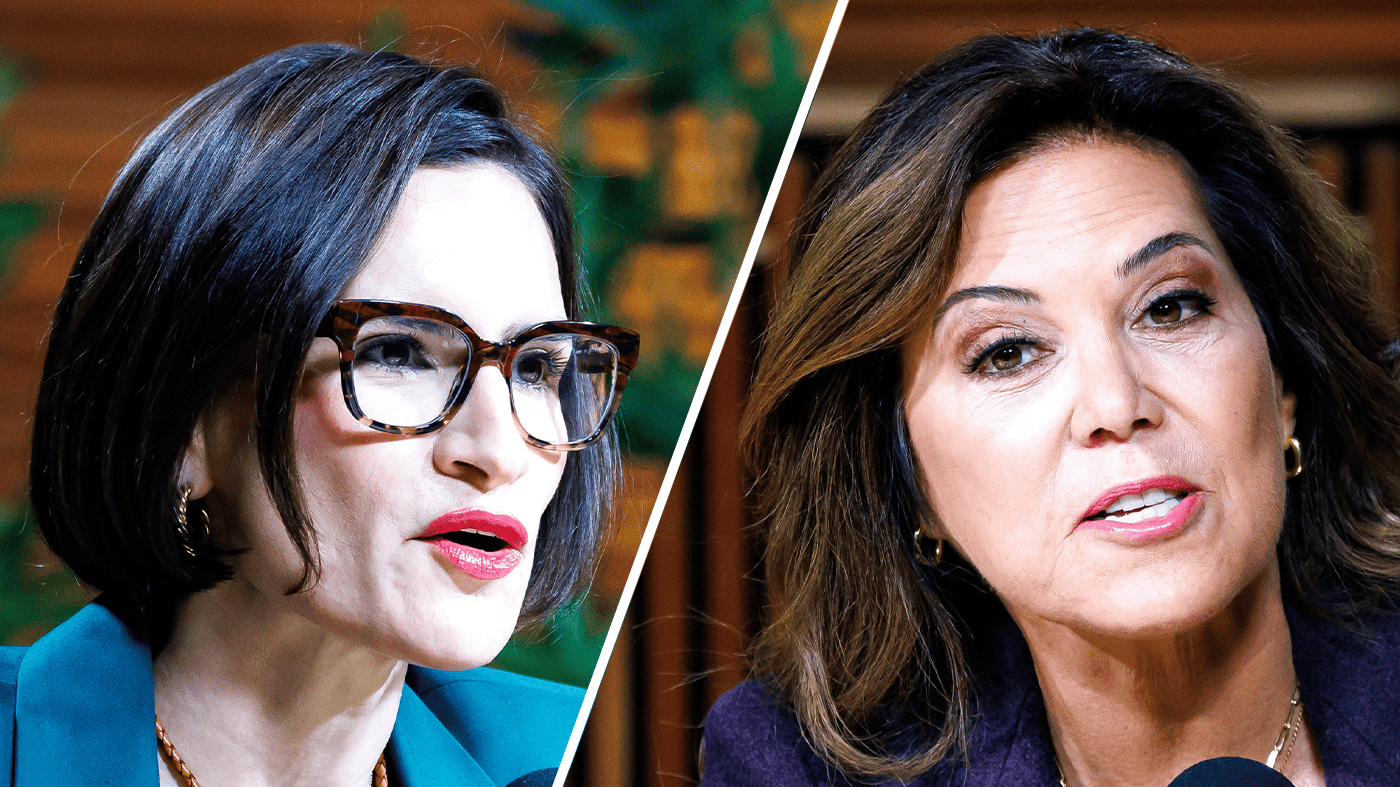
National political conditions have tilted in favor of Democrats, with high fuel prices and President Trump's sagging approval ratings creating a tough midterm landscape for Republicans. But in Minnesota, the open Senate seat vacated by retiring Sen. Tina Smith (D) has become an unexpectedly competitive battleground.
Lt. Gov. Peggy Flanagan (D) holds only a narrow lead over former sports broadcaster Michele Tafoya (R), and that margin has been shrinking in recent public polls. The Cook Political Report recently downgraded the race from “likely Democratic” to “lean Democratic,” citing Flanagan’s underperformance relative to Sen. Amy Klobuchar (D), a statewide fraud scandal, and Tafoya’s strength as a recruit.
Tafoya faces an uphill climb in a state that hasn’t sent a Republican to the Senate in nearly a quarter-century. But Flanagan’s biggest liability is her nearly eight years as Gov. Tim Walz’s running mate, a tenure now overshadowed by allegations of massive fraud in state social service programs.
“This is one of the races that could be so close we might have a recount,” said longtime Minnesota political analyst Blois Olson, who compared Flanagan’s connection to the scandal to “ankle weights around her campaign.”
The fraud allegations, involving up to billions of dollars in misspent funds, forced Walz to abandon his bid for a third term in January. Flanagan, who ran alongside him in 2018 and 2022, is now one of the few administration figures on the ballot this fall.
Republicans are betting that voter anger over the fraud and a broader anti-incumbent mood will hurt Flanagan, especially with no incumbent running for governor or the Senate. “Peggy Flanagan allowed fraudsters to plunder billions in taxpayer dollars on her watch, and now she’s facing questions about her own inflated academic record,” said Bernadette Breslin, a spokeswoman for the Senate Republicans’ campaign arm. “Minnesotans aren’t buying the excuses Flanagan is selling, and they’re counting on Michele Tafoya to protect their hard-earned tax dollars.”
Tafoya has made the fraud scandal the centerpiece of her campaign, arguing that Flanagan and the administration must be held accountable. “Why has no one been fired?” she asked in an interview with The Wall Street Journal. “The only real consequence we’ve seen is that Tim Walz was convinced to step out of his third term gubernatorial race because there was no way he was going to survive this. But Peggy Flanagan’s asking for a promotion.”
Flanagan’s campaign has pushed back, noting that the lieutenant governor’s statutory duties are limited compared to the governor’s and that Walz oversees state agencies. A campaign official acknowledged that more should have been done sooner to address the fraud, adding that the issue is personal for Flanagan, who once relied on Medicaid and Section 8 housing.
Even Flanagan’s personal background has come under scrutiny. The Wall Street Journal initially reported that she had not been a member of the Phi Beta Kappa honor society, though the society later confirmed her membership. Her campaign said internal confusion prevented a timely confirmation to the Journal.
Tafoya, meanwhile, must navigate her own challenges. Trump’s unpopularity in Minnesota, rising prices amid the war with Iran and a tariff dispute with Canada, and backlash over federal immigration enforcement that led to two ICE-involved shootings have complicated her efforts to win over independents. “The fraud thing — that it hangs over the state of Minnesota — certainly is a bit of a drag for Democrats, but at the same time, the Trump administration, I still think, is a bigger drag on the Republicans,” said former Minnesota DFL chair Mike Erlandson.
Tafoya has tried to distance herself from the president, telling a debate audience, “There is one endorsement that I care about and that is the one that happens on Nov. 3.” She has also criticized Trump over the Iran war. The race remains a toss-up, with recent momentum favoring the GOP and Democrats still leading nationally. A recount is a real possibility, and the outcome could hinge on which national trend proves stronger in the North Star State.