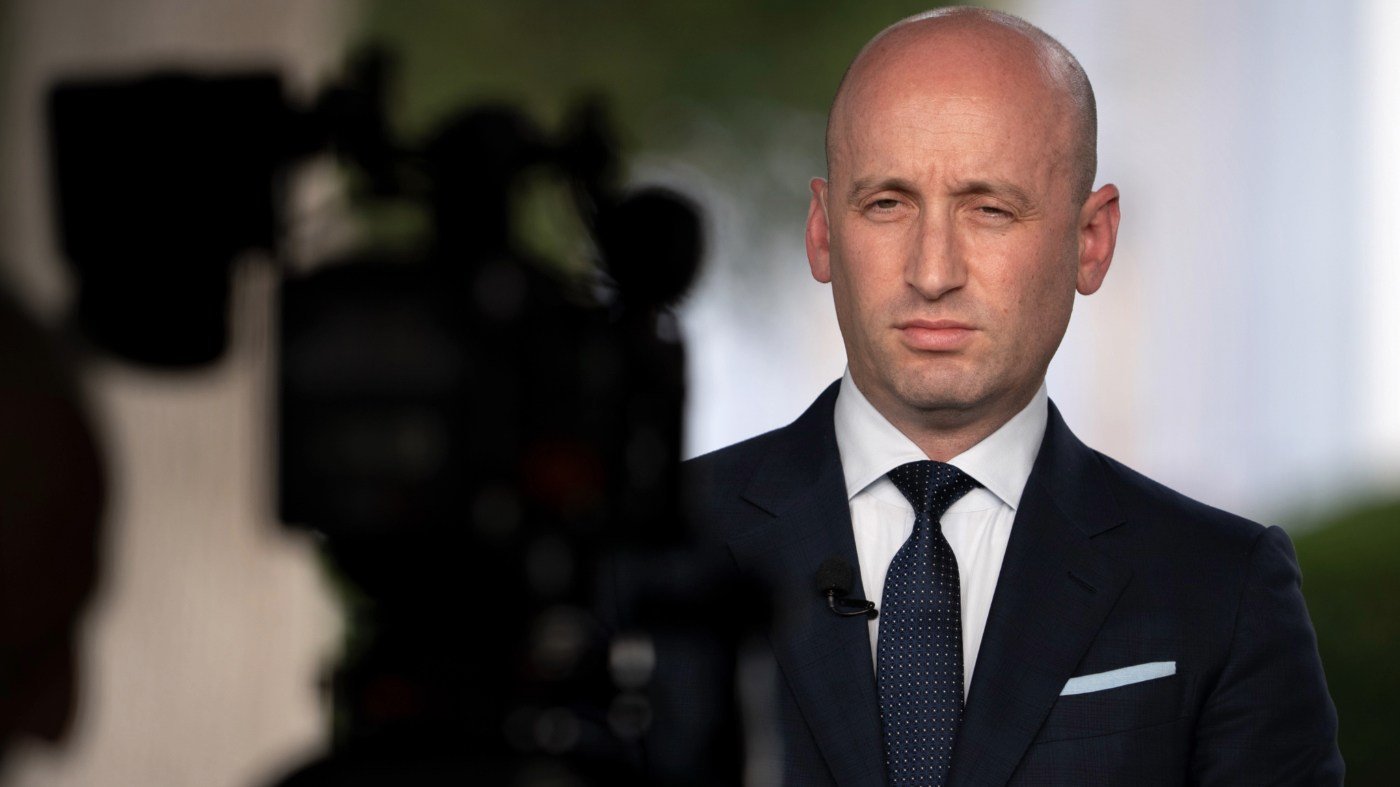
President Trump's decision to elevate Stephen Miller to White House chief of staff—announced just days after Democrats captured both chambers of Congress—sends a clear message that immigration and border security will remain the administration's top priority, and that Mexico should brace for a more confrontational approach. Miller, the architect of Trump's hardline immigration policies, replaces Susie Wiles in a move that many analysts see as a direct response to the midterm rebuke, doubling down on the issues that animate the president's base.
For Mexico, the implications are profound. Miller has long advocated for treating drug cartels as terrorist organizations and using military force against them. At a Pentagon counter-cartel conference in March, he described cartels as "the ISIS and al Qaeda of this hemisphere," calling for "hard power and lethal force" rather than criminal justice. His appointment means those views will now shape White House decision-making on a daily basis.
The policy shift is already underway. Since February, eight Mexican criminal groups have been designated as foreign terrorist organizations. In September, U.S. forces conducted lethal strikes on suspected drug boats, and this fall, around 500 troops were deployed to the Texas border following an alleged shooting. Miller, as deputy chief of staff, helped craft these actions; now, as chief of staff, he controls the flow of information to the president and the agenda itself.
A Democratic Congress is unlikely to restrain him. Miller will push the White House to use tools that require no congressional approval: terrorist designations, Treasury sanctions, federal indictments, troop deployments, and covert operations. He is also expected to continue using tariffs as leverage against Mexican President Claudia Sheinbaum, a tactic that has already yielded significant concessions.
Sheinbaum has walked a tightrope, maintaining a public posture of sovereignty while quietly cooperating with Washington. Under her watch, Mexico has extradited or transferred 133 cartel figures to the U.S. in 2025, with 37 more in January alone. A February raid, based on U.S.-shared intelligence, killed Nemesio Oseguera Cervantes, "El Mencho," leader of the Jalisco New Generation Cartel. But analysts like Eduardo Guerrero warn that this cooperation has bought time, not safety. He has described the prisoner transfers as "offerings to Uncle Sam" and predicts the National Palace will yield again to Washington.
Guerrero also notes a shift in U.S. strategy from a "war on drugs" to a "war on cartels," with federal agencies now treating cartel finances, logistics, and political protectors as terrorist infrastructure. The legal and bureaucratic machinery for unilateral action is already in place, and Miller inherits it without guardrails.
The targets are expanding too. In April, U.S. prosecutors charged Sinaloa Governor Rubén Rocha Moya, a member of Sheinbaum's Morena party, along with nine officials, though Mexico refused to extradite them. The same month, two CIA officers died in a crash in Chihuahua after a joint operation the Mexican government says it never authorized. Mexico's attorney general has charged a former Chihuahua prosecutor with treason for allowing U.S. involvement.
Guerrero poses a pointed question: Why is cooperation with Washington indispensable when the federal government runs it, but treason when a state does? The answer, he suggests, is that Mexico City already expects Washington to bypass its authority and is trying to close every side door.
Omar García Harfuch, Mexico's security chief, must plan for unilateral U.S. action. That means establishing protocols for strikes on Mexican territory, articulating a clear public stance on sovereignty, and protecting state officials who cooperate in good faith. It also means reminding Washington that decapitation strategies have historically backfired. Felipe Calderón's kingpin strategy (2006-2012) splintered cartels and increased violence. The removal of Joaquín "El Chapo" Guzmán and Ismael "El Mayo" Zambada sparked a brutal internal war within the Sinaloa Cartel that continues today.
Under Miller, the cost of coercion will likely grow—paid by migrants, border communities, and Mexico's weakest institutions. For now, Sheinbaum's strategy of quiet cooperation has prevented a direct assault on sovereignty, but as Miller takes the helm, that may no longer be enough.