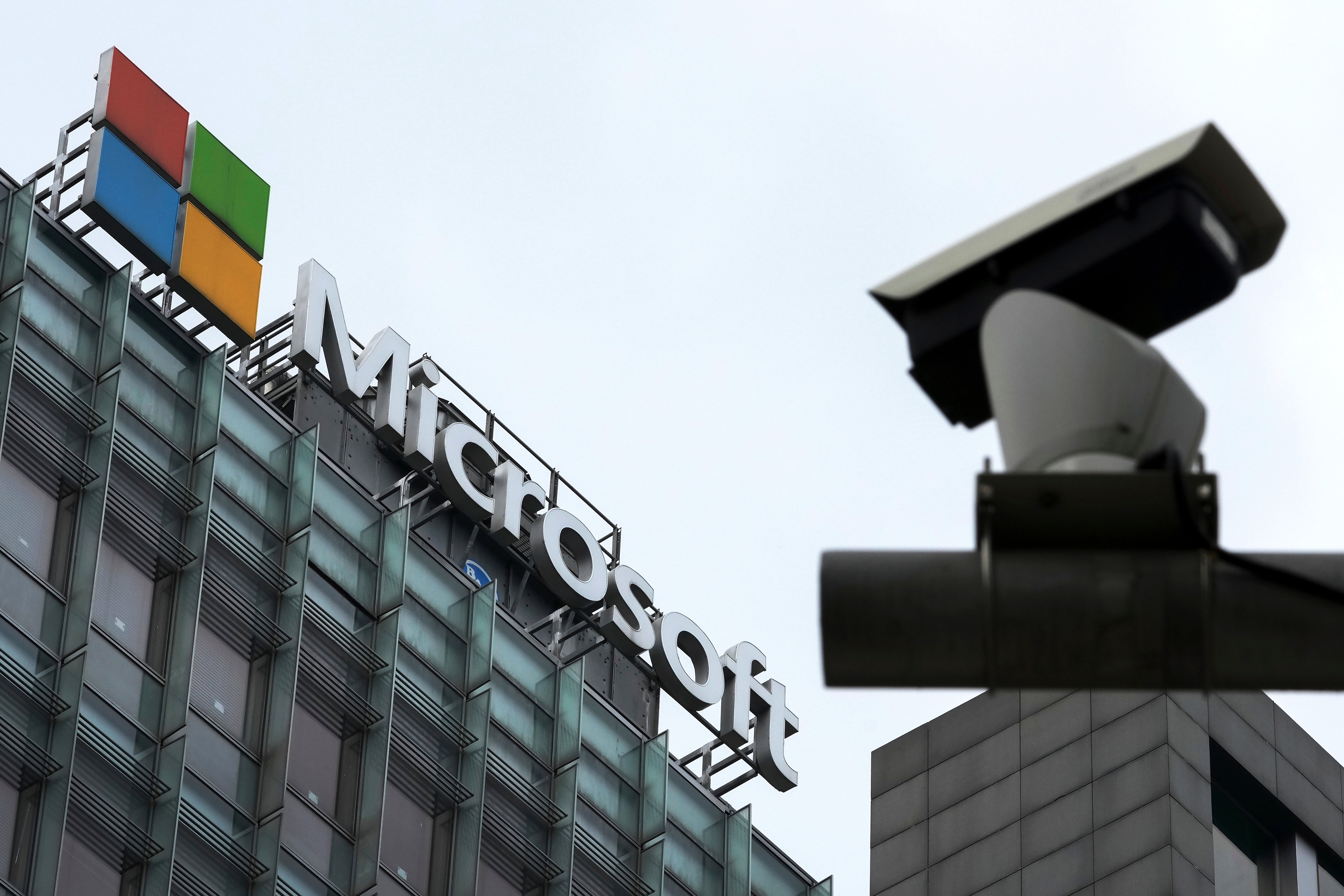
Microsoft is pouring $60 million into the Department of Energy's Genesis Mission, a sweeping initiative designed to harness artificial intelligence for scientific discovery and cement U.S. technological dominance. The tech giant's contribution breaks down into $40 million in Azure cloud and AI computing credits over three years to handle large-scale AI and scientific workloads, plus $20 million earmarked to translate that computing power into tangible scientific outcomes, according to a company blog post.
AI as Essential to Science
Chris Barry, Microsoft's president of U.S. Public Sector Industries, framed the investment as a recognition that AI and quantum computing have moved from supporting roles to become indispensable tools for research. “We are entering an era where AI and quantum don’t just support the scientific process, they are essential to it,” Barry said in a statement.

Microsoft is also launching a new coordination hub dubbed SPARK—short for Scientific Partnership Advancing Research & Knowledge—to streamline collaboration across the DOE's network. The first four SPARK projects will be hosted at national labs: the Pacific Northwest National Laboratory will focus on critical minerals and materials; Lawrence Livermore National Laboratory will tackle biosecurity; Johns Hopkins University Applied Physics Laboratory will run autonomous labs for accelerated materials discovery; and Idaho National Laboratory will work on speeding up nuclear energy permitting and autonomous energy operations.
Building on a Broader DOE Push
The investment expands on existing DOE partnerships with major tech firms, academic institutions, and AI startups including OpenAI, Anthropic, Google DeepMind, and Nvidia. These entities are pooling expertise, computing power, and AI models to drive the Genesis Mission forward. The DOE itself brings 40,000 scientists, engineers, and technical staff to the table, alongside private-sector participants.
The initiative aims to connect the DOE's 17 national laboratories, supercomputers, and experimental facilities into a single digital environment. Last November, Energy Secretary Chris Wright declared the Genesis Mission will “ensure” that America remains the “global leader” in AI, a statement that comes as lawmakers voice concerns about falling behind China. In a related development, the Pentagon recently extended the D.C. National Guard mission through the 2029 inauguration, signaling ongoing focus on national security amid geopolitical competition.
Microsoft's move also echoes broader federal efforts to leverage AI for strategic advantage. Meanwhile, the Treasury Department's new screening system recently blocked $99 million in payments to deceased individuals, highlighting the government's push to modernize oversight through technology.
Implications for Energy and Tech Policy
The partnership underscores a growing convergence between Big Tech and federal energy agencies, particularly as the U.S. seeks to maintain an edge in AI while addressing energy demands. The focus on autonomous energy operations at Idaho National Lab could have ripple effects for nuclear power regulation, a topic that has drawn attention amid debates over climate goals and grid reliability.