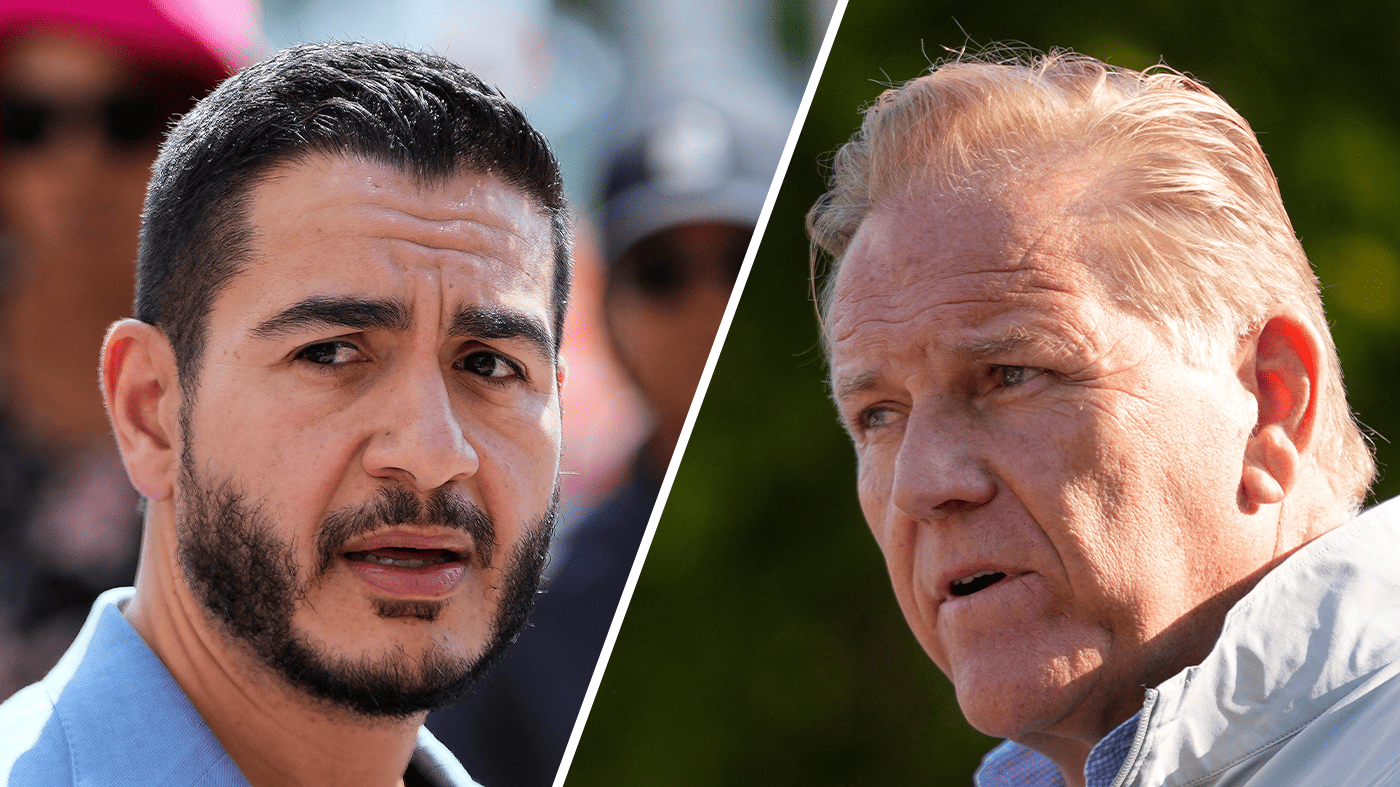
The first Senate debate in Michigan between Republican Mike Rogers and Democrat Abdul El-Sayed was marked by intense personal attacks and accusations, so much so that the confrontation spilled beyond the cameras. Moderator Rick Albin of WOOD TV noted, "In 30 years of doing debates, I've never seen it continue during the commercial. But it did." The debate, hosted by Nexstar's Grand Rapids station, quickly devolved into a series of sharp exchanges over corporate and foreign influence, residency claims, President Trump, and the candidates' professional backgrounds.
El-Sayed Ties Rogers to Trump
El-Sayed sought to make the debate a referendum on President Trump, repeatedly linking Rogers to the former president's policies and rhetoric. He argued that Rogers would be a rubber stamp for Trump's agenda, particularly on issues like tariffs and healthcare. Rogers, however, tried to position himself as a bipartisan problem-solver, while characterizing El-Sayed as dishonest and out of touch with Michigan voters.
Rogers Attacks El-Sayed's Credibility
Rogers went on the offensive, questioning El-Sayed's integrity and pointing to his past as a public health official. He accused El-Sayed of misleading voters about his record and his ties to national Democrats. The Republican also highlighted El-Sayed's decision to participate in a debate alone last month after Rogers declined, accusing the host outlet of bias.
Carpetbagging and Residency Disputes
A central flashpoint was the issue of residency. Rogers, who previously lived in Florida, faced accusations of being a carpetbagger, while El-Sayed was criticized for his own moves within Michigan. Both candidates sought to paint the other as out of touch with local communities, a theme that resonated with voters watching closely.
Off-Camera Tensions
The animosity was not confined to the broadcast. The debate's moderator expressed surprise at the ongoing confrontation during the commercial break, underscoring the depth of the personal animosity between the two candidates. This level of hostility is unusual even for a high-stakes Senate race, and it signals a bruising campaign ahead.
What's Next in the Race
The pair are scheduled to meet again on October 21 in a debate hosted by WXYZ-TV. That encounter is expected to be equally contentious, as both campaigns vie for momentum in a race that could help determine control of the Senate. Recent polling suggests a tight contest, with national Democrats eyeing an expanded map, as seen in the tightening Kansas Senate race.
National Implications
The Michigan Senate race has drawn significant national attention, with both parties investing heavily. Former President Trump has already weighed in, calling El-Sayed 'terrible' in a recent social media post. Meanwhile, Senate Majority Leader Chuck Schumer has criticized Trump's attacks on El-Sayed as bigoted, highlighting the national stakes.
As the campaign enters its final weeks, both candidates are expected to sharpen their attacks. The upcoming debate will be a crucial test for Rogers and El-Sayed as they seek to sway undecided voters in a state that remains a key battleground.