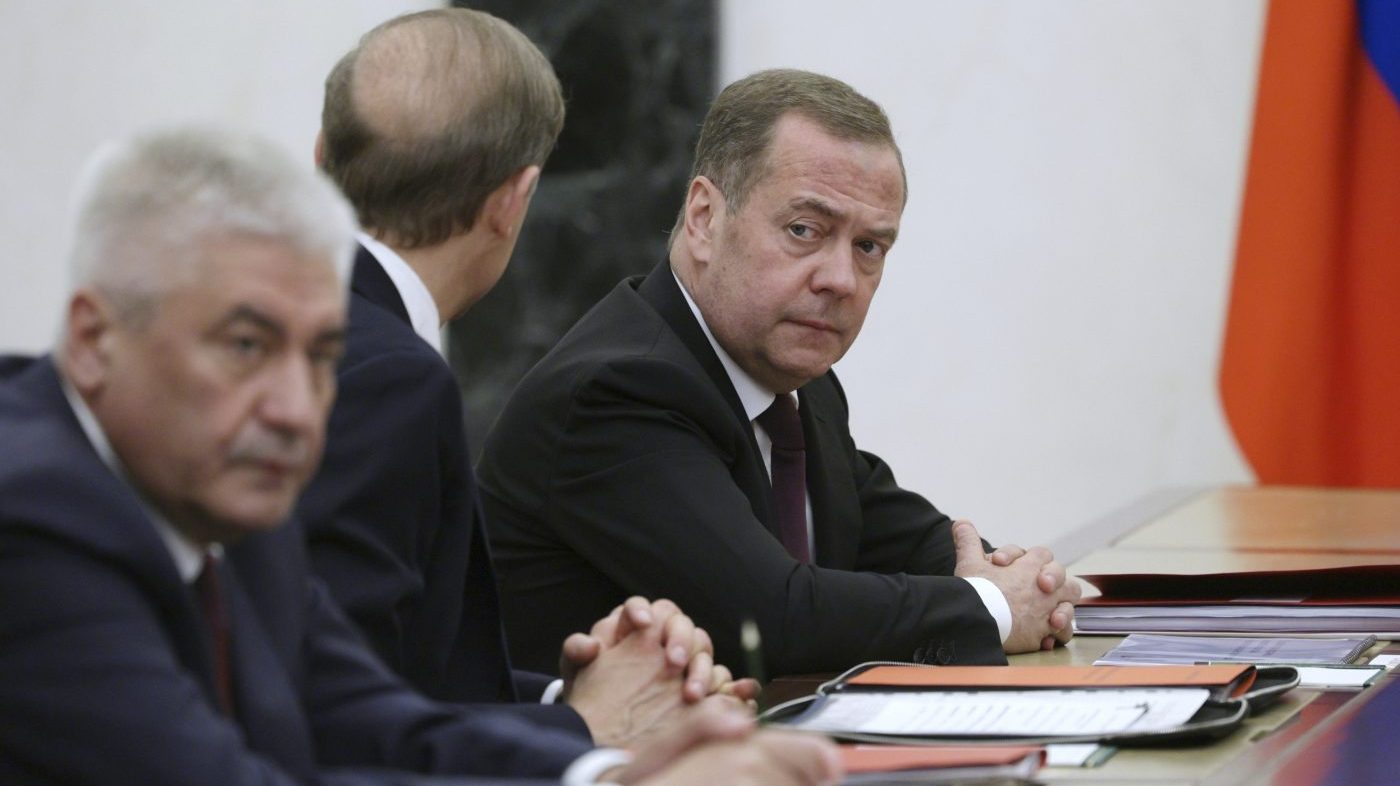
Dmitry Medvedev, Russia's former president and current deputy chair of the Security Council, issued a chilling threat Tuesday against European Union diplomats stationed in Kyiv, suggesting they could become casualties of Moscow's escalating bombardment of the Ukrainian capital.
In a post on X, Medvedev wrote: "The EU has said it will maintain its diplomatic presence in Kiev unchanged, despite Russia's warnings. Well, apparently they've got diplomats to spare and need to trim the headcount." The remark came just a day after the Russian Foreign Ministry ordered foreign nationals to evacuate Kyiv, citing a fresh wave of large-scale strikes targeting the city's defense infrastructure.
The ministry said Monday that Russian forces were conducting "consistent and systemic strikes at enterprises of the Ukrainian defence industry ... including specific facilities for designing, manufacturing and programming drones and preparing them for operation." It added that "the strikes will target decision-making centres and command posts" and that because these sites are "scattered across [Kyiv], we are notifying foreign citizens, including the personnel of diplomatic missions and international organisations of the need to leave the city as soon as possible."
European Commission spokesperson Anitta Hipper pushed back forcefully during a press conference Tuesday. "What we have seen is that Russia is only trying to sow panic, issuing these threats," she said. "They want fear and isolation in Ukraine and elsewhere, but we have a clear message: this will not work. In fact, the EU is maintaining its presence and operation in Kyiv, and these threats smell like desperation."
The standoff comes amid heightened tensions as Russia ramps up its assault on Kyiv, a city that has been a frequent target since the invasion began. The warning to diplomats echoes earlier threats from Moscow, which has often accused Western nations of using diplomatic cover to support Ukraine's military efforts. Medvedev, known for his bellicose rhetoric, has repeatedly signaled that Russia is willing to escalate the conflict, even if it risks direct confrontation with NATO allies.
Meanwhile, the U.S. State Department confirmed that Secretary of State Marco Rubio spoke with Russian Foreign Minister Sergey Lavrov on Monday, with discussions covering both the war in Ukraine and the situation in Iran. The call suggests ongoing diplomatic backchannels even as Russia threatens Western personnel on the ground.
The EU's decision to keep its diplomats in Kyiv underscores a broader Western strategy to maintain a visible presence in Ukraine as a symbol of solidarity. But Medvedev's comments raise the stakes, hinting that Moscow may view these envoys as legitimate targets—a move that would mark a dangerous escalation in the conflict.
As the war grinds on, the threat to diplomats adds a new layer of volatility. For now, Brussels is standing firm, but the Kremlin's message is clear: stay at your own risk.