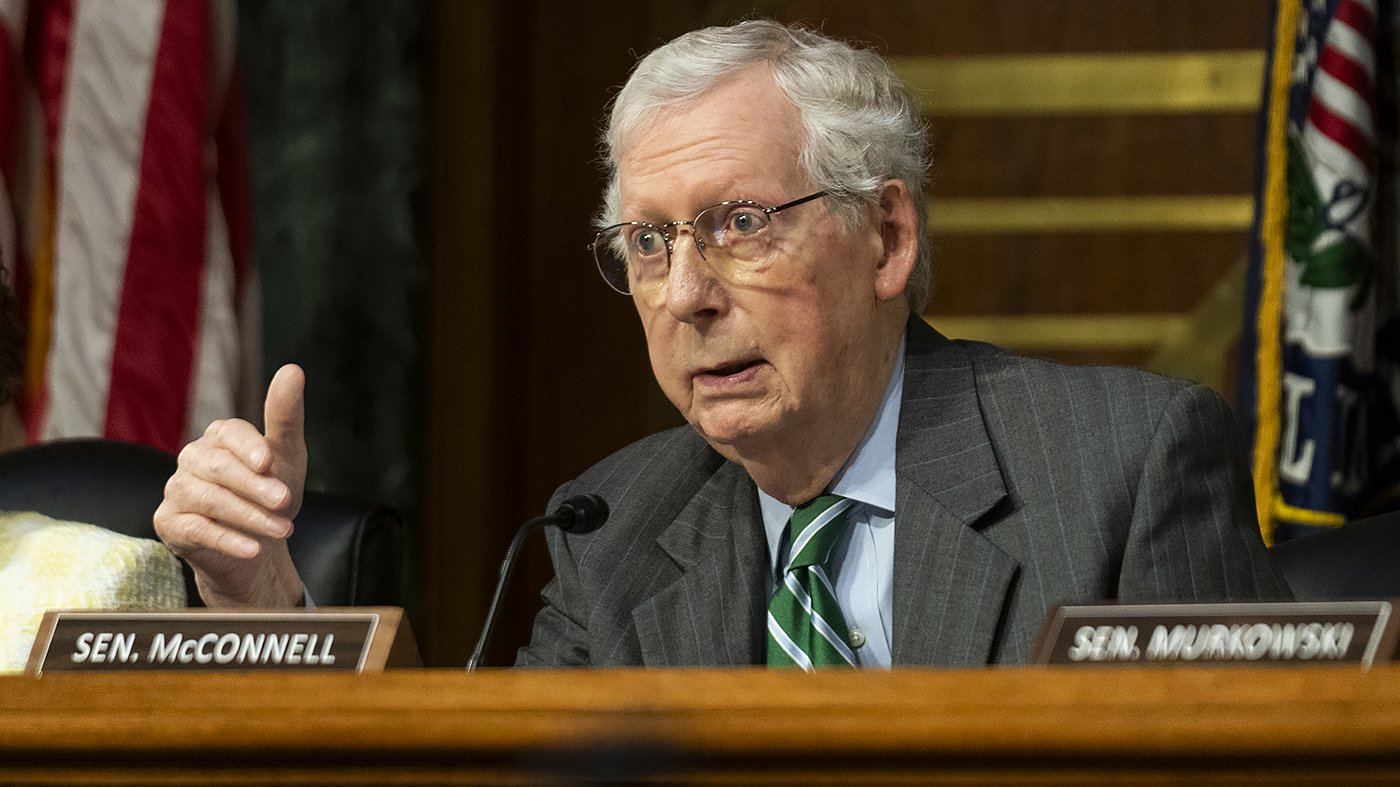
Senate Minority Leader Mitch McConnell (R-Ky.) has been in touch with top Republican leadership this week, pushing back against growing speculation that his health issues may be more serious than previously disclosed. McConnell, 84, has been hospitalized since June 14 after an emergency medical incident at his Capitol Hill residence.
On Monday, McConnell spoke with Senate Majority Leader John Thune (R-S.D.) in what a Thune spokesperson described as a “lengthy and substantive conversation” covering a range of topics, including national security. The call undercut rumors that McConnell’s condition had deteriorated significantly, as the two leaders discussed legislative priorities and the path forward.
“Leader Thune spoke with Sen. McConnell yesterday by phone. They had a lengthy and substantive conversation that covered a variety of topics, including national security,” the spokesperson said.
Tuesday brought a follow-up call between McConnell and Senate Republican Whip John Barrasso (R-Wyo.), lasting roughly 20 minutes. According to Barrasso’s spokeswoman Kate Noyes, the two caught up on the latest developments in Senate races, the Graham Platner scandal, and the recent Supreme Court ruling on coordinated spending limits. They also discussed the upcoming July work period and the need to pass the National Defense Authorization Act and confirm Jay Clayton as director of national intelligence.
“Sen. McConnell was fully engaged and is eager to get back to the Senate,” Noyes said.
The calls come amid intense scrutiny of McConnell’s health, fueled by the release of emergency dispatch audio from the day he was hospitalized. The audio indicated that paramedics found an unconscious person at McConnell’s address and administered CPR in response to a possible cardiac arrest. McConnell’s office has not confirmed the specifics of his condition, reiterating only that he “continues to improve and is working closely with his staff on Kentucky and Senate matters while the Senate is out of session.”
McConnell’s absence has already had tangible consequences. Senate Appropriations Committee Chair Susan Collins (R-Maine) postponed a markup of several bills before the July 4 recess because McConnell was unavailable. As chairman of the Defense Appropriations Subcommittee, McConnell plays a pivotal role in drafting the emergency supplemental defense spending package requested by the Trump administration to replenish munitions used in the conflict with Iran. His vote is also critical on the full committee, where Republicans hold a slim 15-14 majority; any absence gives Democrats the ability to block bills.
Thune told reporters on June 15 that he spoke with McConnell and that he “sounded good,” expressing hope for a speedy return. The uncertainty surrounding McConnell’s health has fueled broader questions about the future of his leadership and the GOP’s ability to advance its agenda in the upper chamber. For now, the calls suggest a leader still very much engaged, even from a hospital bed.