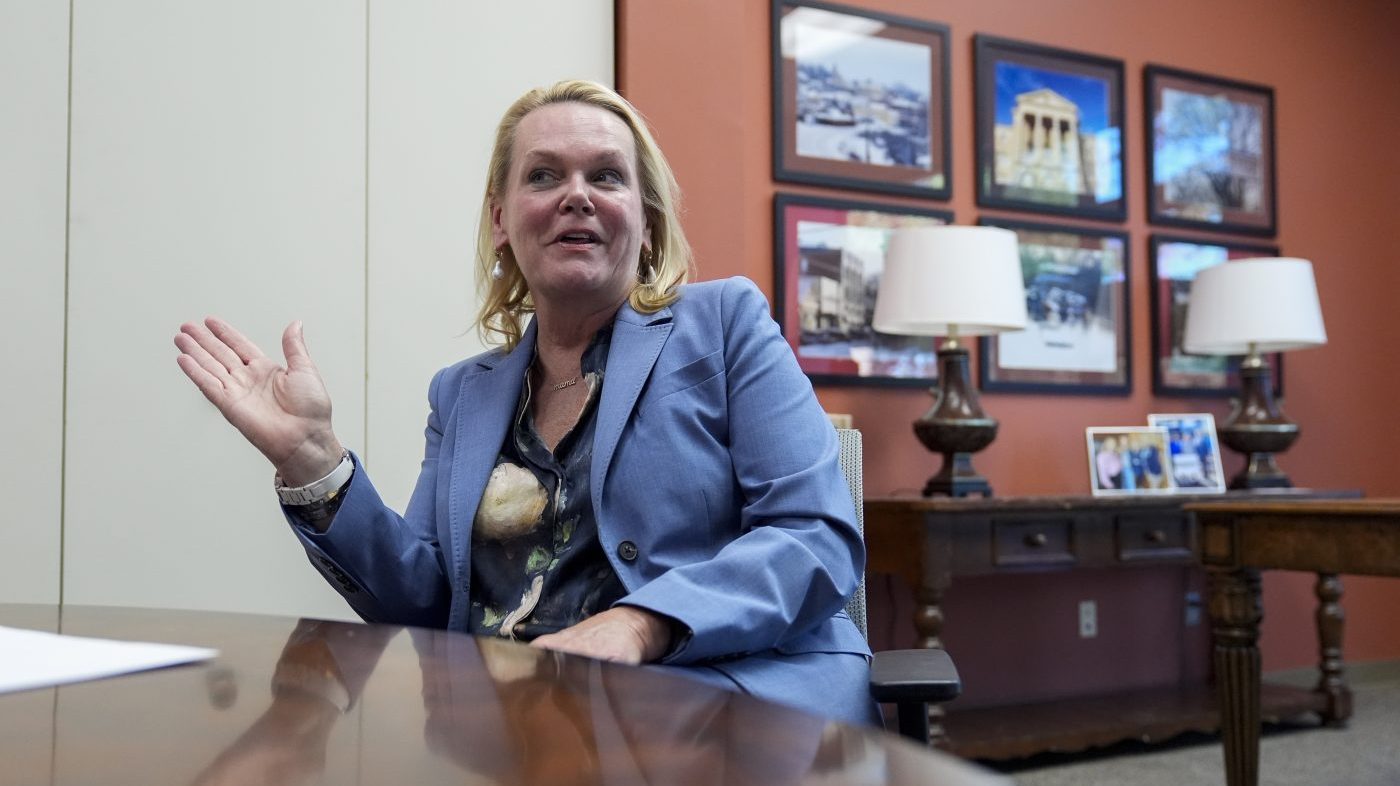
Rep. April McClain Delaney (D-Md.) has secured victory in a fierce primary challenge from former Rep. David Trone (D-Md.), according to projections from Decision Desk HQ. The race, one of the most expensive House primaries this cycle, pitted two wealthy Democrats against each other for a blue-leaning seat in northwestern Maryland.
Trone, the co-owner of Total Wine & More, represented the district from 2019 to 2025 before an unsuccessful Senate bid against Sen. Angela Alsobrooks (D-Md.) in 2024. After that loss, he announced he would run for his old seat, setting up a rematch with McClain Delaney, a former Biden administration official who succeeded him for one term.

The primary quickly turned acrimonious, with both candidates pouring millions of their personal fortunes into the contest. According to the ad-tracking firm AdImpact, Trone spent at least $15 million on advertising, while McClain Delaney spent at least $8 million. The race became a showcase of the growing trend of former lawmakers seeking to reclaim their old districts, a dynamic that has played out in a handful of primaries this year.
McClain Delaney’s victory is a significant win for the Democratic establishment, which rallied behind her after Trone’s Senate defeat. The contest highlighted internal party tensions, with Trone positioning himself as a pragmatic businessman and McClain Delaney emphasizing her Washington experience and ties to the Biden administration.
The outcome also underscores the shifting political landscape in Maryland, where the 6th District has become increasingly competitive. While the seat is considered blue-leaning, the primary’s intensity reflects broader national debates within the Democratic Party about messaging, spending, and the role of self-funded candidates. Similar dynamics have emerged in other primaries, such as the socialist surge in New York that is reshaping party dynamics.
Trone’s campaign had hoped to leverage his name recognition and financial resources to mount a comeback, but McClain Delaney’s incumbency and organizational strength proved decisive. The race also drew attention to the influence of money in politics, with both candidates spending heavily on ads attacking each other’s records and character.
Looking ahead, McClain Delaney will face a Republican opponent in the general election, though the district’s Democratic lean makes her the favorite. However, the primary’s bitterness could linger, potentially affecting turnout and unity in the fall. Meanwhile, the broader trend of former lawmakers seeking to reclaim seats, as seen in other races, signals a reshaping of the political landscape that both parties must navigate.
The race also highlighted the growing role of outside groups and the challenge of maintaining party cohesion in an era of high-spending primaries. As the 2026 midterms approach, the Maryland contest serves as a case study in the risks and rewards of political comebacks.