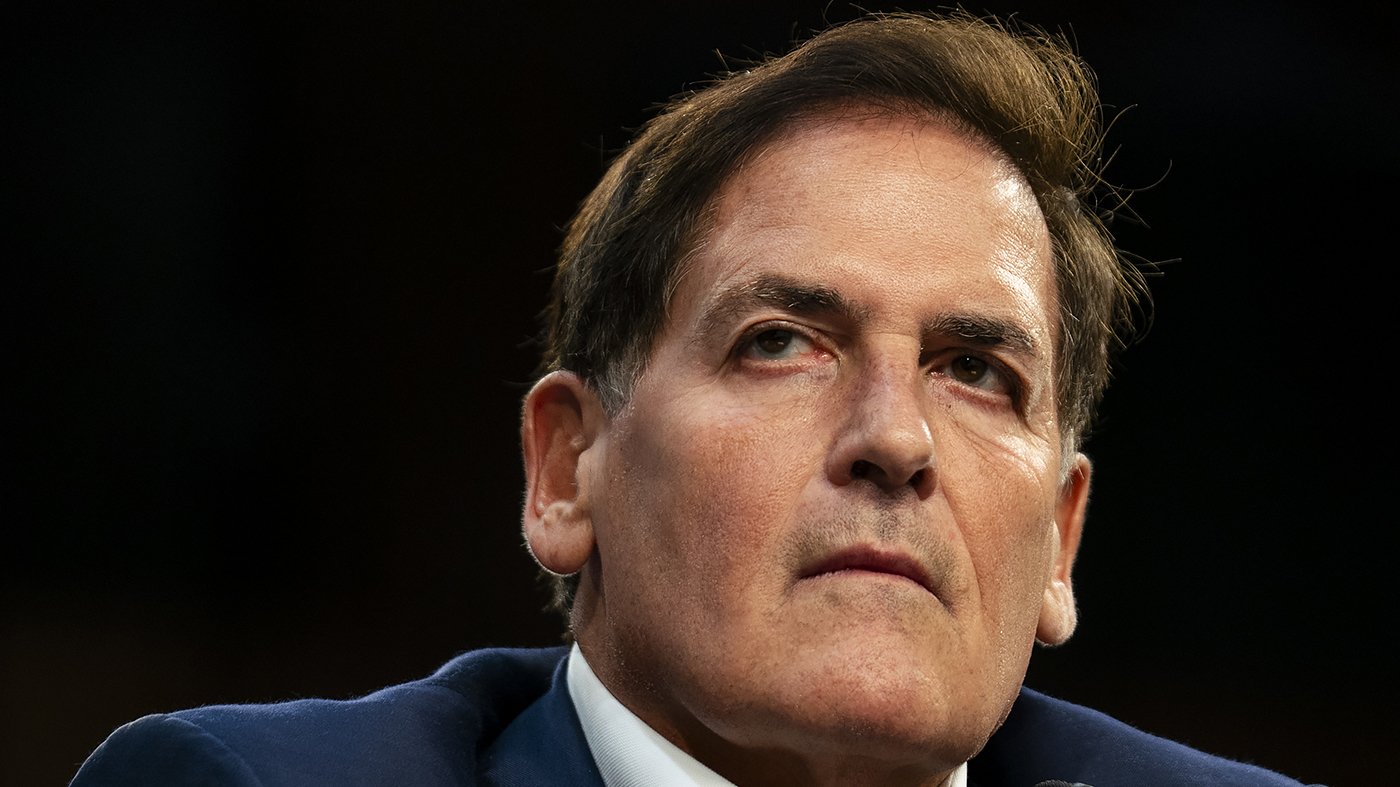
Billionaire investor Mark Cuban has publicly withdrawn his support for a potential Kamala Harris presidential campaign in 2028, signaling a definitive break from his previous role as a surrogate for the former vice president. The declaration came during a healthcare policy forum where Cuban redirected the political conversation toward systemic industry reform.
A Surrogate No More
When pressed by Politico's Alexander Burns at the outlet's Health Care Summit about Harris's healthcare platform, Cuban offered a blunt dismissal: "Don't remember, don't care." This starkly contrasts with his active support during the 2024 election cycle, when he praised Harris's economic messaging and served as a campaign advocate. His current posture reflects a strategic pivot away from electoral politics toward policy activism.

"Those days are gone," Cuban stated, emphasizing his present focus. "I don't care at this point in time. Right now, we've got until 2028. I don't care who the candidates are. I'm not trying to pick a candidate. I'm not trying to promote a candidate. I'm trying to change how f---ed up this health care industry is right now, and that's all I care about." When Burns followed up on his rejection of a Harris 2028 run, Cuban added, "There's time for a lot of new s--- right now," suggesting the political field remains wide open.
Policy Over Partisanship
Cuban's new stance is notably bipartisan. He expressed openness to supporting a Republican aligned with Trump's Department of Health and Human Services, provided they advance goals like lowering drug prices and accelerating clinical trials. His policy focus zeroes in on legislation, such as a bill co-sponsored by Senators Elizabeth Warren and Josh Hawley, that would dismantle major healthcare conglomerates. "Until you break those companies up and make them divest their non-insurance assets, they own your health care," he argued, directly challenging the Federal Trade Commission to "do your job."
While he praised the concept of an independent candidate running on a healthcare affordability platform, Cuban definitively ruled out being that candidate himself. "It won't be me," he stated, closing the door on speculation about his own political ambitions.
From Potential Running Mate to Critic
The distance Cuban is placing between himself and Harris is particularly notable given their recent history. He previously revealed he turned down an offer to be her vice-presidential running mate, citing his political inexperience and unsuitability for a secondary role, quipping that "she would have fired me within six days." His support in 2024 followed an initial endorsement of Nikki Haley in the Republican primary, which he made contingent on a matchup against President Biden. He ultimately backed Harris for her persistent focus on economic issues, telling The New York Times she delivered "economy speech after economy speech" to connect with voters.
Harris is widely seen as a leading contender for the 2028 Democratic nomination, with early polling and strategic appearances shaping the field. Her political strategy often involves keynote addresses to core constituencies to gauge support. Cuban's rejection, therefore, represents the loss of a high-profile, cross-partisan advocate from her previous coalition.
The Broader Political Context
Cuban's comments arrive as the next presidential cycle begins to take shape, with potential candidates maneuvering for position. His singular focus on healthcare costs aligns with a persistent voter concern but places him at odds with the political calendar. His advocacy for breaking up healthcare conglomerates intersects with broader policy debates in Washington, including efforts like the congressional push to reform investment taxes, which also aim to address economic pressures on American households.
Furthermore, his remarks underscore how figures from outside politics are increasingly seeking to influence policy directly, bypassing traditional electoral endorsements. By stating he does not care about the 2028 candidates, Cuban is attempting to elevate a specific policy issue—healthcare industry consolidation—above the partisan fray, even as his words carry clear political consequences for a former ally.