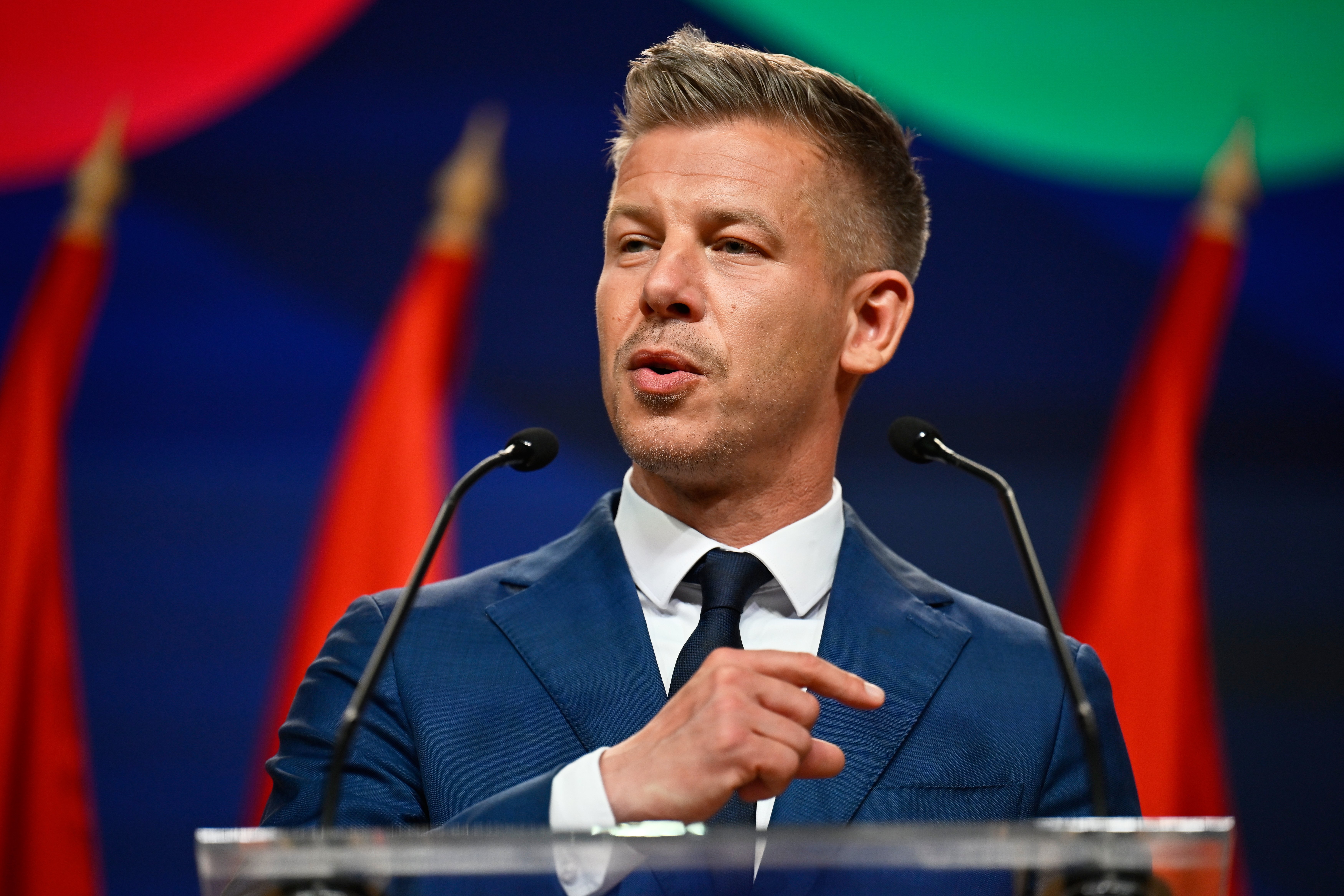
The political landscape in Hungary has undergone a fundamental transformation with the election of Péter Magyar, whose policy agenda represents a decisive departure from the illiberal democracy model championed by his predecessor, Viktor Orbán. While Magyar emerged from within Orbán's own political apparatus, his governing program targets the very foundations of the previous sixteen-year regime.
A Systemic Assault on Corruption
Magyar has declared the dismantling of Orbán's patronage networks a central priority, labeling Hungary as "Europe's poorest and most corrupt country." He has pledged to audit all major state investments exceeding $32 million, directly confronting what economists describe as an industrial-scale funneling of public funds to political loyalists. This represents a direct challenge to the economic architecture of Orbán's Fidesz party.
Reorienting Foreign and Energy Policy
On the international stage, Magyar promises a stark reversal. He commits to a constructive partnership with the European Union, including seeking membership in the European Public Prosecutor's Office and reconsidering Eurozone accession. His stance on Ukraine, while cautious on rapid EU membership, explicitly identifies Russia as the aggressor and supports security guarantees for Kyiv, a clear break from Orbán's Kremlin-aligned posture.
Energy policy will see a concerted push to reduce dependence on Russian supplies. "This government will do everything in its power to diversify our energy mix," Magyar stated, outlining a more pragmatic, EU-aligned relationship with Moscow. He added that while he would speak to Vladimir Putin if called, the conversation would center on a plea "to please stop the killing."
Reversing Democratic Backsliding
Magyar's platform includes concrete steps to restore institutional checks and balances eroded under Orbán. He proposes a constitutional amendment to impose a two-term limit for the prime minister. A major overhaul of state media, potentially modeled on the BBC's principles, is planned to end its use as a government propaganda arm, a move supported by scores of media professionals. Furthermore, Magyar intends to rejoin the International Criminal Court, from which Orbán withdrew.
Analysts note that unlocking billions in frozen EU funds, withheld over rule-of-law concerns, is a key incentive for democratic reforms. "Which gives us some guarantees that he will behave in a democratic way," said Péter Krekó of Political Capital. The agenda extends to social policy, with Magyar pledging a more inclusive society where citizens are not stigmatized for their identity, contrasting with Orbán's focus on conservative culture wars.
Continuity and Consequences
One area of likely continuity is a hardline stance against illegal immigration, with Magyar vowing to maintain border fences and reject EU migrant quotas. However, experts believe the inflammatory political rhetoric around the issue may subside.
The collective impact of these shifts severs Hungary from its role as a beacon for global right-wing populism. The change leaves little for Orbán's international admirers, like Steve Bannon and Tucker Carlson, to champion. A last-ditch campaign effort by U.S. Senator JD Vance, dispatched by former President Donald Trump to support Orbán, appears to have backfired, highlighting the gamble of tying U.S. politics to a falling star. The defeat has already exposed fissures within the American right, as Senate Republican Leader Mitch McConnell publicly rebuked conservatives for backing Orbán.
Magyar's victory, detailed further in his post-election platform definition, concludes an era that saw Hungary's democratic institutions systematically weakened. The question now is whether this political contagion—a rejection of illiberalism at the ballot box—will influence debates beyond its borders, including within a Republican Party that had embraced Orbán as a model.