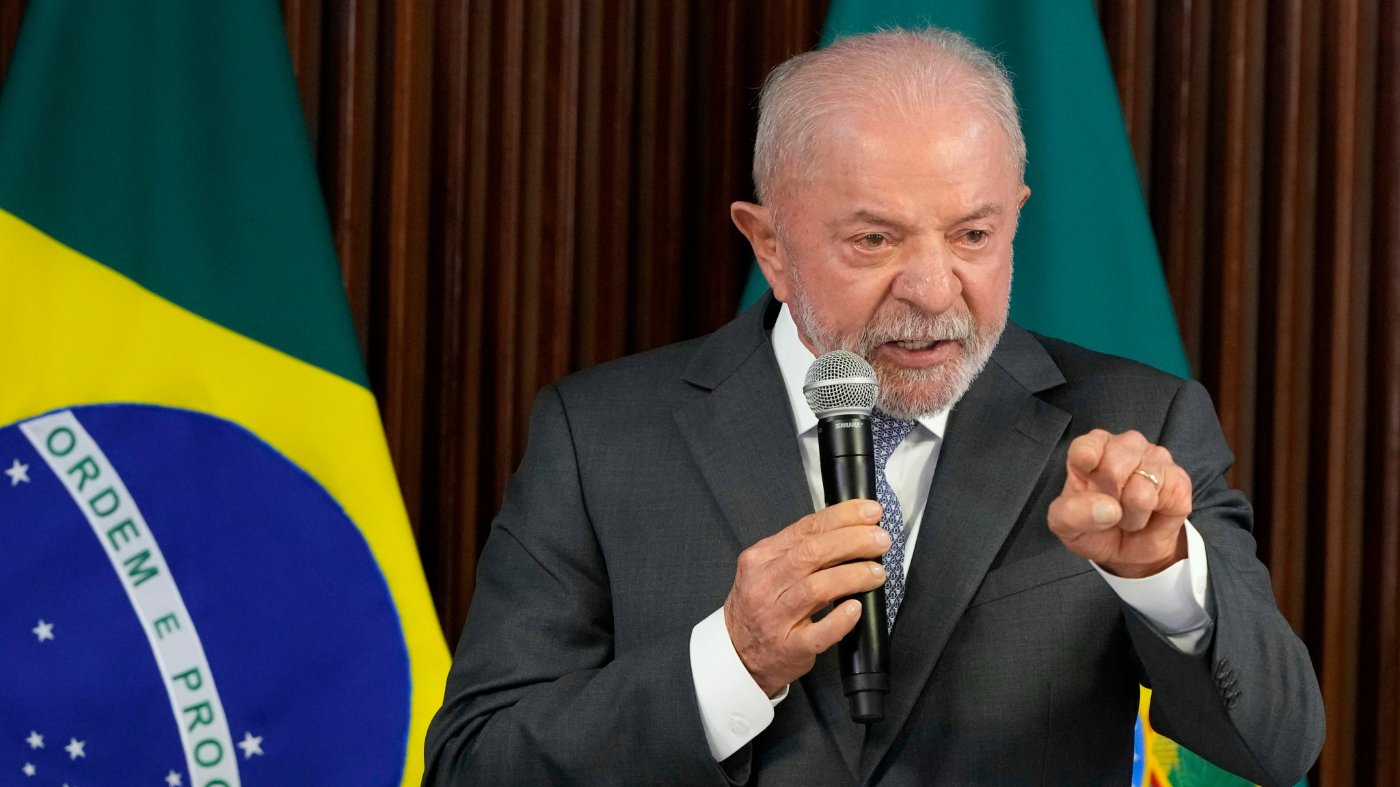
Brazilian President Luiz Inacio Lula da Silva is escalating his confrontation with Washington while deepening ties with Beijing, a strategy that analysts say could undermine Brazil's economic independence, national security, and regional standing. The leftist leader's recent attacks on U.S. Secretary of State Marco Rubio—dismissing him as a 'frustrated Latin American' and a 'mortal enemy'—come after the Trump administration imposed 25 percent tariffs on Brazilian goods and designated two major criminal gangs, Primeiro Comando da Capital and Comando Vermelho, as terrorist organizations.
Lula's undiplomatic rhetoric is a sharp departure from traditional statecraft. Brazil is one of the world's largest economies, and the United States remains its second-largest trading partner. In 2023, bilateral trade totaled $74.8 billion, with U.S. exports of $37.9 billion and imports from Brazil of $36.9 billion. Yet Lula is actively steering the country away from the dollar and toward the yuan. This week, Brazil announced it would soon issue so-called panda bonds denominated in Chinese currency. Already the top buyer of Brazilian iron ore, soybeans, and oil, China now gains a new lever: Brazil will borrow in yuan, limiting its financial flexibility to sell to other markets.

The economic pivot is matched by military cooperation. Earlier this year, Brazil welcomed the People's Liberation Army Navy hospital ship Silk Road Ark with open arms. The two navies conducted joint search-and-rescue exercises, and China staged a demonstration of combat and rescue operations. This military rapprochement comes as Brazil also deepens space collaboration with China, including the Joint Radio Astronomy Technology Laboratory, which involves the state-owned China Electronics Technology Group Corporation—a defense firm. The two nations are building BINGO, South America's largest radio telescope. Critics argue China's space ambitions are not purely scientific; Beijing is seeking to enhance its military capabilities in the U.S. sphere of influence.
In telecommunications, Brazil continues to embrace Huawei despite widespread accusations of espionage. Former Senator Rubio warned in 2024 that Huawei had 'exposed the U.S. to potential nuclear command interference and stolen technology from at least six U.S. companies.' Brazil's reliance on Huawei for 5G infrastructure raises similar concerns about data security and foreign influence.
Lula's stance on security issues has also drawn criticism. He refused to join the U.S.-led 'Shield of the Americas' initiative, a multilateral effort to combat organized crime and security threats, and has openly opposed designating Brazilian gangs like PCC and Comando Vermelho as terrorist organizations—even as the U.S. took that step.
Meanwhile, questions about labor practices have emerged. Brazilian authorities reported that 163 Chinese citizens were brought illegally to work on a BYD car factory construction site under conditions resembling modern slavery—a stark irony given Lula's frequent denunciations of 'savage capitalism.'
As Lula concentrates economic, military, and technological power in Chinese hands, Brazil's vulnerability grows. A downturn in China's economy could ripple through Brazilian finances, and Beijing's strategic interests in the Americas may not align with Brasília's. The path forward, analysts argue, requires leadership that prioritizes national interest over ideological alignment. Confrontation with the U.S. is both futile and unnecessary, but dependency on Beijing puts Brazil's economy at risk and endangers the security of the Western Hemisphere.
Arturo McFields, an exiled journalist and former Nicaraguan ambassador to the OAS, contributed to this analysis.