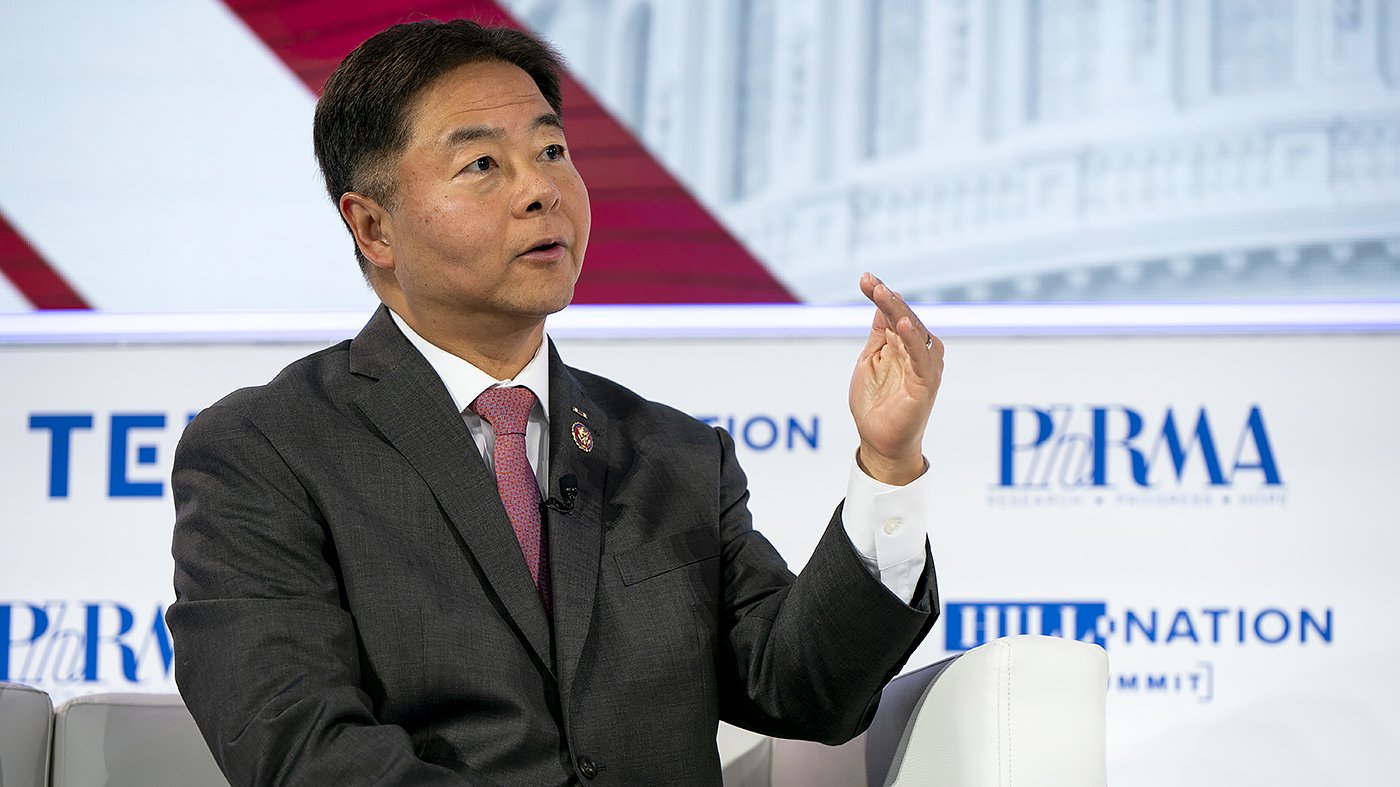
Rep. Ted Lieu (D-Calif.) on Wednesday delivered a sharp critique of House Republican leadership, accusing them of failing to prioritize any legislative guardrails on artificial intelligence as the technology races ahead at an unprecedented pace. Speaking at The Hill's second-annual Nation Summit, the fourth-ranking House Democrat said he remains deeply unsettled by AI's rapid evolution.
“I am still freaked out by AI, and it’s actually accelerated much more quickly than I thought possible,” Lieu told The Hill’s Miranda Nazzaro. His remarks underscored a growing bipartisan unease on Capitol Hill about the lack of a coherent federal framework for AI oversight.
Lieu argued that Congress must strike a balance between imposing necessary guardrails and fostering innovation, especially as the United States competes with China in the AI sector. But he reserved his harshest words for his GOP colleagues, saying they have offered no real strategy. “I cannot name a single law passed this term by House Republican leadership that has any guardrails on AI,” the California Democrat said.
The congressman’s frustration mirrors public sentiment. A Johns Hopkins University study published last month found that nearly 80 percent of Americans want regulations on AI in sensitive areas like medical care and therapy. “The American people, I think, are being fed up with what they see as a lack of action in Congress,” Lieu added, connecting the legislative inertia to broader voter discontent.
In a rare moment of bipartisanship, Lieu praised Reps. Jay Obernolte (R-Calif.) and Lori Trahan (D-Mass.) for introducing draft legislation last month that would create a national AI framework. “This is a very difficult area, and I welcome lots of members to delve into it,” he said. However, Lieu took issue with the draft’s proposal to override state laws on AI model development for three years—a preemption ceiling he called “a little dangerous.”
“If you’re going to have a ceiling on preemption, then it needs to have not only a very strong federal standard, but [it should] also take into account that AI’s moving so quickly and we don’t even know what AI’s going to look like in two or three years,” Lieu argued. He warned that a ceiling, rather than a floor, could leave the nation vulnerable as the technology evolves.
The draft bill’s summary states it “expressly does not preempt laws of general applicability, common law remedies, or laws regulating AI use or deployment.” Still, Lieu’s concerns highlight the deep divisions within Congress over how to approach AI regulation. The debate comes as other political flashpoints—like Trump’s controversial Hormuz blockade strategy and Pentagon’s handling of the F-35 program—continue to dominate headlines.
Lieu’s rebuke is the latest sign that AI policy is becoming a key fault line in Congress. With the technology advancing faster than legislative bodies can respond, the pressure to act—or face public backlash—is mounting. For now, the House remains without a unified strategy, and Lieu made clear he sees that as an unacceptable risk.