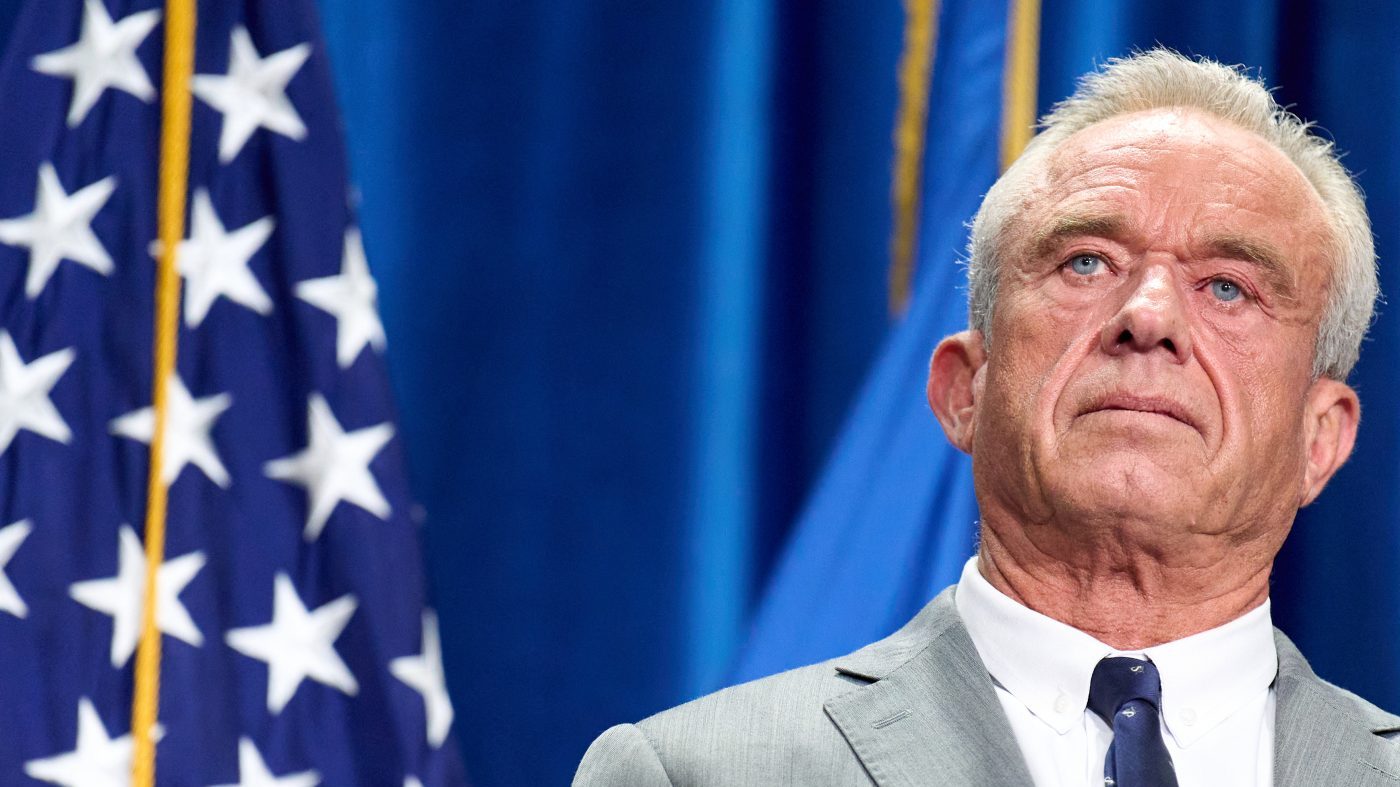
Health and Human Services Secretary Robert F. Kennedy Jr. is turning to podcasting in an effort to re-energize his core political constituency, the "Make America Healthy Again" movement, as his standing within the Trump White House shows signs of erosion. The debut of "The Secretary Kennedy Podcast" follows recent reports that the administration has distanced itself from his signature vaccine policy agenda, which is currently stalled by a federal court ruling.
A Strategic Pivot to Direct Communication
The inaugural episode, released Wednesday, notably avoided the contentious topic of vaccines, instead featuring a conversation with celebrity chef Robert Irvine on reforming the U.S. food system. This focus aligns with rare areas of bipartisan agreement, such as reducing artificial additives and promoting whole foods, and represents a strategic shift. The move mirrors a broader trend among political figures who bypass traditional media to speak directly to supporters, a tactic famously employed by former President Trump himself.
"What everybody in government has discovered is that they don't need traditional media anymore. They can do their own media," said Frank Sesno, a professor at George Washington University's School of Media and Public Affairs. "Nobody edits them, and their stream becomes pickup material for those who still are in the legacy media."
Courting a Crucial Voting Bloc
For Kennedy, demonstrating he can still mobilize an audience may be critical to retaining his influence. Unlike other recently dismissed Cabinet officials, such as former Attorney General Pam Bondi, Kennedy commands the loyalty of a discrete voting bloc that represents a potential wild card for Republicans in the upcoming midterms. President Trump appears cognizant of this dynamic, having met privately with MAHA activists at the White House last week.
HHS spokesperson Andrew Nixon framed the podcast as a platform for "radical transparency" on issues from chronic disease to healthcare costs. Key figures within the MAHA movement welcomed the initiative. "The MAHA grassroots base will welcome a podcast directly from Secretary Kennedy," said activist Kelly Ryerson, known online as "Glyphosate Girl." "It is helpful to have the secretary reengage directly, as this will remind the grassroots why they supported this administration." Influencer Vani Hari, author of "The Food Babe" blog, praised the long-form format for allowing complex positions to be explained more fully.
Internal Tensions and External Criticism
However, the MAHA coalition is not monolithic, and Kennedy's alignment with the administration has previously caused friction. When Trump signed an executive order promoting access to glyphosate-based herbicides—a move Kennedy defended—it drew sharp rebuke from activists like Hari, who labeled it a "mass poisoning of Americans." The episode highlights the challenge Kennedy faces in managing a movement with a broad and sometimes conflicting set of priorities.
Critics, particularly from the scientific community, condemn the new platform as a vehicle for misinformation. "I'm aghast. This is just another vehicle for Kennedy and MAHA to promote their pseudoscience, disinformation agenda," said Dr. Peter Hotez, co-director of the Texas Children’s Hospital Center for Vaccine Development. He argued the podcast provides "a more attractive format, especially for young people, to push their pseudoscience agenda, and it's very destructive." This criticism echoes concerns raised by a progressive group that recently attacked Kennedy's record ahead of congressional testimony.
A Precarious Position in a Volatile Administration
The podcast launch occurs against a backdrop of heightened instability within Trump's Cabinet. The president has demonstrated a willingness to abruptly terminate senior officials, as seen with the dismissals of Bondi and former Homeland Security Secretary Kristi Noem. Kennedy's future may hinge on his perceived utility in rallying the MAHA base, a group whose support Trump values but whose policy demands can conflict with other administration goals. This internal GOP tension is not isolated, as seen in the party fractures over the push to hold Bondi in contempt.
Ultimately, while the podcast may satisfy Kennedy's most dedicated followers, its capacity to translate that engagement into broader political capital for the secretary or the Republican party remains highly uncertain. As Sesno noted, such direct-media efforts often do little to alter the fundamental political landscape for an administration. The success of Kennedy's audio venture will be measured not by download numbers, but by whether it can solidify his fragile position and unify a movement that has shown it is willing to break with him on key issues.