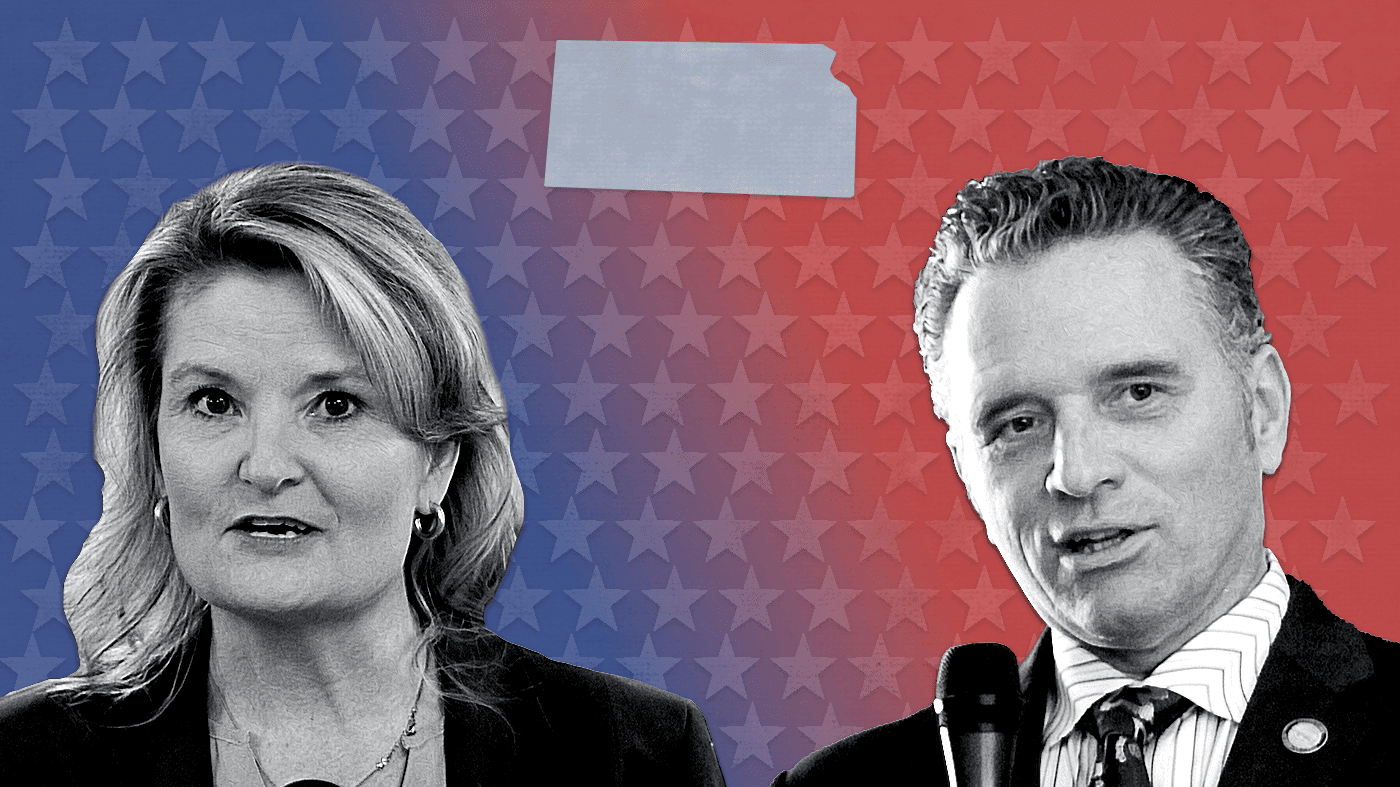
Kansans head to the polls Tuesday to elect their next governor, with two-term Democrat Laura Kelly barred from seeking a third consecutive term. The open race is one of the GOP's most promising pickup opportunities this cycle, even as the national political winds blow against Republicans.
State Senate President Ty Masterson, who has led the upper chamber since 2021, carries the Republican banner. Masterson, endorsed by former President Donald Trump, easily won his primary, defeating financial services executive Philip Sarnecki by more than 20 points. His campaign has focused on tax cuts, school choice, and conservative social policies.
On the Democratic side, state Sen. Cindy Holscher emerged from a competitive primary, beating fellow state Sen. Ethan Corson by roughly 10 points. Holscher, a former engineer, has emphasized protecting public education, expanding Medicaid, and defending abortion access. She faces an uphill battle in a state that has trended red in recent presidential cycles, though Kelly's two victories demonstrated Democratic viability in Kansas.
Polls close at 8 p.m. EST. Early returns are expected shortly after, but the race may take hours to call given the state's mix of urban, suburban, and rural counties. Election officials have reported smooth voting so far, with no major disruptions.
What's at stake
The governor's office in Topeka controls the state budget, appointments to key boards, and veto power over legislation. Kansas has been a laboratory for conservative fiscal policy, including the controversial 2012 income tax cuts that led to budget crises before being partially repealed. Masterson has pledged to pursue further tax reductions, while Holscher warns of repeating past mistakes.
Health care is another flashpoint. Kansas remains one of the few states that has not expanded Medicaid under the Affordable Care Act, a move Kelly repeatedly pushed but the Republican legislature blocked. Holscher supports expansion; Masterson opposes it, citing costs and federal overreach.
Education funding and school choice are also central. Masterson has championed vouchers and charter school expansion, while Holscher argues such measures drain resources from rural public schools.
National implications
The race is being watched nationally as a bellwether for the 2026 midterms. Republicans are defending a narrow House majority and looking to offset expected losses in other states. A win in Kansas would bolster their chances of holding the governor's mansion count, while a Democratic upset would signal resilience despite an unfavorable map.
Recent polling has shown a tight contest, with Masterson holding a slight edge in most surveys. However, independents and suburban women—key to Kelly's past victories—remain up for grabs. Both campaigns have poured resources into the Kansas City and Wichita media markets.
For more on other governor's races, check out California's contest and Georgia's open seat. Also, see how the generic ballot is tightening nationally.
Turnout is expected to be strong, with many counties reporting early voting numbers that surpass 2022 levels. Election night results will be updated live on this page as counties report.