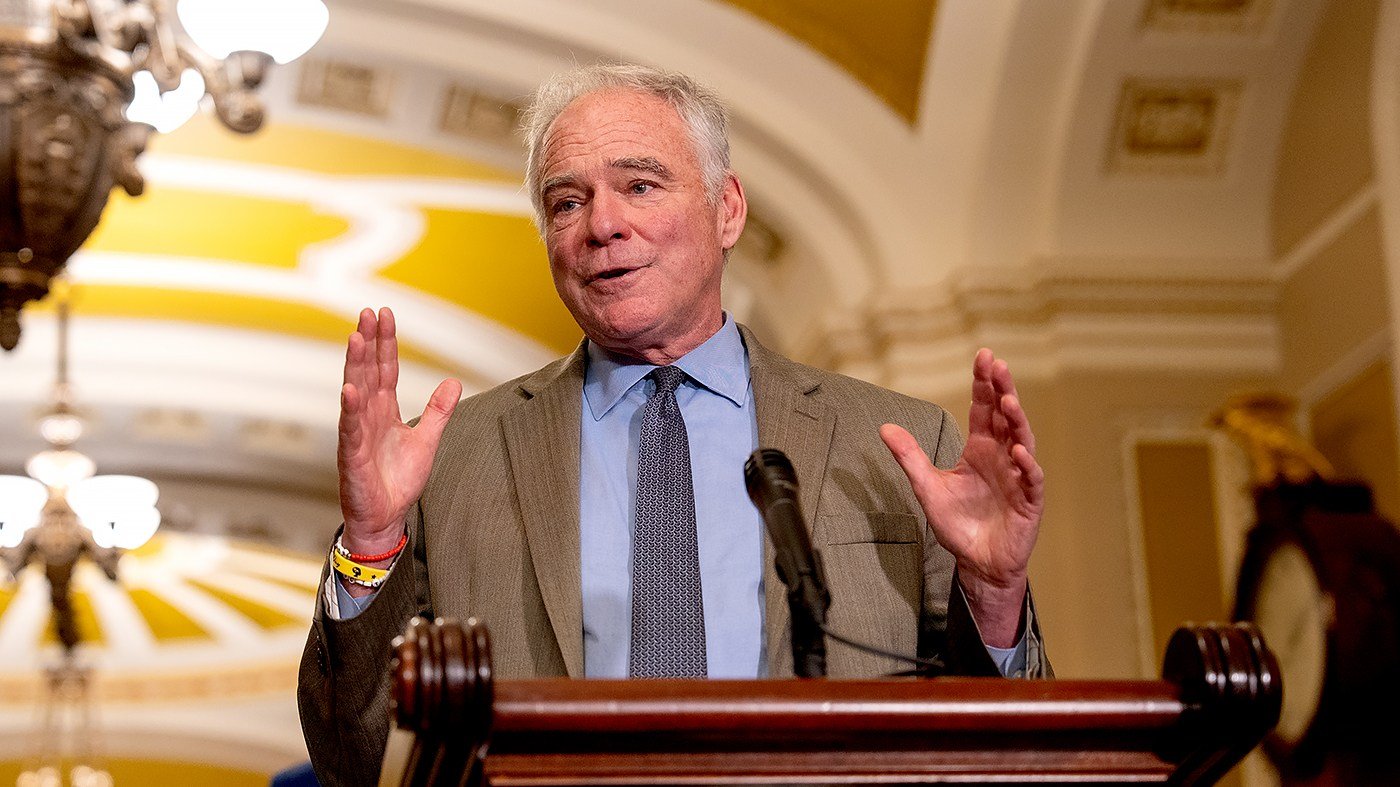
Sen. Tim Kaine (D-Va.) on Wednesday demanded that the Trump administration halt military operations against Iran without delay, intensifying congressional pressure to close out a conflict that has stretched for months. Speaking to reporters on Capitol Hill, Kaine pointed to three House-passed war powers resolutions and argued that the war is now "triply illegal."
Kaine, who authored a Senate war powers resolution that passed in June with support from four Republicans, said the upper chamber is "likely to pass a second one soon." But he conceded that the administration has shown little appetite for bowing to public or legislative pressure.
"The war should end immediately because it's illegal and foolish," Kaine said, adding, "I don't think you can expect the president to do that."
The conflict has drawn mounting criticism over the loss of U.S. service members and the economic fallout, particularly the effective closure of the Strait of Hormuz, a vital oil shipping lane. Global energy prices have spiked, and domestic gas prices have climbed to an average of $4.47 per gallon, up from $3.17 a year ago, according to AAA.
Public opinion has turned sharply against the war. A July Marquette Law School poll found that three-quarters of respondents believed the conflict was "not worth the cost."
President Trump, however, has defended the operation. At a rally in North Carolina last week, he described higher gas prices as "a very inexpensive price to pay for what we've done."
Some Republicans facing tough reelection fights are feeling the heat. Sen. Jon Husted (R-Ohio), locked in a competitive race, told Politico he wants the war to "come to an end as quickly as possible so we can lower gas prices." But his spokesperson indicated he would not back the Democrats' war powers resolution, which lacks the force of law.
Sen. John Kennedy (R-La.) echoed that reluctance, telling CBS News that "we all want the war to end" but rejecting the idea of Congress "pulling the rug out from under our commander in chief." He added, "I think the genesis of most of that is political, and I think it would hurt America."
The standoff sets up a contentious debate as lawmakers weigh competing priorities: ending a costly and unpopular war versus supporting a president who insists on seeing it through. As Democrats press their case, they are also eyeing the political implications, with House Minority Leader Hakeem Jeffries signaling that Iran policy will be a central issue in the upcoming elections.