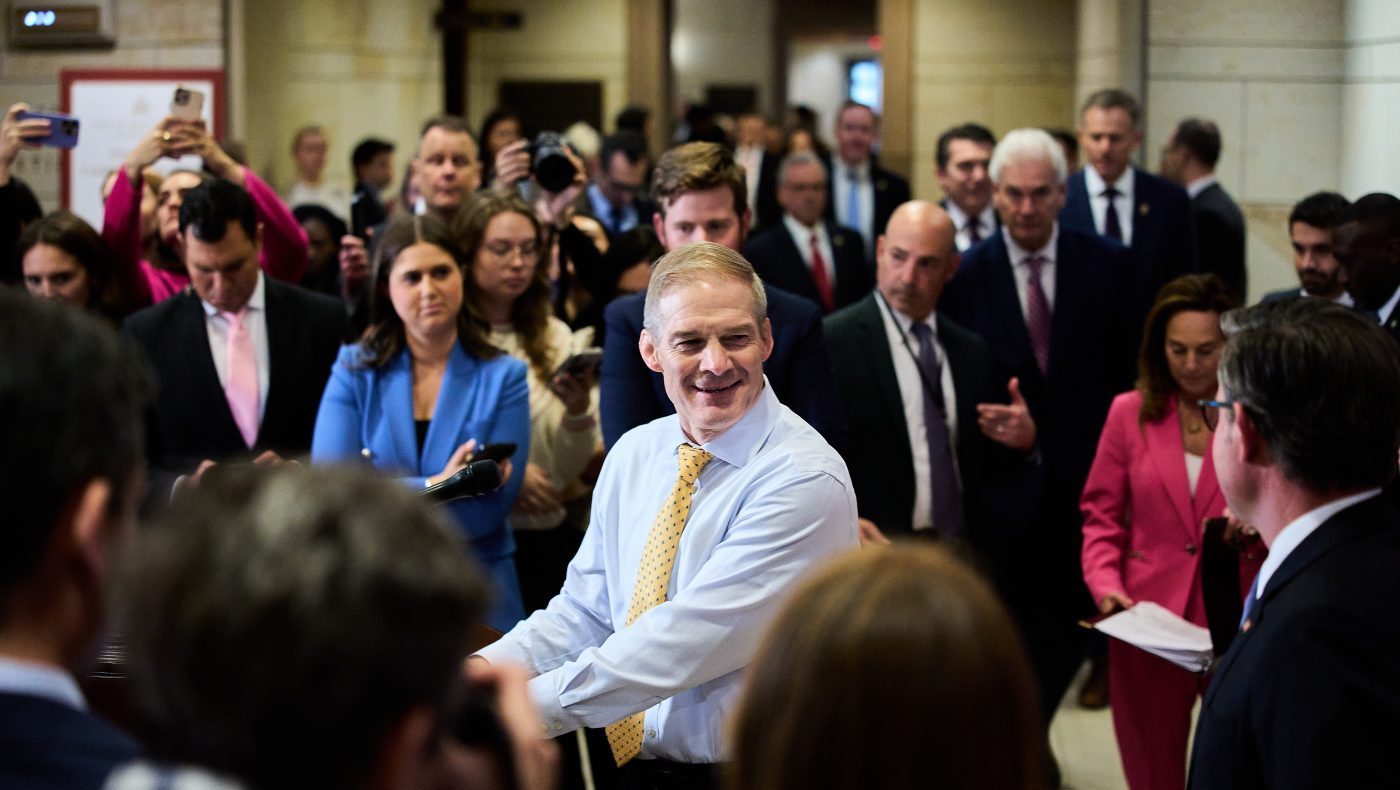
House Republicans voted Tuesday to install Rep. Jim Jordan (R-Ohio) as their new minority leader, a decisive bet that the conservative firebrand and former leadership antagonist can revive a party reeling from a midterm drubbing and searching for a coherent path back to power.
Jordan, who has long been a thorn in the side of GOP establishment, immediately signaled a combative posture toward the incoming Democratic majority. "When Democrats offer more government, we'll offer more freedom," he told reporters after his victory. "And we will bring that fight in committee, on the floor and on the stump every single day."
The Ohio Republican's rise marks a striking turn for a man who built his career challenging party leaders rather than joining them. As a co-founder of the far-right House Freedom Caucus, he has repeatedly clashed with GOP leadership over spending and tactics. Now, he inherits a conference that is deeply divided over the causes of its defeat and the way forward, while also facing pressure to defend former President Trump amid Democratic promises of investigations.
Republicans said the scale of the losses tipped the race in Jordan's favor over Rep. Steve Scalise (R-La.), the outgoing majority leader whose long tenure in leadership became a liability. "He represents change," said Rep. Darin LaHood (R-Ill.). "He also has a very detailed plan on how we get out of the minority. He has excellent communication skills. He's viewed as a fighter, which he is, and I think the conference was ready for a different direction." LaHood added that if the election had been closer, the outcome might have been different.
Jordan's victory was not a complete overhaul of the leadership team. Rep. Tom Emmer (R-Minn.) fended off a challenge from Rep. August Pfluger (R-Texas) to retain his whip post, and Rep. Lisa McClain (R-Mich.) kept her role as conference chair after beating back Reps. Greg Steube (R-Fla.) and Erin Houchin (R-Ind.). Emmer, after his win, vowed that the leadership team would "expose the Democrats' lies and show the American people their true colors as the radical communists that they are."
Notably, Trump stayed out of the leadership races, an unusual move for a former president who has often wielded influence in such contests. Many Republicans blame Trump's policies—particularly the Iran war, global tariffs, and a deportation surge—for dragging down the party in the midterms. Some said they chose Jordan because he expressed a willingness to break with the former president on certain issues.
Rep. Rich McCormick (R-Ga.) said he asked Jordan how the conference would handle "a president who we're not sure how he's going to go forward." McCormick said Jordan's answer impressed him: "Instead of waiting to see what the president's going to say, we lead. We lead with a message based on what we want to say." McCormick stressed the importance of independent thinking, saying, "We're not a cult. If everybody in the church agrees with everything the minister says, you're in a cult. We are not a cult."
The transition from Speaker Mike Johnson (R-La.) to Jordan could not be more stark. Johnson is a prim, bespectacled constitutional lawyer who often quotes Scripture and pledges "servant leadership." Jordan, a former champion wrestler, is known for his muscular build, casual attire, and combative style from his perch on the Judiciary Committee. The contrast underscores the shift in the conference's mood: from a more reserved, institutional approach to an aggressive, take-no-prisoners strategy.
Jordan's immediate challenge is to unify a party that is still nursing its wounds and pointing fingers. He must also craft a message that can win back voters who abandoned the GOP, particularly among Hispanic communities, as exit polls showed significant erosion. At the same time, he must navigate the shadow of Trump, who has already begun to revive election fraud claims after the losses. Jordan's ability to balance these pressures will determine whether he can lead his party back to the majority in 2028.