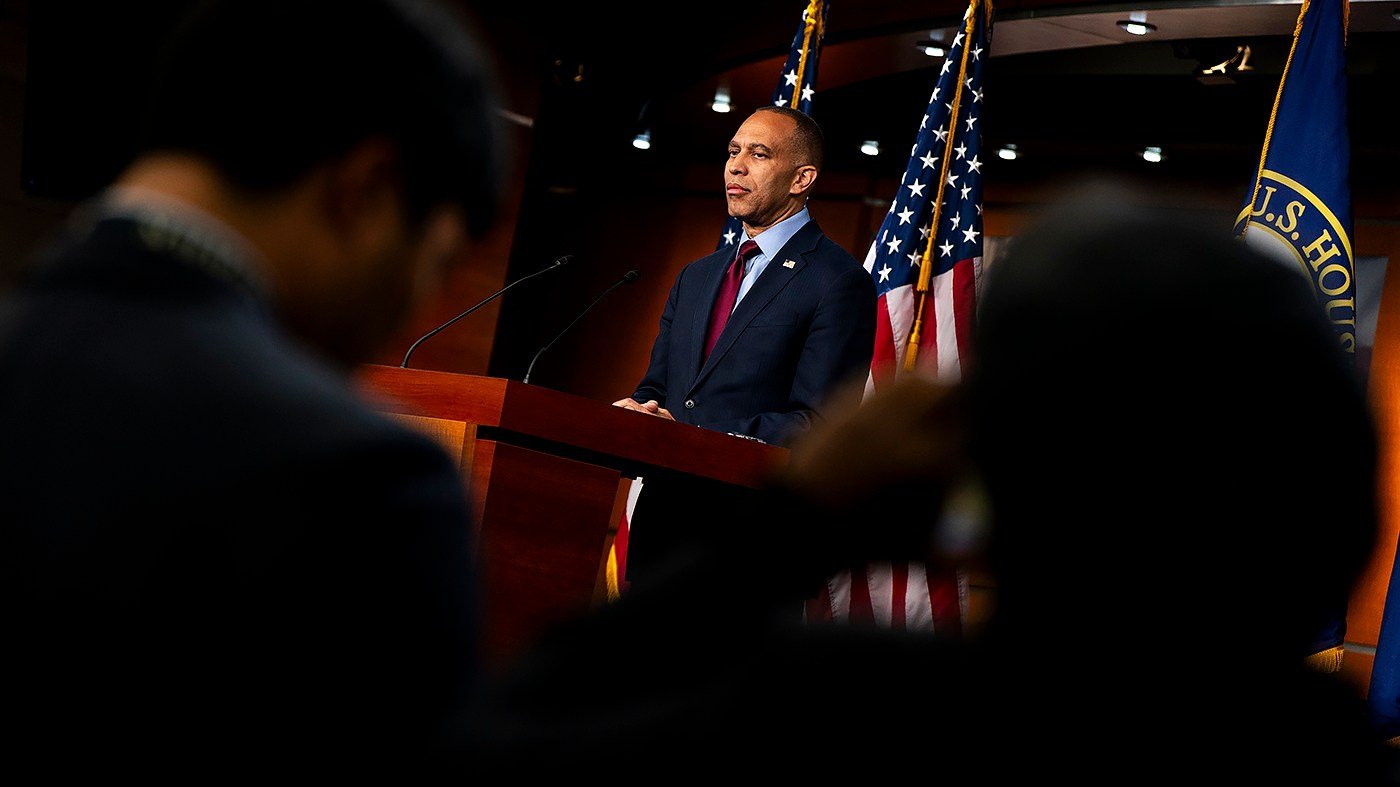
House Minority Leader Hakeem Jeffries (D-N.Y.) is set to address reporters Thursday, offering a window into Democratic strategy as the party braces for a divided government and a narrow House majority in January. The press conference comes at a fraught moment: lawmakers face a government shutdown deadline, a contentious fight over energy permitting, and a slate of potential investigations targeting the incoming administration.
Jeffries, who is widely expected to claim the Speaker’s gavel when the new Congress convenes, must also manage intraparty friction. His caucus is scheduled to hold leadership elections on Nov. 18-19, and while no serious challenger has emerged, progressive and moderate wings are jockeying for influence over the party’s agenda. The New York Democrat has sought to project unity, but the lame-duck session is testing that resolve.

The immediate legislative crunch centers on keeping the government funded past the current deadline. With Republicans still controlling both chambers until January, any deal will require bipartisan cooperation. Jeffries has signaled that Democrats will press for provisions that shield their priorities, including protecting the Affordable Care Act and resisting deep cuts to social programs, even as they negotiate with GOP leaders.
Energy permitting reform is another flashpoint. Progressive lawmakers are pushing for stricter environmental reviews, while moderates and industry allies want faster approvals for transmission lines and renewable projects. Jeffries has tried to bridge the divide, but the issue could stall must-pass legislation and expose fractures in the party’s climate coalition.
The failed impeachment effort against Defense Secretary Pete Hegseth has also left a mark. Although the move collapsed, Democrats have vowed to continue oversight of his tenure. Jeffries is likely to face questions about whether the party will pursue further probes once it controls committee gavels, particularly into Pentagon spending and civilian-military relations. Some members have already signaled they will revive scrutiny of Hegseth’s record and the broader defense agenda.
Beyond immediate tactics, Jeffries is positioning Democrats to capitalize on their electoral gains. Recent special election wins have energized the caucus, and leaders are framing the new majority as a mandate to address kitchen-table issues like affordability and infrastructure. But the party also faces pressure to deliver tangible results quickly, especially with a narrow margin that leaves little room for defections.
Internal dynamics are further complicated by jockeying in the Senate. While Jeffries focuses on the House, Senate Democrats are navigating their own leadership questions, with some progressives challenging the status quo. The two chambers will need to coordinate messaging to avoid mixed signals on key votes.
Observers expect Jeffries to use Thursday’s appearance to outline a “people-first” agenda, emphasizing job creation, healthcare access, and democratic reforms. He may also preview early legislative pushes, such as voting rights protections and anti-corruption measures, which are popular with the base but face steep odds in a divided government.
The press conference, scheduled for 11 a.m. EST, will be closely watched for signals on how Democrats intend to wield their new power—and whether they can avoid the internal strife that often plagues narrow majorities. For now, Jeffries is projecting confidence, but the lame-duck period will test his ability to keep his caucus aligned.