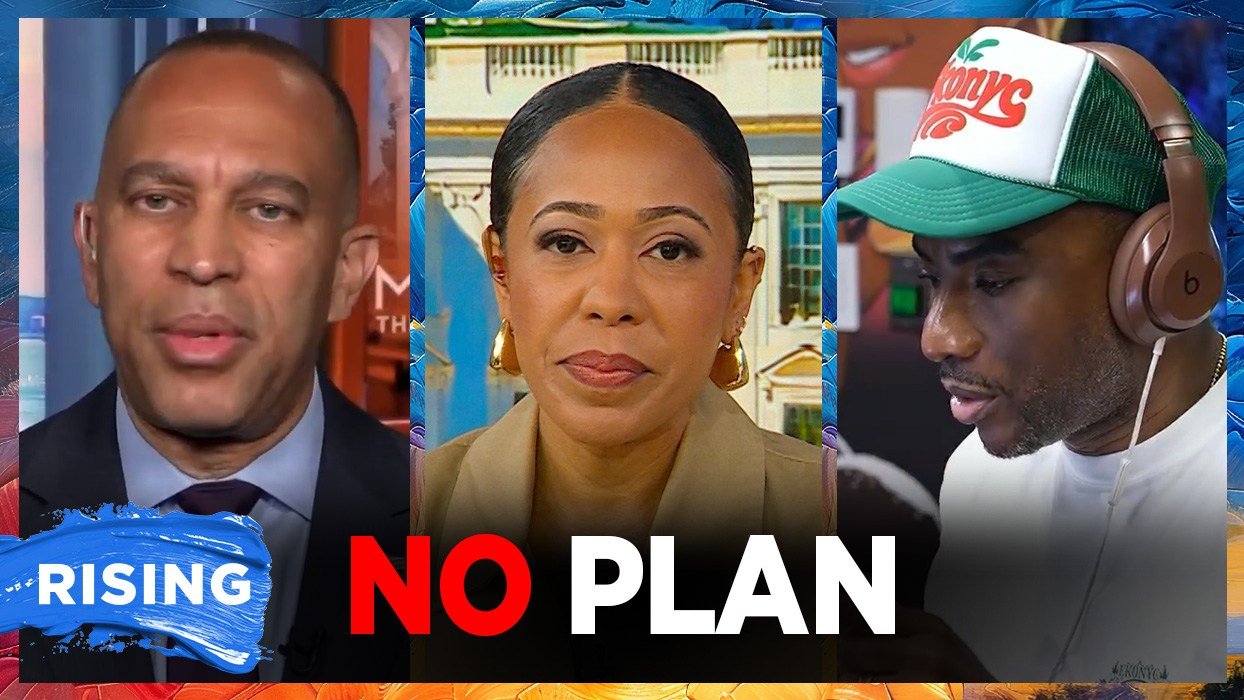
House Minority Leader Hakeem Jeffries is under fire after telling NBC's "Meet the Press" that he no longer backs Medicare for All, a stance he once championed as a co-sponsor of the 2019 legislation. The about-face has drawn sharp criticism from media personality Charlamagne tha God, who awarded Jeffries his infamous "Donkey of the Day" segment, calling out the New York Democrat for what he sees as a politically convenient flip.
Charlamagne's critique taps into a broader frustration among progressive voters who view the shift as a betrayal of a core policy promise. "If a political leader as powerful as Hakeem Jeffries changes position on a major issue, voters deserve more than a pivot," he said on his show. "They deserve the why and, more importantly, the what now."
The reversal is particularly notable given the political landscape. Recent polling shows strong public appetite for government-backed health coverage. A 2025 Data for Progress survey found 65 percent of likely voters support Medicare for All when it's described as replacing most private insurance. Pew Research similarly reports that 66 percent of Americans believe the federal government has a responsibility to ensure everyone has health coverage.
Cost remains a pressing issue. The Kaiser Family Foundation found that 36 percent of adults have skipped or postponed needed care due to expense. With the government shutdown earlier this year partly tied to health care spending, and premiums continuing to climb, voters are demanding concrete solutions rather than vague promises.
Jeffries' shift has also fueled chatter among progressives who see it as a sign of his positioning ahead of a potential House majority bid. Some argue the progressive primary wins have put Jeffries on notice, signaling that he must address the left's priorities or risk losing their support.
Charlamagne's challenge is direct: If Medicare for All is off the table, what is the alternative? He points out that the government shutdown over health care costs yielded no change, and costs have only risen. "Do the new options Jeffries has in mind offer lower premiums, cheaper prescriptions, or protection from medical debt?" he asked. "We have been fighting about lackluster health care options for decades in this country."
The broader political stakes are high. Health care consistently ranks as a top voter concern, and Democrats are eager to avoid repeating past messaging failures. Some strategists warn that turning policy failures into political wins is a risky strategy, especially when the public is looking for actionable fixes.
For Jeffries, the pressure is mounting. He must articulate a clear, viable health care plan that addresses affordability and access, or risk alienating the very voters he needs to secure a majority. As Charlamagne put it, "Americans are already paying the price of a health care system they believe is broken. Blaming the other party alone doesn't answer the question all voters are asking at this point: What exactly is your solution?"
The debate also intersects with other health-related controversies, such as Trump's vaccine order undermining public health consensus, which has further polarized health policy discussions. Jeffries' next steps will be closely watched by both allies and critics.