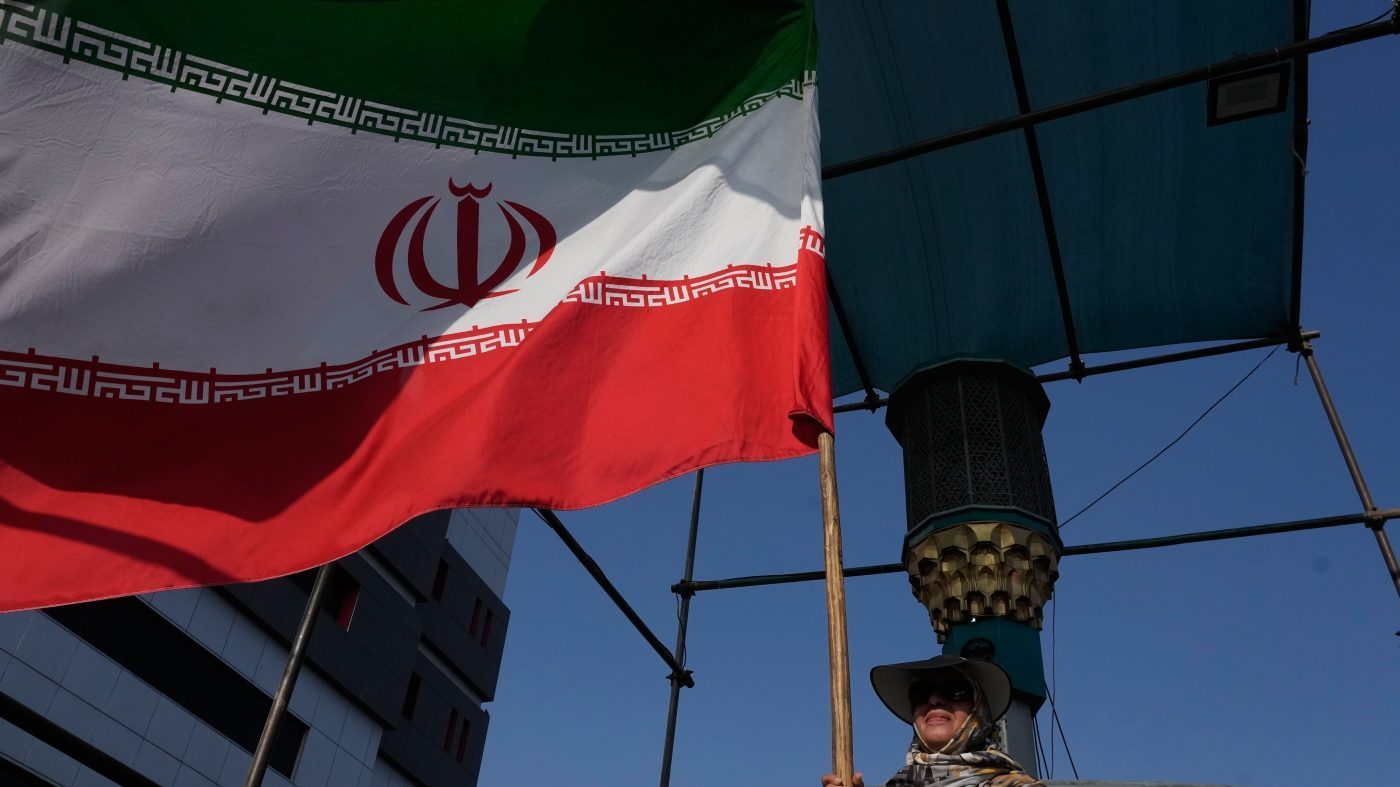
Iran has threatened to strike back after the Trump administration on Monday rolled out a broad new sanctions campaign designed to sever the Islamic Republic from global markets and intensify pressure to end the nearly six-month-old conflict and reopen the Strait of Hormuz.
Treasury Secretary Scott Bessent provided scant specifics on what he dubbed "Operation Economic Outcast" in remarks that were eagerly awaited following President Trump's recent warning of an "Economic D-Day" against Tehran. Bessent urged nations worldwide to cut all financial ties with Iran or face exclusion from the U.S. dollar system.

Iranian Economy Minister Ali Madanizadeh told state television that Tehran is "fully prepared for the U.S. sanctions." He added, "Our defense is no longer defensive; the enemies should wait for an attack," according to Reuters.
Bessent declined to name specific countries on Monday, saying the administration is "giving everyone the opportunity to remedy bad behavior." He also offered no deadline for compliance, stating, "We're not going to name names. We've already seen some results, and I am confident the president, as you all know, is quite persuasive."
China, the largest buyer of Iranian oil, responded on Tuesday, asserting that the new sanctions "will only further intensify tensions." Foreign military spokesperson Lin Jian said during a press briefing, "China's cooperation with Iran has always been conducted within the framework of international law and should not be disrupted or undermined." He added that Beijing is "closely following" the U.S. economic campaign and "will take all necessary measures to firmly safeguard its own rights and interests."
Iranian President Masoud Pezeshkian pushed back against what he called "bullying" from the U.S. during a meeting with Pakistan's army chief, Field Marshal Asim Munir, as reported by ISNA news agency. Pezeshkian insisted the U.S. "must change its tone" in negotiations mediated by Pakistan, warning that "reliance on coercion and bullying will only complicate the implementation" of a memorandum of understanding signed in June. He later stressed that Tehran would "overcome all forms of pressure and threats" from Washington.
The escalation comes amid a broader trade war with Canada, where Trump and Bessent have doubled down on Iran sanctions even as the conflict drags on. The administration's aggressive posture also echoes its recent moves to strip Syria's terrorism designation, signaling a broader reshaping of Middle East policy.
Analysts note that the success of "Operation Economic Outcast" hinges on whether key buyers like China and Turkey will comply, and whether the threat of losing access to the dollar system is credible. The administration's refusal to name offenders suggests a diplomatic campaign that may rely more on pressure than public shaming.
As the standoff intensifies, the risk of direct military confrontation remains high, with Iran's leadership vowing that its defense strategy is now offensive. The coming weeks will test whether economic coercion can achieve what months of war have not: a reopening of the Strait of Hormuz and a halt to hostilities.