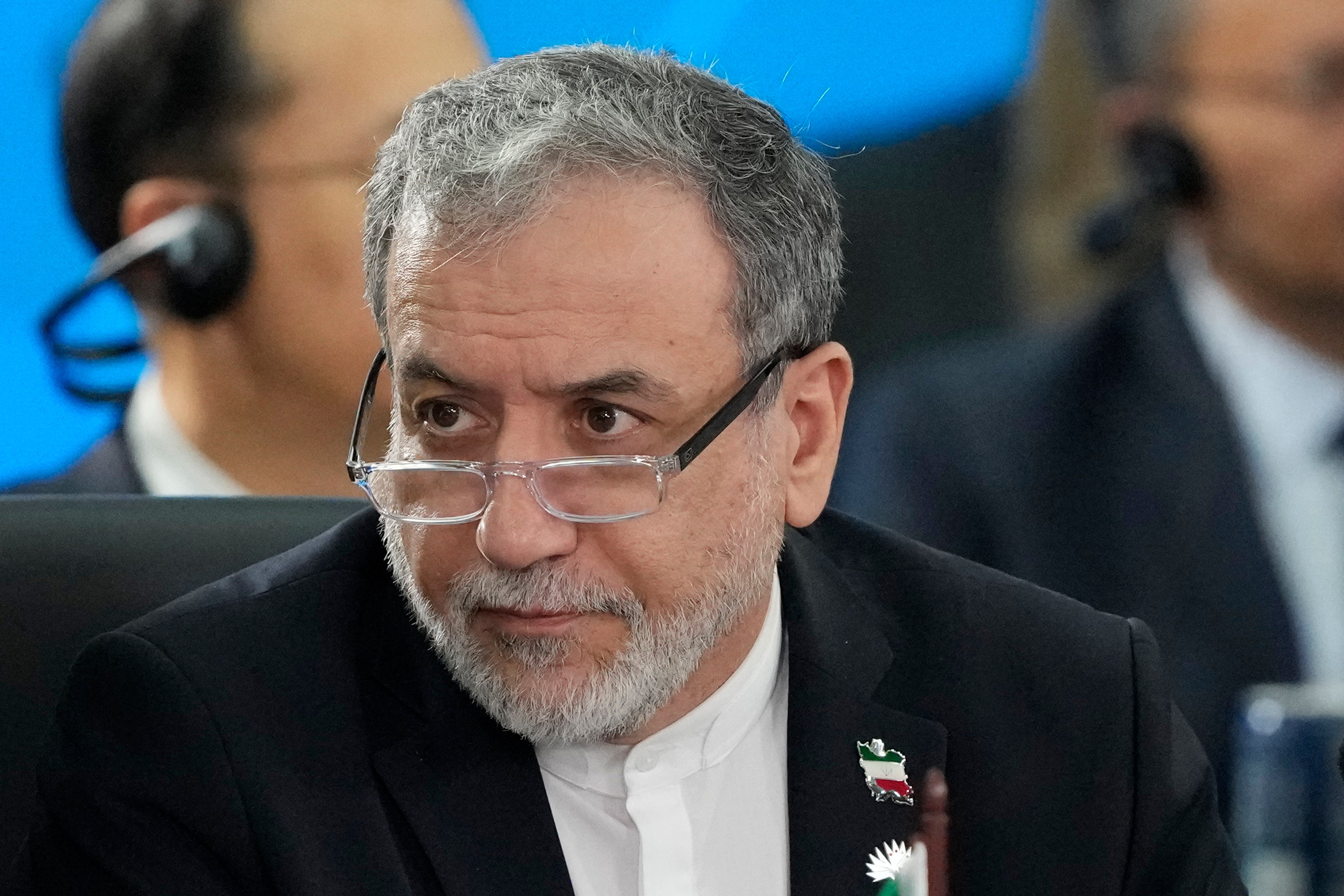
Iran's Foreign Minister Seyed Abbas Aragachi on Thursday pushed back against President Trump's pledge of an "Economic D-Day" against Tehran, arguing that the pressure campaign will only deepen America's own economic woes. In a post on X, Aragachi framed the threat as a distraction from the United States' mounting fiscal troubles, pointing to record national debt and rising interest costs.
"The so-called 'Economic D-Day' is a diversion from America's own crisis: unprecedented debt & surging interest costs," Aragachi wrote. He added that "doubling down on failed policies will only bring further defeat—and enmity of Iranians."
Aragachi's remarks came a day after Trump issued a sweeping ultimatum on Truth Social, vowing to choke off Iran's economy through a comprehensive isolation campaign. "Oil smuggling, swap lines, cash transfers, exchange houses, ship registries, front companies — It all needs to stop NOW," Trump wrote. "You know who you are. This will be an ECONOMIC D-DAY, and we need all of our Allies to stand with the United States of America to isolate, and defeat, the Iran threat."
Trump warned that any nation attempting to undermine the isolation measures would face "TREMENDOUS Economic Consequences." Over the past six months, his administration has moved to block Iranian vessels from transiting the Strait of Hormuz and has expanded sanctions to cut off Tehran's profitable trade routes.
However, the aggressive posture abroad comes as the U.S. national debt crossed the $40 trillion mark on Tuesday. Direct military spending on the conflict, coupled with rising inflation, higher oil prices, and surging interest rates, has accelerated federal borrowing. Higher bond yields and increased borrowing costs from the war are rippling through federal, business, and household loans alike.
The economic strain is not lost on the American public. A Marquette Law School Supreme Court poll released earlier this month found that 75% of respondents described the fighting in the Middle East as "not worth the cost," while only 25% said it has been worth it. The survey highlights growing war fatigue as the administration pushes for economic escalation.
Efforts to contain Iran's economy also come amid broader fiscal concerns. The Federal Reserve's recent minutes showed growing support for further rate hikes, a move that could exacerbate debt servicing costs. Trump has downplayed bond market alarm and renewed his push for Fed rate cuts, but the central bank's trajectory remains uncertain.
Meanwhile, diplomatic channels remain active. On Monday, Trump's son-in-law Jared Kushner said talks toward ending the war in Iran have been "robust," and the president has contended that negotiations leading to a ceasefire are underway. Trump expressed hope that talks could resume next month, though no concrete timeline has been set.
Analysts note that the administration's dual track of maximum pressure and tentative diplomacy mirrors past confrontations, but the fiscal backdrop is more precarious. With the debt ceiling debate looming and interest payments consuming a growing share of the budget, some economists question whether Washington can sustain both a costly foreign campaign and domestic economic stability.
Iran's foreign minister, for his part, seems to be betting that the U.S. is overextended. His dismissal of the "Economic D-Day" threat reflects a broader narrative in Tehran that America's economic vulnerabilities will ultimately constrain its military and diplomatic options.