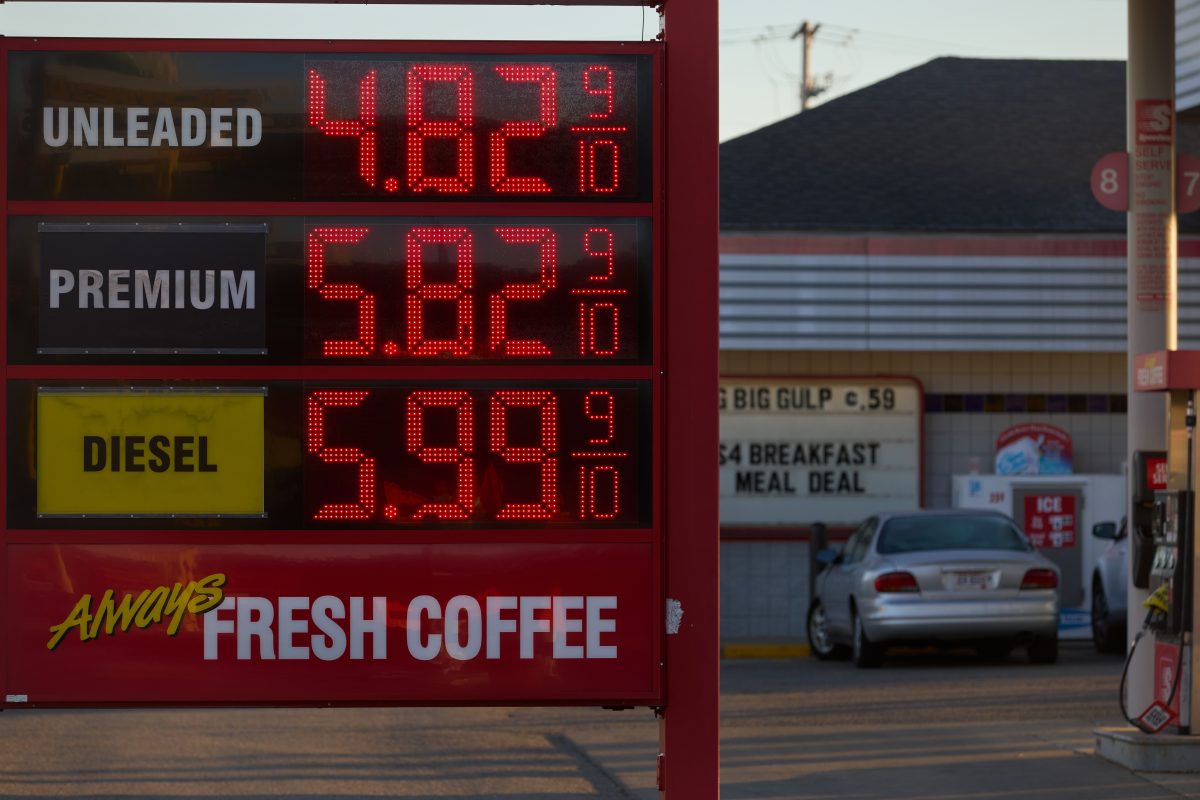
Inflation in the United States has hit its highest level in three years, with gasoline prices bearing the brunt of the surge. White House senior counselor for trade and manufacturing Peter Navarro argues that the culprit is not President Donald Trump's economic agenda but rather Iran's campaign of maritime terrorism in the Strait of Hormuz, a critical energy chokepoint.
Iran has been deploying anti-ship ballistic missiles, cruise missiles, drones, fast attack boats, and mines to disrupt oil shipments through the strait, according to Navarro. He contends that Tehran's aggression is a direct response to Trump's demand that Iran halt its nuclear weapons development—a stance no previous American president has taken.
The core issue, Navarro writes, is not whether the United States should confront Iran but how long it can avoid doing so. For nearly 50 years, Iran has attacked Americans directly and through proxies such as Hamas, Hezbollah, and the Houthis, as well as through terror networks it arms, funds, trains, and protects.
Navarro catalogs a litany of Iranian attacks: the 1979 seizure of the U.S. Embassy in Tehran and 444-day hostage crisis; the 1983 bombing of the Marine barracks in Beirut that killed 220 Marines, 18 sailors, and three soldiers; the 1996 Khobar Towers bombing in Saudi Arabia that killed 19 American airmen; and the use of explosively formed penetrators in Iraq that killed or maimed hundreds of U.S. troops. The American body count from Iran's actions exceeds 600, he notes.
More recently, Iran has fired ballistic missiles at U.S. forces in Iraq, including at Ain al-Asad and Erbil in 2020, leaving over 100 troops with traumatic brain injuries. In 2024, an Iranian-backed militia drone struck Tower 22 in Jordan, killing three American soldiers and wounding dozens. The pattern, Navarro argues, is unmistakable: Iran takes hostages, bombs barracks, funds militias, plots assassinations on U.S. soil, and turns sea lanes into weapons.
Iran's missile strikes have also targeted Israel, hitting near Tel Aviv, Haifa, and close to nuclear infrastructure at Dimona and Arad. In the Gulf, Iran has attacked the U.S. Fifth Fleet in Bahrain, the Bapco refinery in Bahrain, Saudi Arabia's Shaybah oil field, Prince Sultan Air Base, and the Fujairah oil zone in the UAE. It has threatened Kuwait International Airport, residential areas in Kuwait, and Qatari and Omani ports. Even Diego Garcia, a joint U.S.-U.K. base in the Indian Ocean 2,500 miles from Iran, was targeted in March with intermediate-range ballistic missiles.
Navarro warns that this is the record without nuclear weapons. Allowing Iran to develop atomic arms and long-range ballistic missiles, he argues, would be catastrophic. Critics say war is expensive, but Navarro counters that delay is more costly, especially as Iran's missile range and capability grow.
The political calculus, Navarro asserts, is that Iran seeks to outlast the U.S. politically rather than defeat it militarily. He accuses Democrats and legacy media of becoming “useful idiots” in Iran's effort to manipulate the November election. If voters blame Trump for inflation caused by Iranian aggression, Navarro says, “Iran wins twice”—first by raising the cost of living, then by turning that pain into political pressure against the president confronting them.
The choice for voters, Navarro concludes, is between blaming the “arsonist in Tehran” or the “firefighter in the White House.” He is speaking today at The Hill's Invest in America Summit.
Meanwhile, the Trump administration faces other challenges, including Canada's push for a 16-year USMCA renewal amid tariff pressures and bipartisan alarm over Trump tapping Housing Chief Pulte to lead intelligence. In the Senate, Trump-backed candidate Alme leads the GOP primary to replace retiring Senator Daines in Montana.