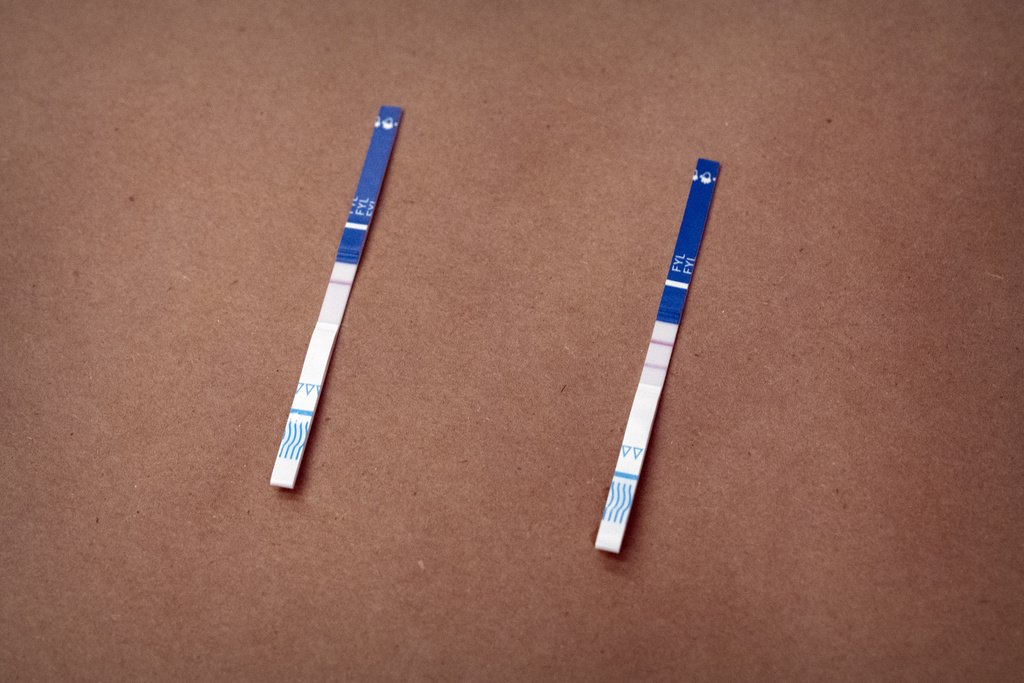
The Department of Housing and Urban Development is drawing a hard line on drug paraphernalia in its latest $4.04 billion overhaul of the Continuum of Care program, the federal government's primary homelessness assistance initiative. But critics argue that in doing so, Washington is conflating a glass crack pipe with a fentanyl test strip—a cheap piece of paper that research shows saves lives.
Ball State University economist David Mitchell, who co-authored a study on fentanyl test strips, says the distinction matters. "A test strip tells a user what they're about to take," Mitchell writes. "That information saves lives." His research, published in Medical Care Research and Review, found that states legalizing the strips saw drug-related mortality drop by roughly 7 percent—a measurable effect from a tool that costs about a dollar.

HUD's new funding notice, rolled out this month, ends the "housing first, questions never" approach that defined federal homelessness policy for two decades. Instead, it redirects money toward treatment, transitional housing, and recovery. It also bars funding for programs that facilitate illicit drug use or distribute paraphernalia. The shift reflects a growing bipartisan consensus that unconditional housing alone failed to address the addiction and mental health crises driving record homelessness.
Mitchell, a policy economist, largely supports the reform. "Taxpayers spent billions on the theory that handing someone an apartment, no strings attached, would fix a crisis driven by addiction and mental illness," he writes. "Homelessness rose to record levels anyway. Tying dollars to performance and putting recovery first is overdue."
But the problem, he argues, is that the new rules sweep fentanyl test strips into the same category as pipes and syringes. The Substance Abuse and Mental Health Services Administration issued similar guidance in April, barring federal grant funds from purchasing the strips for public distribution. This puts federal policy at odds with 45 states and the District of Columbia, which have already excluded test strips from their paraphernalia statutes.
The backlash against harm reduction is understandable, Mitchell acknowledges. Some programs have distributed "safer smoking kits"—glass pipes, mouthpieces, screens—under the theory that smoking is less risky than injecting. Voters reasonably concluded their tax dollars were normalizing addiction. But a fentanyl test strip is different. "It facilitates nothing except an informed decision," he writes.
In legal markets, product quality is enforced by regulators and brand reputation. In black markets, none of that exists, which is why street drugs are routinely laced with fentanyl, a synthetic opioid up to 100 times stronger than morphine. A test strip is a crude substitute for the quality information every legal market provides. "It does not bless the transaction; it removes some of the deadly ignorance surrounding it," Mitchell notes.
The objection that test strips send the wrong message—that the goal should be abstinence and recovery—misses a key point. "Dead people do not enter treatment," Mitchell writes. "Recovery is a process, often with relapses along the way, and a fatal overdose ends it permanently. A test strip is not an alternative to treatment; it is what keeps people alive long enough to accept it."
The broader political context is fraught. The Supreme Court's recent birthright citizenship ruling has exposed deeper divides over national identity, while the NAACP is launching a record $20 million midterm push after a voting rights blow. But on drug policy, the administration's bright line risks erasing a crucial distinction between enabling use and preventing death. As Mitchell puts it: "Keep the test strips. They cost about a dollar, and they keep people alive—including the people we hope will walk through the door of a treatment program."