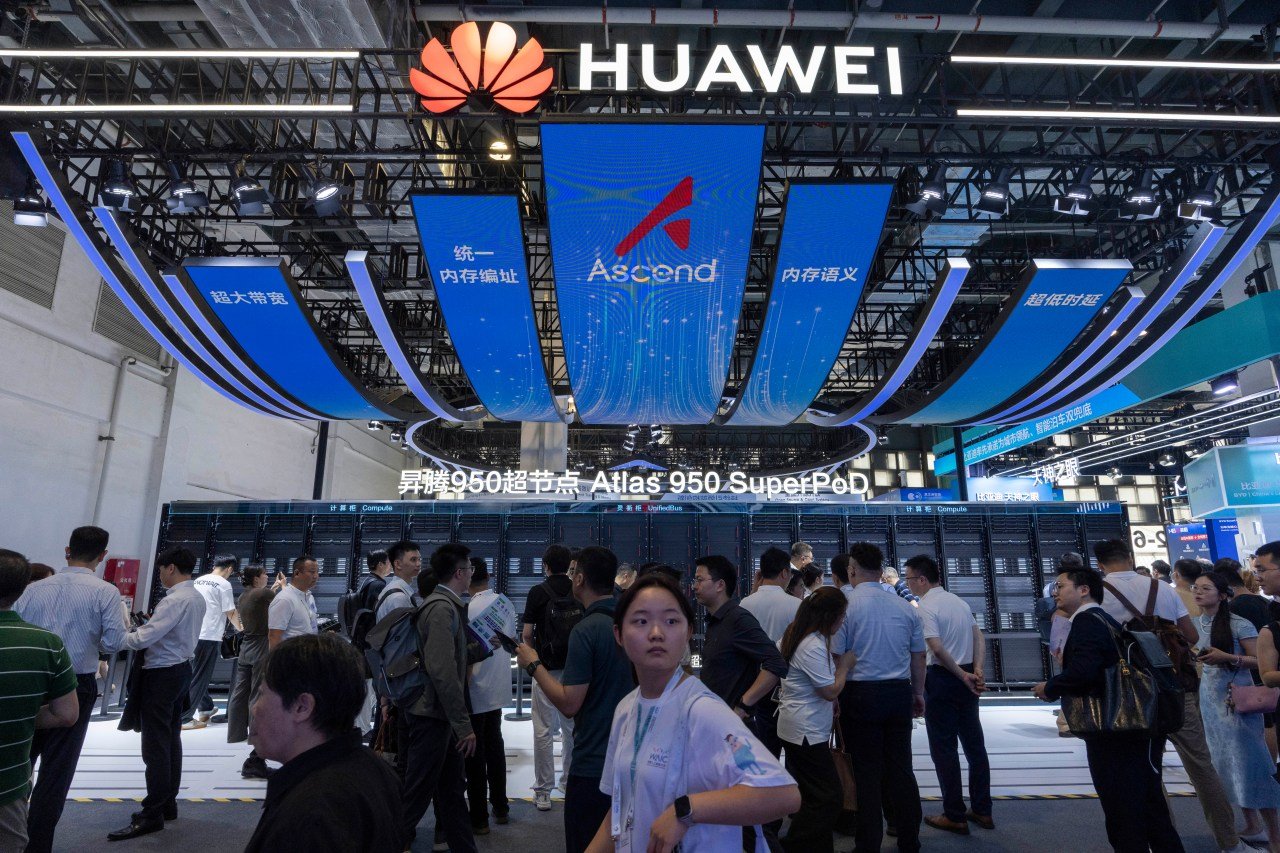
Chinese tech giant Huawei unveiled a suite of new chip technologies on Thursday, directly challenging U.S. leaders like Nvidia and underscoring Beijing's accelerating push for self-reliance in artificial intelligence. The announcement, made at Huawei's flagship conference in Shanghai, lands just days before President Donald Trump is slated to meet Chinese President Xi Jinping in Washington on September 24.
The timing is not coincidental, according to analysts. "The timing — less than two weeks before President Xi Jinping's visit to Washington — underscores Beijing's confidence and ambition in technology and innovation," said George Chen, a partner and chair of digital practice at The Asia Group consultancy.

Huawei introduced the Atlas 960 SuperPoD computing cluster, a faster successor to the Atlas 950 SuperPod launched late last year. The new system promises significant gains in AI training and inference—the process by which trained models make predictions or decisions. Huawei also mapped out a roadmap for the Ascend 970 and 980 chip series, slated for release in 2028 and 2029, with expectations of major leaps in computing power.
The rapid iteration cycle—just months after the previous model—raised eyebrows among tech analysts. "The fact that Huawei achieved this upgrade in just a year, far quicker than before, will only heighten U.S. anxiety about the accelerating AI competition," Chen added.
Huawei's advances come amid a U.S.-led export control regime that bars China from accessing the most advanced AI chips and chipmaking equipment. Washington's restrictions have pushed Chinese firms to develop domestic alternatives, a trend that is reshaping the global semiconductor landscape. Analysts note that while Chinese AI model training still heavily relies on U.S. chips—particularly Nvidia's—Huawei's homegrown processors are gaining traction among domestic AI companies.
President Trump, for his part, has downplayed calls from AI leaders to slow development for safety reasons, insisting the U.S. must retain its edge over China. "Whoever wins in AI, wins," Trump said, reflecting his administration's view of AI as a zero-sum contest. But as Huawei's latest release demonstrates, the race is far from settled. "AI developments move so quickly that no one can be certain of holding the lead forever," Chen cautioned.
The political stakes are high. The upcoming Trump-Xi meeting will likely touch on trade, technology, and security, with Huawei's progress serving as a backdrop. For Washington, Huawei's rapid innovation is a reminder that export controls alone may not be enough to preserve U.S. dominance. For Beijing, it is a signal that China intends to compete at the highest levels of AI, regardless of external pressure.
Huawei's new chips also carry implications beyond geopolitics. The company's push into advanced AI hardware could accelerate the adoption of domestic chips across China's tech sector, potentially shifting the global supply chain. As one industry observer noted, "Huawei is not just catching up; it is setting the pace for Chinese innovation."
With the Atlas 960 and the upcoming Ascend series, Huawei is making a clear statement: the AI race is no longer a one-horse affair. Whether the U.S. can maintain its lead remains an open question, but the answer will shape the technological and economic balance of power for years to come.