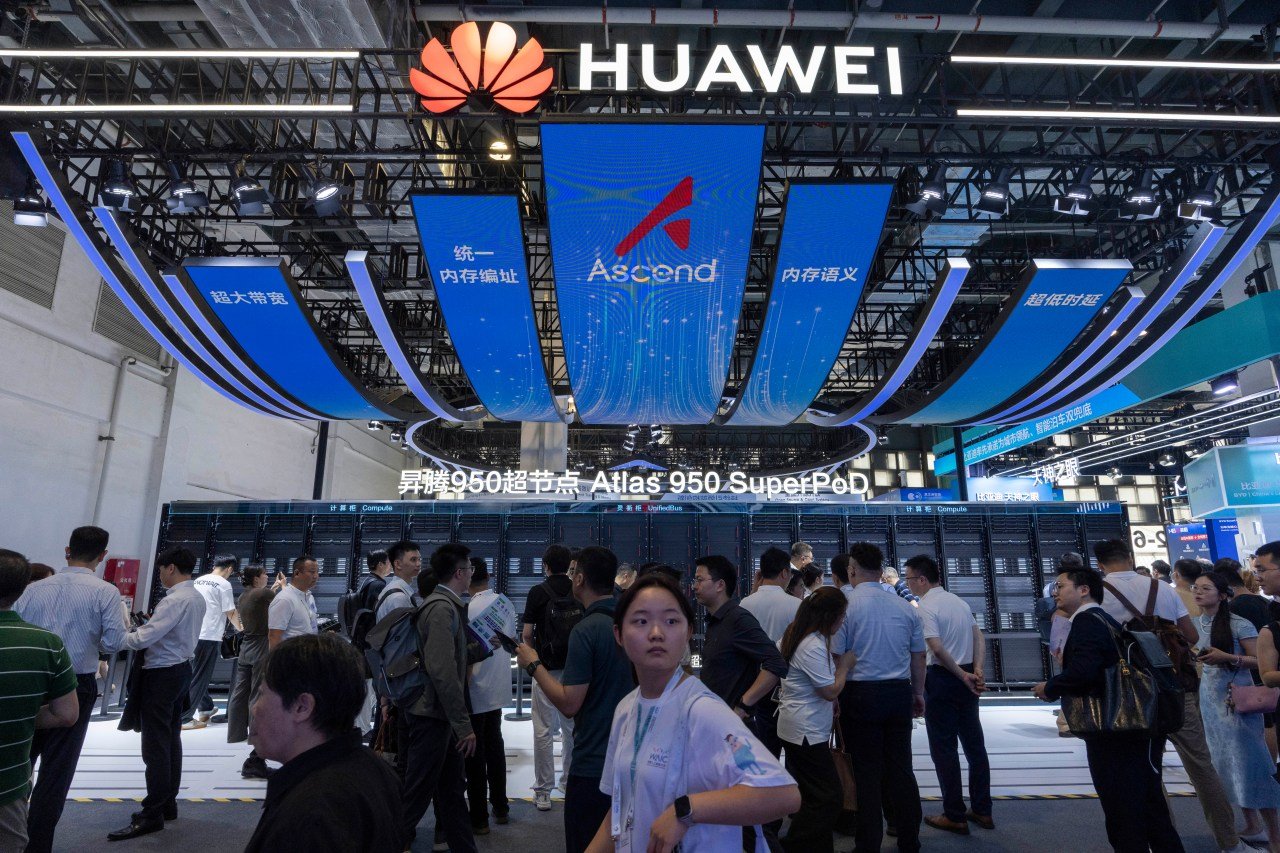
Chinese tech giant Huawei unveiled a suite of new chip technologies on Thursday, escalating its challenge to global leaders like Nvidia and underscoring the rapidly shrinking technological gap between China and the United States in artificial intelligence.
The announcement, made at Huawei's annual flagship conference in Shanghai, lands just days before a scheduled meeting between U.S. President Donald Trump and Chinese President Xi Jinping in Washington on Sept. 24. The timing is widely seen as a deliberate signal of Beijing's confidence in its tech sector amid ongoing U.S.-led export controls.

New Hardware and Roadmap
Huawei introduced the Atlas 960 SuperPoD, an advanced computing cluster that succeeds the Atlas 950 SuperPod launched only months ago. The new system promises significant gains in AI training and inference—the process by which trained models make predictions or decisions. The company also laid out a roadmap for its Ascend 970 and 980 chip series, slated for release in 2028 and 2029, with steep expected increases in computing power.
Analysts note that Huawei's rapid iteration—upgrading its flagship cluster within a year—signals a faster development cycle than in the past. George Chen, a partner and chair of digital practice at The Asia Group consultancy, said the move "will only heighten U.S. anxiety about the accelerating AI competition." He added that the timing, "less than two weeks before President Xi Jinping's visit to Washington, underscores Beijing's confidence and ambition in technology and innovation."
U.S.-China Tech Rivalry
The launch comes against a backdrop of escalating U.S. restrictions that have barred Chinese firms from accessing the most advanced AI chips and cutting-edge chipmaking equipment. Washington argues these measures are necessary to protect national security, but Beijing views them as an attempt to stifle its technological rise. In response, China has poured resources into achieving self-reliance in semiconductors, with Huawei at the forefront.
President Trump has downplayed concerns raised by AI leaders about the pace of development, insisting that the U.S. must retain its lead over China. "Whoever wins in AI, wins," he said recently. But as Chen pointed out, "AI developments move so quickly that no one can be certain of holding the lead forever."
Domestic Chip Adoption
Despite Huawei's progress, analysts caution that China's AI model training still heavily depends on U.S. chips, particularly those from Nvidia. However, Huawei has established itself as the leading domestic chip developer, and an increasing number of Chinese AI companies are embracing its hardware. This shift is part of a broader push to reduce reliance on foreign technology, a priority for Beijing as tensions with Washington persist.
The timing of Huawei's announcement also coincides with the AI-driven capital investment boom among U.S. tech giants, highlighting the competitive stakes. Meanwhile, Huawei's legal battles in the U.S. continue, with a racketeering trial opening in New York amid sanctions and espionage charges—a reminder of the fraught relationship between the two countries.
As the U.S. and China prepare for high-level talks, Huawei's latest advances serve as a stark reminder that the race for AI supremacy is far from decided. The company's ability to innovate under pressure suggests that Beijing is not merely catching up but may be poised to leapfrog in certain areas, reshaping the global tech landscape.