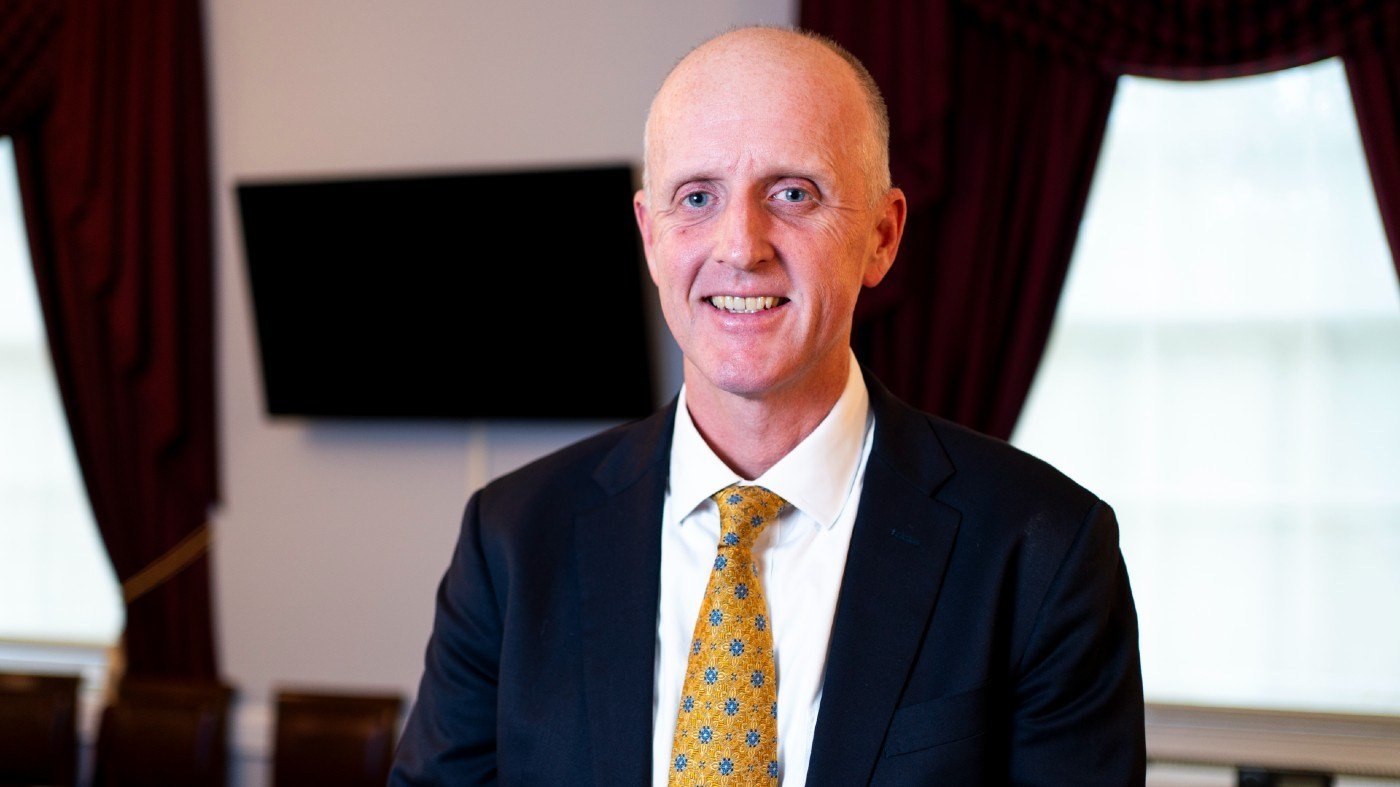
For nearly two decades, Tom Rust has operated behind the scenes as a key figure in policing the conduct of members of Congress. As chief counsel and staff director of the House Ethics Committee, he has overseen some of the most sensitive and high-profile investigations in recent memory.
Rust joined the committee in 2009, after spending close to a decade in private legal practice. He rose through the ranks, serving as senior counsel and acting director of investigations before taking on the top staff role in 2014. Today, he manages a team of roughly 30 staffers across the committee's advisory, investigative, and financial disclosure units, and advises its 10 members—split evenly between Republicans and Democrats.
Among the notable cases Rust has handled is the probe into former Representative George Santos of New York, who was expelled from the House in 2023 and later sentenced to seven years in prison for wire fraud and aggravated identity theft. President Trump commuted Santos's sentence, and he was released last year. Rust described the Santos case as particularly complex, noting that it involved criminal misconduct allegations and interactions with an ongoing federal investigation. "There were just so many different issues there," he said. "It was a wide-ranging case that involved allegations of criminal misconduct. It involved interactions with an ongoing criminal investigation. It was very high-profile."
Rust says one of the most gratifying parts of his job is working with the committee's members. He emphasized that despite the partisan climate, the panel's discussions are often devoid of party labels. "If you took the transcript of our committee meeting and you took the names off the transcript, you oftentimes have trouble finding out which party somebody is in," he explained. "Our members all take it very seriously, and they are not particularly partisan in the room, which is great."
That bipartisanship is central to how Rust responds to accusations that the committee is politically motivated. Investigators frequently face criticism from the subjects of their inquiries, he acknowledged, but the even split in membership and the nonpartisan nature of the staff serve as important safeguards. "The best way to address any criticism of your work is just let your work speak for itself and do the best work possible," he said.
The biggest challenge, Rust added, is the committee's confidentiality. Because much of its work occurs behind closed doors, outsiders can sometimes misunderstand its processes. This can lead to frustration or suspicion from the public and lawmakers alike.
Despite these challenges, Rust remains committed to the mission. He expects to stay with the committee for at least the next few years, driven by a belief that protecting the integrity of the House is "a valuable thing."
His work echoes the efforts of other Hill staffers who operate out of the spotlight, such as a staffer who turned sanctions into a weapon against Assad and a deputy chief of staff who masters the art of the House floor. These behind-the-scenes figures play crucial roles in shaping policy and oversight.
As the Ethics Committee continues to navigate contentious issues, Rust's steady hand and emphasis on bipartisanship will remain critical. His tenure reflects a commitment to a process that, while often opaque, is essential to maintaining public trust in Congress.