House Democrats are laying the groundwork for an aggressive healthcare push in the next Congress, betting that flipping the chamber will let them reverse Republican cuts and expand federal health programs. Party leaders have signaled that affordability—with healthcare at its core—will top their legislative agenda if they win control in November.
“I see that as priority No. 1: Saving the healthcare of the American people,” said Rep. Brendan Boyle (D-Pa.), who is in line to chair the Budget Committee. Boyle and other Democrats have seized on voter anxiety over rising medical costs, a theme that has dominated campaign trails all cycle. The issue gained urgency after President Trump and Republicans slashed health programs in last year’s One Big Beautiful Bill Act and allowed Affordable Care Act (ACA) subsidies to lapse in January. Polls consistently show healthcare as a top concern for voters, and Democrats are eager to capitalize.
If they secure the majority, Democrats plan to move quickly. Their wish list includes reversing the Medicaid cuts embedded in the One Big Beautiful Bill—cuts that don’t fully take effect until December, just after the elections. “That means that if we Democrats win the majority in November, and I get the gavel on Jan. 3, the Medicaid cuts will just be starting at the moment that I’m taking over as chair,” Boyle said. “I want to reverse every single healthcare cut that was contained in that bill.”
Beyond restoring cuts, Democrats are eyeing expansions: paid medical leave, long-term care, and a revival of ACA subsidies. Rep. Richard Neal (D-Mass.), poised to chair the Ways and Means Committee, plans to use his panel’s dual jurisdiction over healthcare and taxes to spotlight the GOP’s trade-off—cutting benefits for low-income families to fund tax breaks for the wealthy. “It becomes a different paradigm if all of a sudden, you’re being asked to cut healthcare so that you can offer tax cuts to wealthy people,” Neal said. He also stressed the need for a substantial government role in long-term care, citing an aging population and rising dementia cases.
Rep. Frank Pallone Jr. (D-N.J.), expected to lead the Energy and Commerce Committee, has been a vocal critic of the administration’s health policies. He has attacked cuts to Medicare and Medicaid, reductions in medical research funding, and restrictions on mifepristone. Pallone has also raised concerns about the administration’s response to a measles outbreak in Pennsylvania, a state whose governor, Josh Shapiro, is a likely 2028 presidential contender.
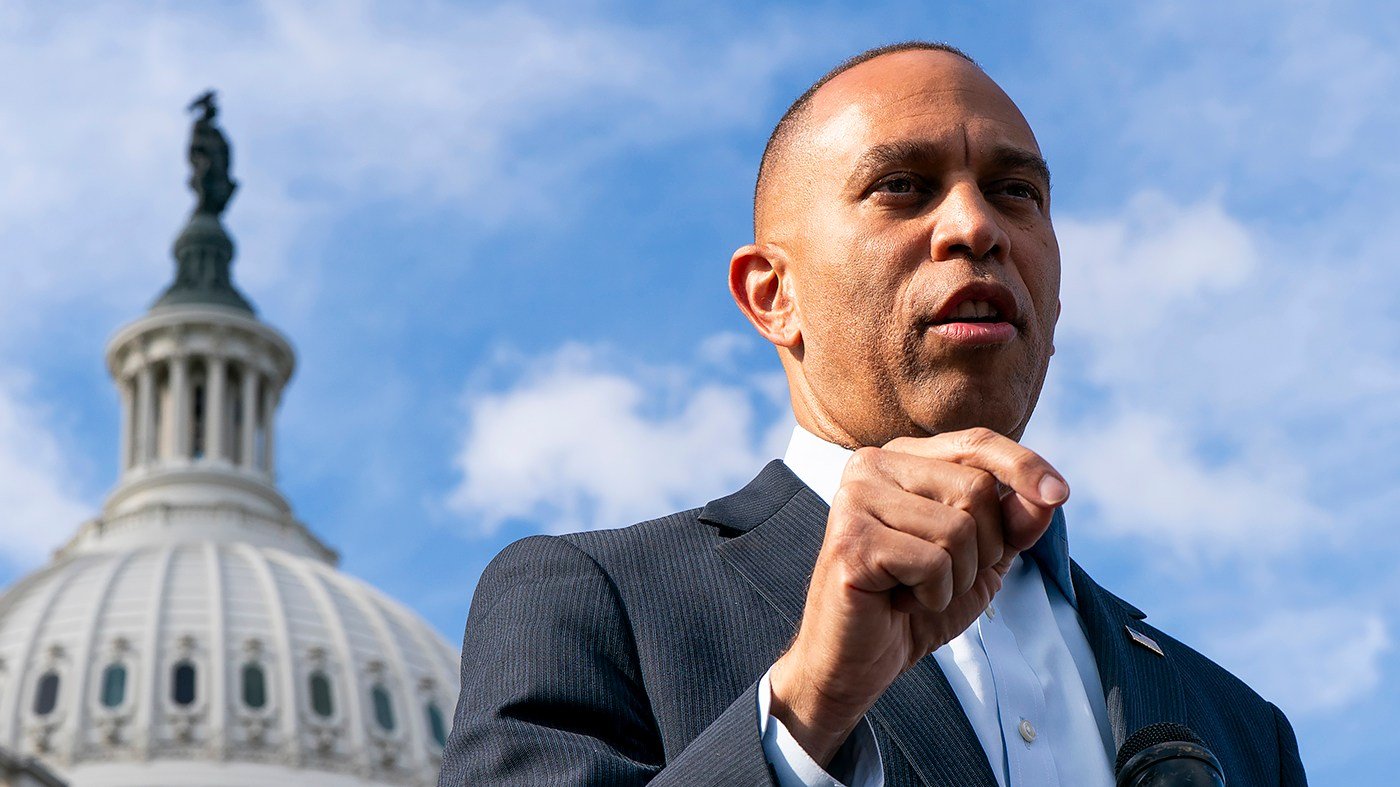
Even House Minority Leader Hakeem Jeffries (D-N.Y.), typically tight-lipped about a future agenda, has been explicit on healthcare. “We have made clear that we’re going to aggressively focus on making life more affordable, and I think we should begin in the areas where we know there is uniform Democratic support,” he said. “We have to reverse the Medicaid cuts, [and] we should extend the Affordable Care Act tax credits.”
Despite the ambitious plans, Democrats face a hard reality: even if they win both chambers, Trump remains president through 2028, making most of these proposals unlikely to become law. But Democrats could use them as leverage in budget fights, as they did during last year’s 43-day shutdown over ACA subsidies. The proposals will also shape the 2028 presidential race, with Democratic hopefuls likely to champion popular health programs. For now, the House Democrats’ healthcare agenda serves as both a governing blueprint and a campaign promise—a preview of what a unified Democratic government might pursue in 2029.
Recent polls suggest healthcare is a winning issue for Democrats, as family costs have outpaced inflation for decades and premiums are expected to rise again next year. The party’s focus on this issue could be a decisive factor in the midterms, with potential implications for Democrats' chances of flipping the House. Meanwhile, Trump's recent $90 Medicare checks appear aimed at blunting GOP liability on healthcare, but Democrats argue these are insufficient. The party’s push is also likely to intensify partisan battles over impeachment, as Republicans warn of retribution if Democrats take power.