House Democrats are laying the groundwork for a governing agenda should they recapture the majority next year, with affordability emerging as the central theme of their platform. As economic anxieties persist—driven by high housing costs, grocery prices, and inflation exacerbated by the military conflict with Iran—Democratic leaders are framing their message around easing the financial burden on American families.
“We’ve got to get Congress working for the American people, and the issue people are talking about at the dinner table, among their friends every moment of every day is what you call affordability, cost of living, just making the economy work for the American people,” said Rep. Brad Schneider (D-Ill.).
Alongside economic messaging, Democrats plan to leverage their oversight authority to probe the Trump administration and Trump family members, arguing that aggressive investigations are necessary to ensure transparency and root out corruption. Rep. Robert Garcia (D-Calif.), ranking member of the House Oversight and Government Reform Committee, highlighted the panel’s ongoing inquiry into files related to deceased convicted sex offender Jeffrey Epstein as a key part of that anti-corruption push.
Garcia recently called for testimony from Trump officials, including Vice President Vance, following a New York Times report that Vance described the Epstein controversy as a “huge problem” and urged the Justice Department to release all related materials. Garcia described the Epstein files investigation as “the single most bipartisan issue in the country” and said Democrats would “talk about it a lot.”
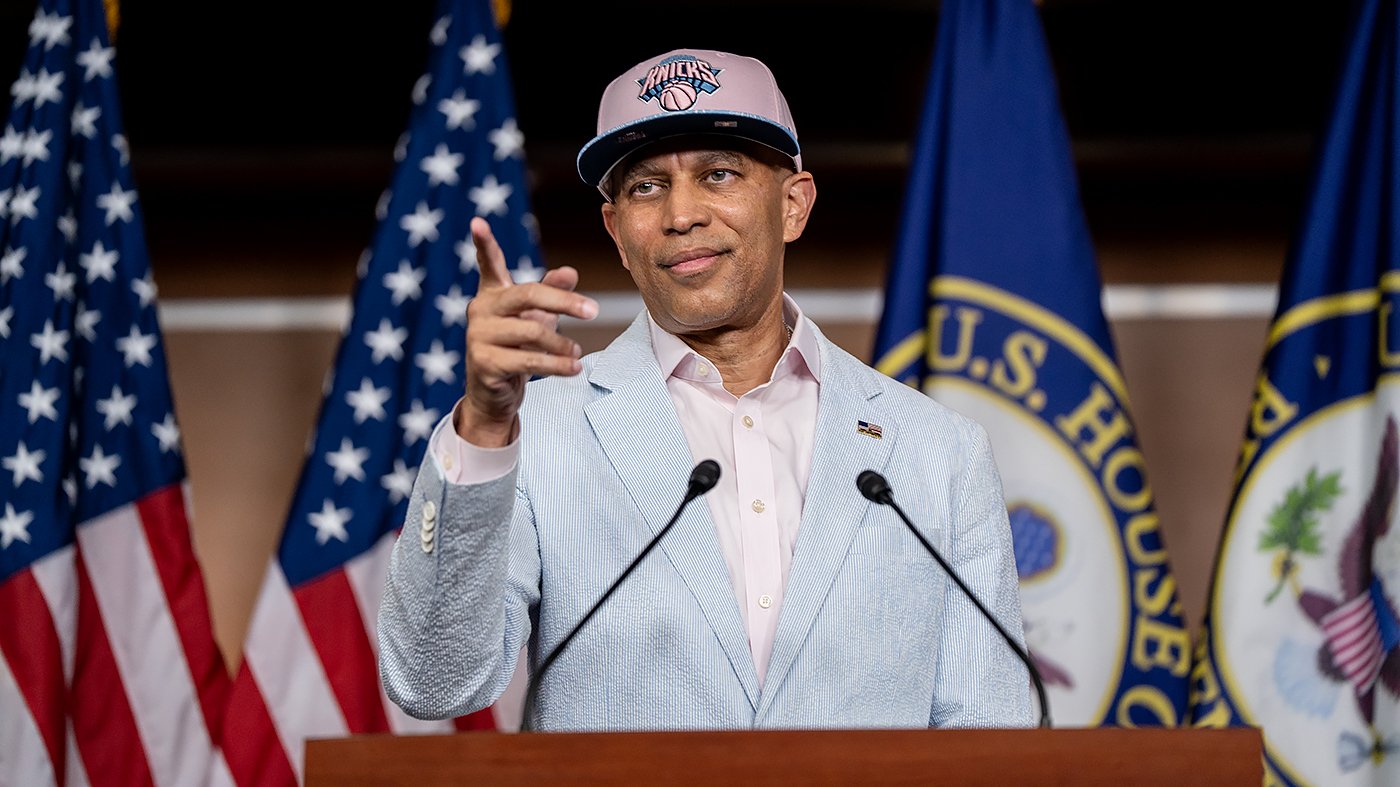
Democrats have not ruled out impeaching President Trump. Minority Leader Hakeem Jeffries (D-N.Y.) told NBC’s Kristen Welker, “We haven’t ruled anything in or ruled anything out in terms of accountability.” Rep. Greg Casar (D-Texas), chair of the Congressional Progressive Caucus, acknowledged that Trump “commits impeachable offenses regularly” but cautioned that voters want a party focused on lowering costs and tackling corruption, not just opposing Trump. “I do think voters want to see us not be just an anti-Trump party, but also a pro-worker party,” Casar said.
Rep. Teresa Leger Fernández (D-N.M.), chair of the Democratic Women’s Caucus, identified childcare and eldercare costs, the gender pay gap, and reproductive care access as top priorities. However, even with a House majority, Democrats would face significant legislative hurdles under a Republican-controlled White House, where Trump would likely veto most Democratic proposals. Bipartisan dealmaking on narrower issues remains a possible path forward.
One area of potential cross-party cooperation is a ban on members of Congress buying or trading stocks. Legislation from Reps. Chip Roy (R-Texas) and Seth Magaziner (D-R.I.) stalled after Jeffries argued it should extend to the executive branch, but interest persists on both sides. Rep. Glenn Ivey (D-Md.) noted that some Republicans have joined Democrats in signing discharge petitions to force votes on legislation, a trend he expects to grow. “I think those numbers are going to grow, and that’s why we’re able to get all these discharge petitions out and to the floor and actually pass them,” Ivey said, adding that it reflects poor GOP management and Democratic unity.
As Democrats prepare for a potential return to power, their agenda balances affordability with oversight, aiming to address voter concerns while holding the Trump administration accountable. The party’s ability to enact major legislation may be limited, but they see opportunities for targeted bipartisan wins.