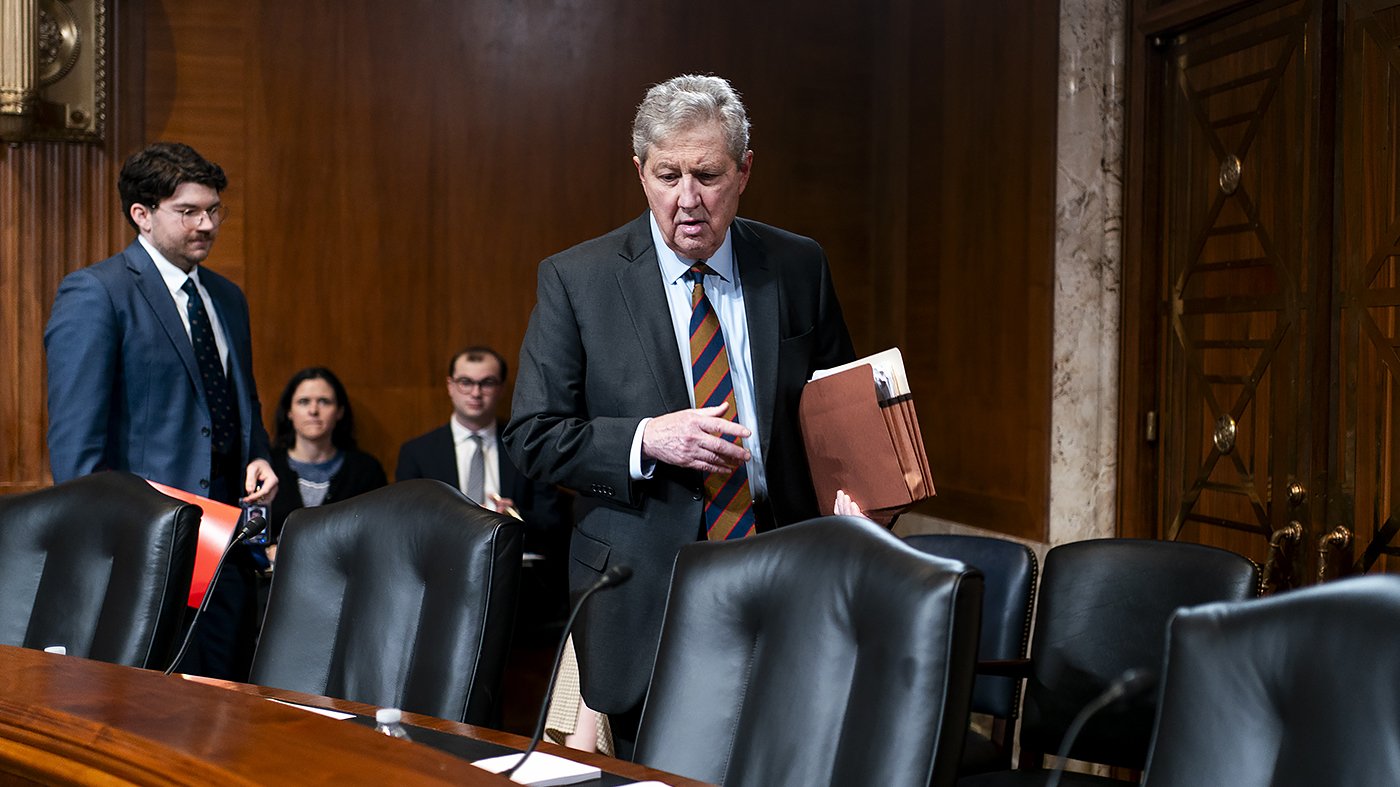
Sen. John Kennedy (R-La.), a member of the Senate Judiciary Committee, is cautioning President Trump that his threat to withdraw Todd Blanche's nomination for attorney general and resubmit it in 2027 could backfire, given the possibility that Democrats might take control of the Senate after the November elections.
Asked by a reporter Thursday whether it would be “risky” to postpone Blanche's confirmation until the next Congress, Kennedy replied, “Well, duh. Yeah.” He added, “This place could be very different,” noting that Democrats could gain seats or even win the majority. Republicans currently hold 53 seats in the Senate.
Trump's threat came in response to Senators John Cornyn (R-Texas) and Thom Tillis (R-N.C.) signaling they would block Blanche's nomination in the Judiciary Committee unless the Department of Justice and the president agree to revise or clarify a settlement with the IRS that would establish a $1.8 billion compensation fund for allies of the former president who claim they were unfairly prosecuted.
In a Truth Social post Thursday, Trump called Blanche a “STAR” and predicted he could become one of the greatest attorneys general ever. He criticized Cornyn and Tillis, both of whom he refused to endorse in their recent races, saying their political careers have been “ended by my action.” Cornyn lost his primary to Texas Attorney General Ken Paxton, and Tillis chose not to seek re-election. Both will leave the Senate at year's end.
However, recent polling suggests the political landscape could shift dramatically. A Fox News poll in Texas shows Democrat James Talarico leading Paxton by 3 points, while a North Carolina survey has Democrat Roy Cooper ahead of Republican Michael Whatley by 9 points. Such outcomes would likely reduce the Republican majority and complicate any future confirmation fight.
Tillis on Thursday advised Trump to carefully consider the numbers in the next Congress rather than assume Republicans will have the votes. He noted that if the president delays, he must “game out what the numbers look like in the next Congress versus a willing group of people who wants to confirm him now.” Tillis suggested that a simple clarification that the anti-weaponization fund is inoperative could resolve the standoff.
Trump, however, escalated his criticism of Cornyn on Friday, accusing him of being upset over the president's endorsement of Paxton. Trump insisted the fund is meant to compensate “great American Patriots” harmed by the Biden administration's Justice Department, not to benefit himself.
This intra-party conflict over Blanche's nomination is part of a broader pattern of GOP infighting that could shape the midterms. With control of the Senate at stake, the outcome of these disputes may have lasting consequences for Trump's agenda.
As the standoff continues, Cornyn and Tillis's quiet revolt highlights the limits of presidential influence over Senate confirmations. Whether Trump will follow through on his threat or seek a compromise remains uncertain, but the political risks are becoming increasingly clear.