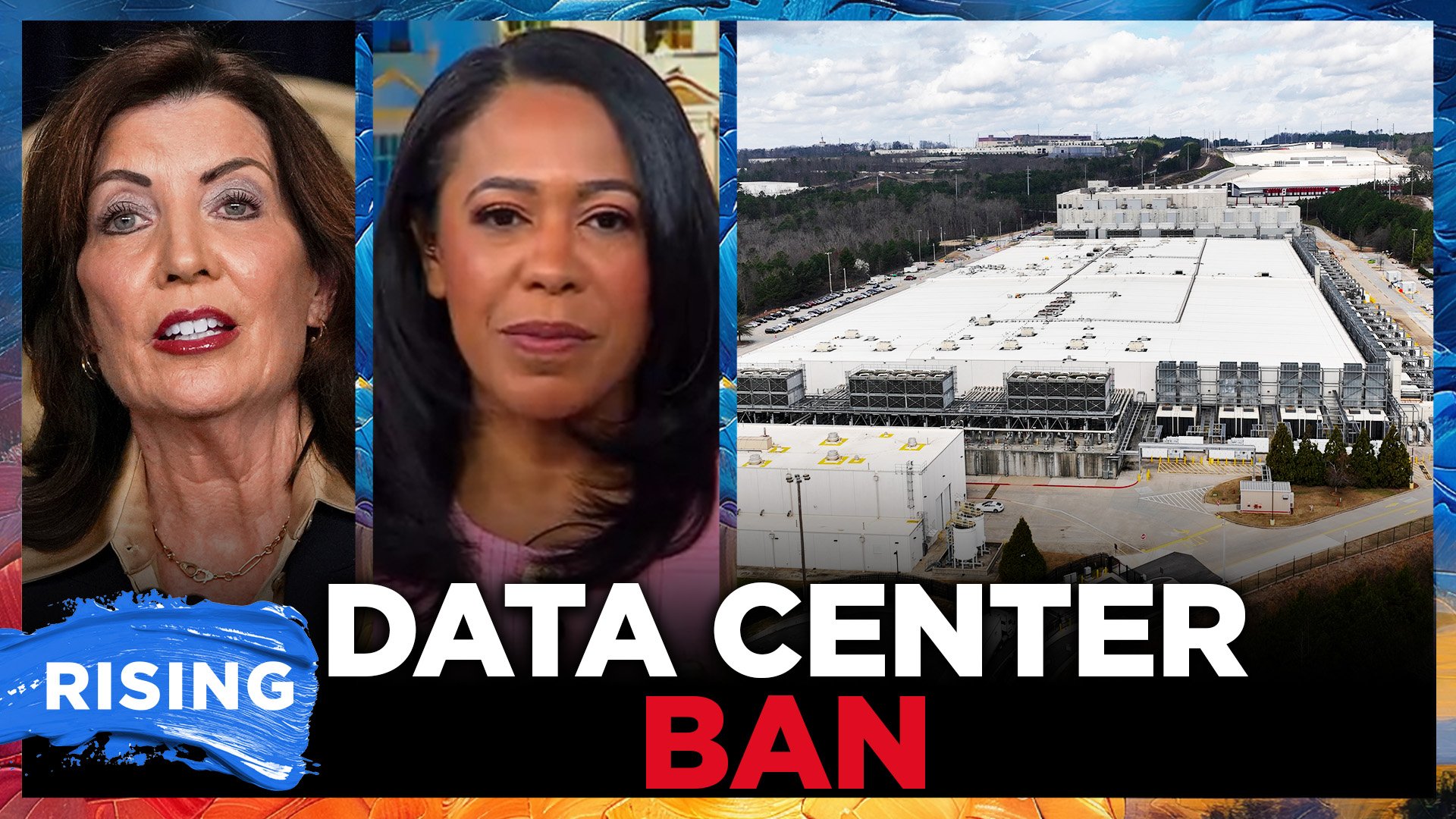
New York Governor Kathy Hochul signed an executive order Tuesday imposing a one-year moratorium on the construction of large-scale AI data centers, positioning the state at the center of a growing national debate over the unchecked expansion of tech infrastructure.
Hochul framed the decision not as a rejection of artificial intelligence or economic growth, but as a necessary step toward accountability. “This conversation has become oddly binary: either you support building AI infrastructure everywhere, as fast as possible, or you’re somehow standing in the way of innovation,” she said. “That’s a false choice.”

The pause targets the largest facilities, which consume vast amounts of electricity—some requiring enough power to supply roughly a million homes. Utilities across the state are already planning new power plants and transmission lines to meet surging demand. Even when tech companies pledge to cover some costs, Hochul argued, Americans have a right to know who ultimately pays for grid expansion and what happens if those promises change.
Environmental concerns also drove the decision. While the industry often downplays water usage, Hochul noted that waiting for a crisis before creating guardrails is poor governance. “Good regulation doesn’t exist because there’s already a crisis. It exists to prevent one,” she said.
The governor pointed to real-world examples: In Wyoming, officials say a Meta data center contaminated the local sewer system with a rare bacterium. In Wisconsin, residents are suing over environmental reviews, complaining of relentless dust, noise, and construction impacts. In Texas, planned data centers could emit more greenhouse gases than many countries. And in Georgia, homeowners near data centers worry about their wells and water supply, even as companies cite paid-for independent studies that find no connection.
“If companies are relying on independent studies they paid for to assure the public everything is fine, who is independently overseeing the entire industry?” Hochul asked. “Who is verifying the long-term impacts? Who is protecting communities before problems become irreversible?”
The move reflects broader public sentiment. A recent Gallup poll found that seven in ten Americans oppose building AI data centers in their own communities. Republicans and Democrats, who rarely agree, share concerns about rising utility costs, environmental damage, and a lack of transparency.
Hochul’s order comes amid a national conversation about the trade-offs of racing to lead in AI. The geopolitical stakes are high—particularly with China advancing rapidly, as highlighted by recent reports on China's LineShine supercomputer that underscore the limits of U.S. export controls. But Hochul insisted that winning the AI race cannot come at the expense of the very people it’s supposed to benefit.
The one-year pause gives New York time to study the consequences before they become too big to manage. It also sets a precedent that other states may follow, as communities across the country raise similar alarms about the unchecked expansion of data centers and their impact on energy grids, water supplies, and local quality of life.