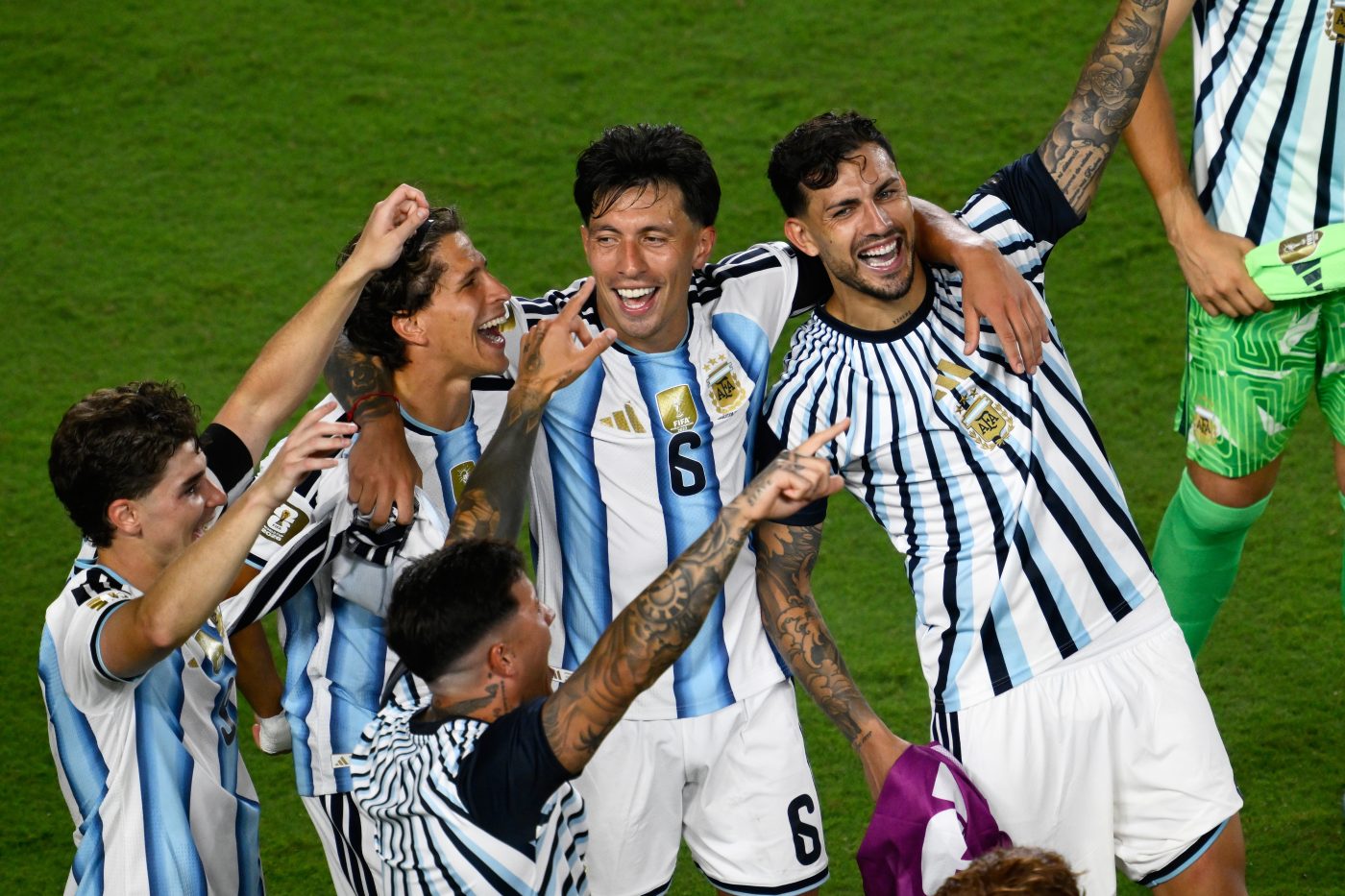
Argentine Vice President Victoria Villarruel on Wednesday stoked historical tensions with England, labeling the English national team as “invaders” and “usurping pirates” in a fiery social media post ahead of their World Cup semifinal clash.
Writing on X, Villarruel made clear she was abandoning diplomatic restraint. “I’m not going to be politically correct or cold-hearted,” she said, according to a translated version of her Spanish-language post. She framed the matchup as “more than just another game,” adding that “against the English, it’s always something more.”

The winner of Wednesday’s match advances to Sunday’s final against Spain, but Villarruel’s remarks shifted focus from the pitch to the unresolved Falkland Islands dispute. The archipelago, known as the Islas Malvinas in Argentina, has been a flashpoint since 1982, when Argentina invaded the British-controlled islands, triggering a 10-week war that left more than 250 British and 600 Argentine soldiers dead.
“It’s the Malvinas, it’s Diego, it’s Leo’s last one, and it’s putting the brakes on the invaders,” she wrote, quoting a popular chant among Argentine players. The lyric references the late soccer legend Diego Maradona and current captain Lionel Messi, who is widely expected to retire after the 2030 World Cup.
Villarruel’s comments tapped into a deep well of nationalist sentiment. The Falklands remain a potent political symbol in Argentina, where successive governments have pressed sovereignty claims. The vice president’s rhetoric also echoes recent tensions in international sports, where geopolitical grievances have increasingly spilled onto the field. For context, the U.S. men’s national team faced its own off-field distractions during the World Cup, with former President Donald Trump’s comments creating what player Folarin Balogun described as “outside noise” before their early exit.
The semifinal matchup has reignited debates about national identity and historical grievances. While English fans have largely focused on the sporting contest, Argentine social media lit up with references to the Malvinas. Villarruel’s post drew both support and criticism, with some accusing her of politicizing a sporting event.
The timing is particularly charged: Messi, arguably Argentina’s greatest player, is likely playing in his final World Cup. The team’s run has been seen by many as a unifying moment for a country grappling with economic turmoil. Yet Villarruel’s invocation of the Falklands underscores how sport can become a proxy for deeper political conflicts.
This is not the first time the Falklands have intruded on a World Cup. In 1986, Maradona’s “Hand of God” goal against England was widely interpreted as symbolic revenge for the war. Now, nearly four decades later, the same raw emotions are resurfacing as Argentina seeks to reach the final.
As the teams took the field, the vice president’s words hung in the air—a reminder that for some, this game carries weight far beyond a trophy.