A long-standing but politically remote immigration reform proposal has unexpectedly become the flashpoint for a bitter public feud within the House Republican conference, exposing fundamental strategic and ideological rifts on one of the party's most defining issues. The Dignity Act, a bill with minimal chance of passage in the current Congress, has drawn intense fire from conservative members and activists, who label it an amnesty measure, while its sponsors defend it as a pragmatic solution.
The Core of the Conflict
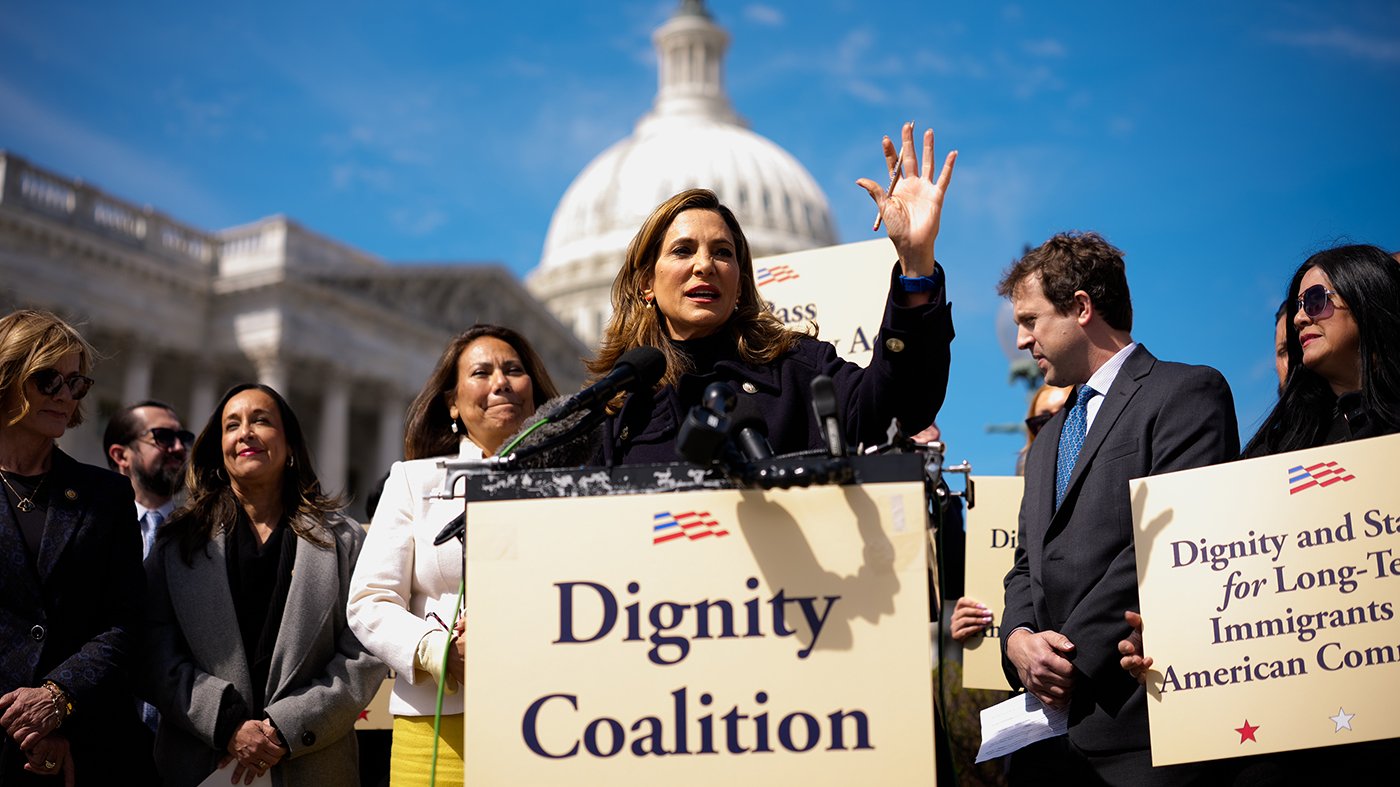
The legislation, authored by Rep. Maria Elvira Salazar (R-Fla.), offers a conditional legal status—not citizenship—to undocumented immigrants who arrived before 2021, have no criminal record, pay a $7,000 restitution fee and any back taxes, and forgo welfare benefits. Salazar argues this is not amnesty but a necessary step to address an estimated 12 million people living "in the shadows," while also appealing to Hispanic voters where the party has seen shifting political dynamics in some traditionally red areas.
"It's the only immigration reform law in the United States Congress," Salazar said in an interview, suggesting the backlash signals growing momentum. "The problem here is that people cannot open their mouth before reading the bill." She contends current policy amounts to a de facto amnesty by providing public services without legal status.
Hardline Backlash and Accusations of Betrayal
Opponents, led by figures like Rep. Brandon Gill (R-Texas), reject this framing entirely. "This is the kind of Orwellian doublespeak we expect from the Left, not our own party," Gill posted on social media. He and other critics insist any form of legal recognition constitutes amnesty and represents a betrayal of the enforcement-first platform that propelled the party to victory in 2024. "Our only objective right now should be to speed up deportations," Gill argued, claiming the bill would hamper those efforts.
The controversy escalated dramatically after co-sponsor Rep. Mike Lawler (R-N.Y.) promoted the bill on Fox News, triggering an onslaught from conservative commentators. The debate turned particularly heated when Lawler appeared on Laura Ingraham's program, where the host repeatedly challenged his description of the bill's restrictions, calling his assertions "false." Ingraham argued the bill's waiver provisions and definitions of disqualifying crimes would create loopholes.
A Strategic Divide on Politics and Policy
Beyond the policy details, the fight underscores a deeper Republican schism. One faction, including Salazar, warns of a long-term electoral cost if the party is perceived as offering only enforcement, citing the need to build a broader coalition. "PRESIDENT TRUMP didn’t win by shrinking the tent. He EXPANDED it," Salazar countered in her exchange with Gill.
The opposing faction views any compromise as an unforgivable dilution of core promises. Gill, appearing on Ingraham's show after Lawler, called the Dignity Act "far worse" than mere amnesty, labeling it a "mass migration bill" and an "unforgivable political betrayal" of the party's base. This internal clash mirrors other recent bipartisan pressures on lawmakers caught between party orthodoxy and legislative pragmatism.
Salazar plans a major press conference this week with the National Association of Manufacturers, which supports the bill as a remedy for workforce shortages. She also intends to directly engage with critics like Gill when the House reconvenes. Despite the fury, the bill's prospects remain dim, serving more as a vessel for a party wrestling with its post-2024 identity on a deeply polarizing issue than as viable legislation.