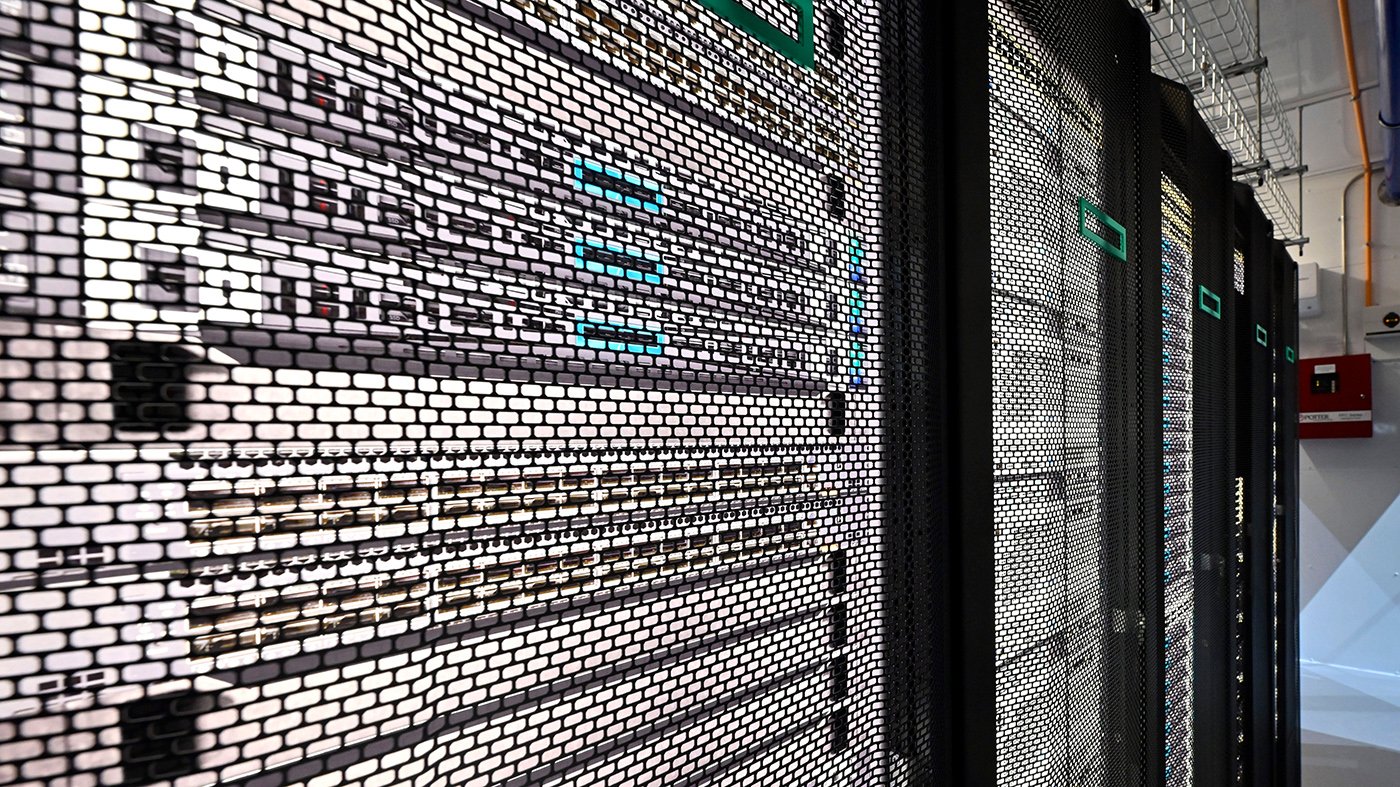
Republicans are seizing on allegations that foreign actors, particularly China, are stoking public opposition to the rapid expansion of data centers across the United States. The shift in strategy comes as the party struggles to address growing voter frustration over the infrastructure's impact on electricity bills and the environment.
Recent reports, including one from OpenAI, have suggested that influence operators linked to China are using social media and other channels to amplify concerns about data center buildouts. OpenAI said it found clusters of ChatGPT accounts generating comments and images claiming that data centers are driving up household electricity costs.
The allegations have provided political cover for GOP lawmakers who are caught between a pro-tech White House and constituents angry about rising energy costs. President Donald Trump has pushed to fast-track data center approvals, cutting environmental reviews and speeding grid connections to maintain U.S. leadership in the AI race against China.
But the administration is also confronting the political reality of the backlash. Earlier this year, Trump secured commitments from major AI firms to cover the increased electricity costs associated with new data centers.
Interior Secretary Doug Burgum told Fox Business Network that “any place that’s trying to build data centers is getting bombarded with foreign-directed propaganda.” House Energy and Commerce Committee Chair Brett Guthrie (R-Ky.) and fellow GOP Reps. John Joyce (Pa.) and Bob Latta (Ohio) sent a letter to the FBI and the President’s Council of Advisors on Science and Technology, requesting information on evidence of foreign influence.
Sen. Tom Cotton (R-Ark.), a longtime China hawk, asked the Justice Department to investigate. While acknowledging that Americans have “valid concerns” about data centers, Cotton argued that “we can’t allow any effort by foreign adversaries to extort these fears and undermine our technological development.”
The lawmakers have pointed to a report from the Bitcoin Policy Institute accusing Chinese state-run media of running anti-data center campaigns and highlighting foreign donations to U.S. climate-focused nonprofits that sometimes weigh in on the debate. OpenAI classified the activity as “category one,” meaning the generated posts had little observable engagement. The company said the operation is “significant not because the operation appears to have shifted public opinion, but because it shows PRC-origin influence operators testing narratives against AI infrastructure.”
Analysts are skeptical that foreign influence is driving the backlash. Ryan Fedasiuk of the American Enterprise Institute told The Hill that while it’s reasonable to highlight China’s influence efforts, “on some level, it’s cope… it’s not going to make the problem go away.” Ari Ben Am of the Foundation for Defense of Democracies added that the operation “did not move the proverbial needle” and that lawmakers are using it to “blame the anti-data center discourse on China instead of tackling it as an issue.”
Katie Miller, wife of top White House aide Stephen Miller, posted on social media that the anti-data center push is not “organic” but “fueled” by Chinese and Russian actors. The Chinese Embassy in Washington said it was not familiar with the specific allegations but “firmly oppose any groundless attacks or smears against China.”
The debate comes as the GOP navigates internal divisions over how to balance a pro-tech agenda with voter concerns. While some Republicans see the China narrative as a way to deflect blame, others worry it could backfire if voters see it as a distraction from real issues like energy costs. For now, the party appears to be betting that pointing to foreign influence will help it weather the storm ahead of the midterms.