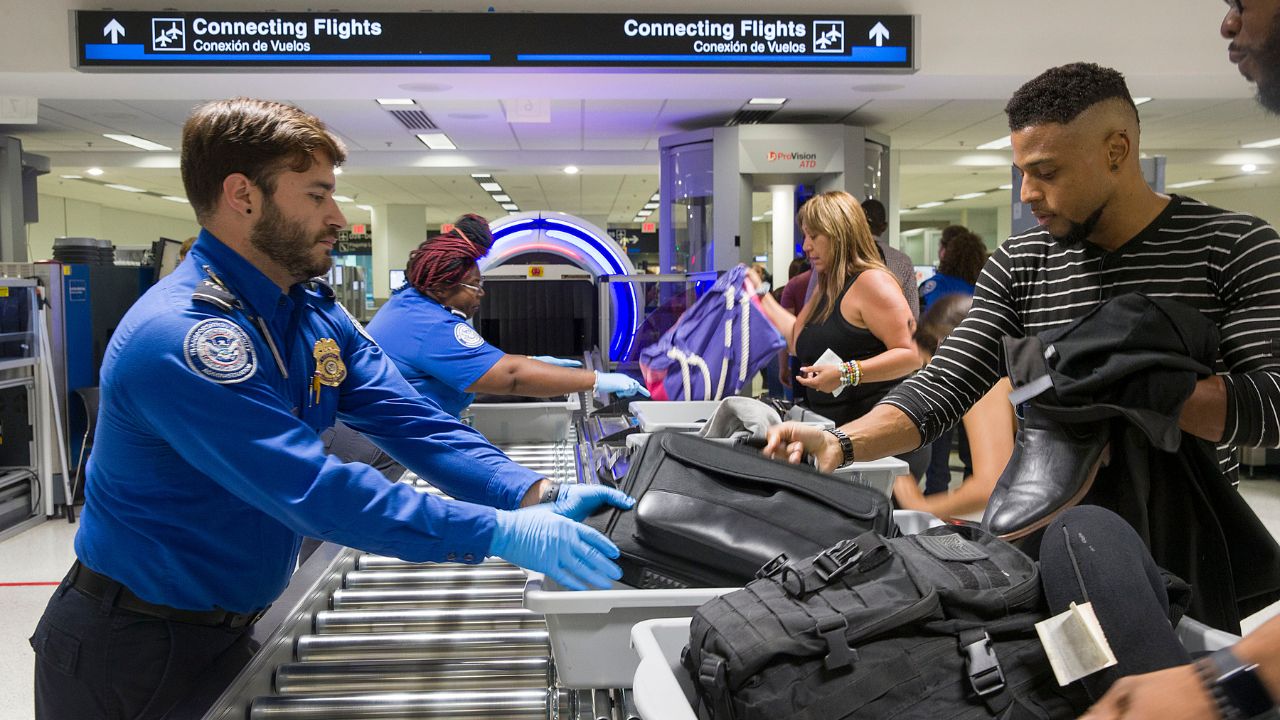
The Transportation Security Administration is pushing ahead with a nationwide rollout of computed tomography (CT) scanning equipment at airport security checkpoints. Unlike the older two-dimensional X-ray machines, these new devices produce a three-dimensional image of carry-on bag contents, which means travelers no longer need to remove items like laptops and liquids for screening.
While CT scanners can detect threats that older X-ray machines might miss—such as liquid explosives—subjecting every passenger's carry-on bag to this advanced technology is misguided, according to Sheldon H. Jacobson, a professor of computer science at the University of Illinois Urbana-Champaign who has spent over 30 years researching risk-based aviation security and contributed to the design of TSA PreCheck.
Jacobson argues that the TSA's own operating principle of risk-based security should guide deployment decisions. That principle, which dictates that security resources should be allocated in proportion to risk, means more scrutiny should be directed at passengers and baggage that pose a greater threat. TSA PreCheck, which allows vetted travelers to use expedited screening lanes after voluntarily providing background information, is the prime example of this approach. For those who enroll, the trade-off of giving up some personal privacy for faster screening is widely accepted. The agency has even introduced Privatized screening at some airports under the TSA Gold+ program, which aims to streamline the process further.
The cost disparity between the two technologies is stark: CT scanners can cost up to $800,000 per machine, while traditional X-ray machines run about $65,000. PreCheck passengers are already screened with walk-through metal detectors rather than the more expensive millimeter wave advanced imaging units. This raises a critical question: can PreCheck passengers' carry-on bags be screened with 2-D X-ray machines without compromising security? If so, using CT scanners for them is over-screening—the antithesis of risk-based security.
Over-screening, as Jacobson puts it, is like using a machete to open a peanut shell. It gets the job done but is far more than necessary. In an era of constrained budgets and a stated focus on reducing government waste, reserving the expensive CT scanners for passengers about whom the TSA knows the least—non-PreCheck travelers—is a more effective strategy.
Beyond the financial waste, CT scanners are slower than X-ray machines, creating bottlenecks at checkpoints as passengers wait for their bags to be processed. If a bag is flagged for additional screening, the delay becomes even worse. This inefficiency undermines the goal of keeping security lines moving, especially for trusted travelers.
One possible justification for deploying CT scanners everywhere is to prepare for the eventual lifting of the liquid, aerosol, and gel restrictions—a move most travelers would welcome. But Jacobson cautions that this would be premature given the current leadership vacuum at the TSA, which lacks a Senate-approved administrator, and the absence of thorough evaluation, including Red Team testing.
Jacobson recommends a more targeted approach: deploy CT scanners at standard lanes, keep 2-D X-ray machines at PreCheck lanes, and use the savings to encourage more travelers to enroll in trusted traveler programs like PreCheck. He even suggests offering PreCheck enrollment at no cost to anyone willing to sign up. If the share of PreCheck-eligible travelers reached 70 percent, airports could dedicate more lanes to expedited screening, reducing wait times and cutting costs on equipment and staffing.
Ultimately, the new CT scanners have a place in airport security, but not at PreCheck lanes. Proper risk-based allocation of resources would make the aviation system more secure—and that, after all, is the TSA's core mission.