The National Weather Service's Space Weather Prediction Center (SWPC) has issued geomagnetic storm watches for Thursday and Friday, following heightened solar activity that could bring the northern lights to parts of the United States and other high-latitude regions.
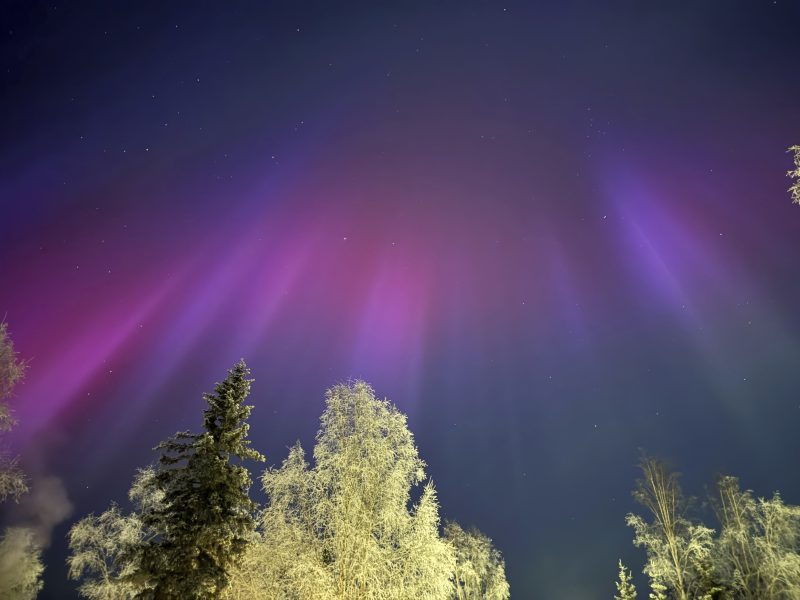
The aurora, commonly known as the northern lights, occurs when charged particles ejected from the sun collide with Earth's atmosphere and interact with its gases. These interactions can also trigger geomagnetic storms, which have the potential to disrupt power grids, satellite communications, and GPS signals.

Earlier this week, the sun released a stream of charged material from a coronal hole—a region of the sun where the magnetic field opens up, allowing solar wind to escape at high speeds. This phenomenon, known as a coronal hole high speed stream (CH HSS), is expected to reach Earth and produce the forecasted geomagnetic activity.
The SWPC's watches indicate that the incoming solar wind could cause G1 to G2-level geomagnetic storms, which are considered minor to moderate. While these levels are not typically associated with severe infrastructure damage, they can enhance auroral displays, making them visible farther south than usual.
Forecasters suggest that the best viewing opportunities will be in northern-tier states, including parts of the Pacific Northwest, the Upper Midwest, and New England. However, the exact visibility depends on local weather conditions and the timing of the storm's arrival, which can be unpredictable.
This celestial event coincides with the blood moon lunar eclipse, which is set to occur earlier in the week. Skywatchers who miss the eclipse may still have a chance to witness the aurora, provided skies are clear and dark.
For those interested in tracking the aurora, the SWPC offers real-time updates and forecast maps on its website. Enthusiasts are advised to seek areas with minimal light pollution and to look northward after sunset.
While geomagnetic storms can pose risks to technology, the upcoming event is not expected to cause significant disruptions. Still, the SWPC will continue to monitor the situation and issue updates as needed.