When Americans sit down for turkey this week, few will recall that the holiday has a long and contentious political past. Before it became a day of family, football, and gratitude, Thanksgiving was a battlefield for religious liberty, federal authority, and even presidential egos.
Early Colonial Roots
The story begins with the Pilgrims, who landed at Plymouth in November 1620 after a grueling 66-day Atlantic crossing. Their 1621 harvest feast with the Wampanoag is the stuff of legend, but it wasn't until 1623, after a drought broke, that they held a similar celebration of thanks.
Revolutionary Proclamations
The Continental Congress issued its first national thanksgiving proclamation in 1777, from its temporary quarters in York, Pennsylvania. Penned by Sam Adams, it called on the Almighty to bless the revolutionary cause and “crown our arms with the most signal success.” Not to be outdone, General George Washington declared a separate thanksgiving in December 1777 to celebrate the victory at Saratoga.
Between 1774 and 1789, the Continental Congress repeatedly designated “national days of prayer, humility, and thanksgiving,” a practice that carried into the new government.
The First Constitutional Fight
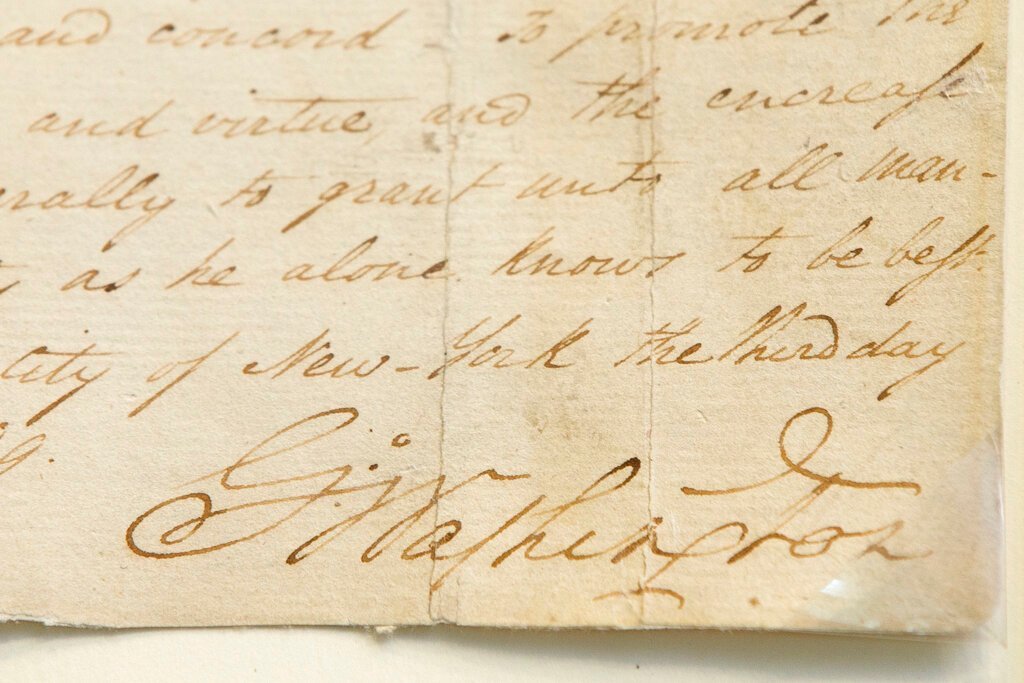
In 1789, just after the First Amendment was adopted, Representative Elias Boudinot of New Jersey proposed that Congress ask President Washington to proclaim a day of thanksgiving for “the many signal favors of Almighty God.” Washington complied, setting the precedent for presidential proclamations. John Adams followed suit.
Thomas Jefferson, however, refused. A deist, he argued in an 1802 letter to the Danbury Baptist Association that government religious declarations violated the First Amendment’s wall of separation between church and state. “Religion is a matter which lies solely between Man and his God,” he wrote, “the legitimate powers of government reach actions only, and not opinions.”
Civil War and the Modern Holiday
James Madison revived the practice in 1814, but his 1815 proclamations were largely ignored. States like Massachusetts, New Hampshire, and New York began celebrating their own thanksgivings on different dates. It wasn’t until Abraham Lincoln, in the midst of the Civil War, that annual presidential proclamations became routine. The Holidays Act of 1870, signed by Ulysses Grant, made Thanksgiving a federal holiday in Washington, D.C., but left the date to the president.
FDR’s ‘Franksgiving’ Fiasco
The most notorious political battle over Thanksgiving came in 1939. At the urging of Fred Lazarus Jr., founder of Federated Department Stores, President Franklin Roosevelt moved the holiday from the last Thursday in November to the fourth Thursday, hoping to extend the Christmas shopping season and boost the Depression-era economy.
Congress pushed back. The House passed a bill in October 1941 to restore the last Thursday, but the Senate amended it to keep the fourth. After a heated debate, the House conceded, and the fourth Thursday became law.
The fight turned partisan: Democrats called the November 30 date “Republican Thanksgiving,” while Republicans dubbed November 23 “Democratic Thanksgiving” or “Franksgiving.” The holiday had become a political football, much like today’s debates over health policy and holiday travel disruptions.
A Bumpy Road to Gratitude
Thanksgiving’s journey from colonial feasts to a national holiday was anything but smooth. It has been a vehicle for wartime prayers, a flashpoint for church-state separation, and a source of partisan sniping. As you carve the turkey, remember that even this most American of holidays was once a political battlefield.