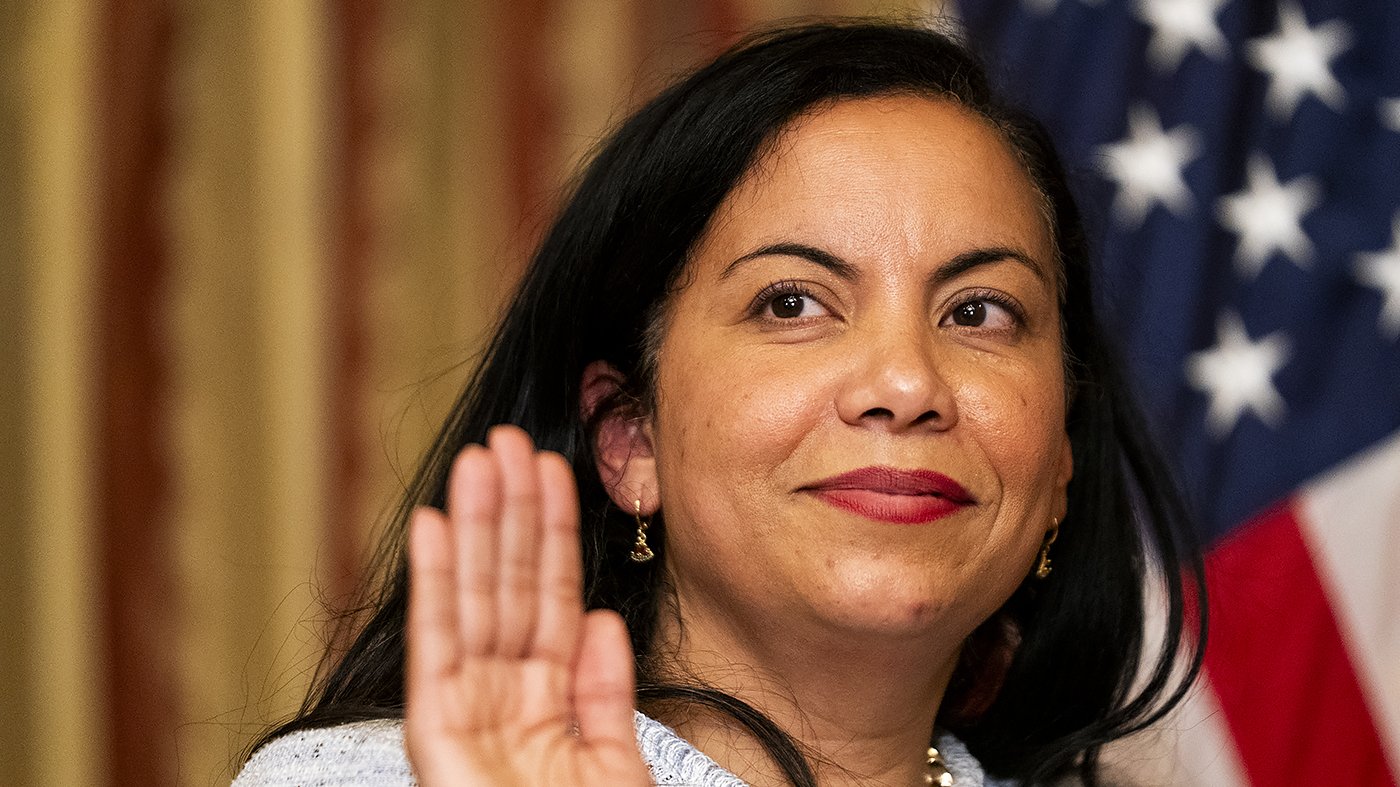
Freshman Representative Analilia Mejia of New Jersey declined on Tuesday to offer an immediate endorsement of House Democratic Leader Hakeem Jeffries for Speaker, should Democrats regain control of the chamber in the November elections. In her first interviews since being sworn into office, Mejia emphasized the need for broader discussions about the party's direction before committing to leadership votes.
A Call for Party Dialogue
"I think that we should have a discussion about how we are going to lead the party, how we are going to make sure to meet people's needs," Mejia stated during an appearance on DC News Now's "Sunrise on The Hill." The newly seated congresswoman, who formally took her oath on Monday, did note she was "very glad" to converse with Jeffries and felt "very aligned" on policy goals for American families.
Mejia's arrival in Congress follows her victory in a special election to succeed former Representative and current New Jersey Governor Mikie Sherrill. A former senior aide to Senator Bernie Sanders's 2020 presidential campaign, Mejia secured the reliably Democratic 11th District and has positioned herself within the party's progressive wing.
Progressive Vision on the House Floor
In her inaugural floor speech following the swearing-in by Republican Speaker Mike Johnson, Mejia issued a call to action focused on economic justice. She urged colleagues to "restore not only our democracy, but also a just economy that actually works" for working-class Americans. She framed congressional decisions as having "real consequences," stating the chamber is called "to stand up, to protect and to deliver on the promise of equal protection and justice."
Her hesitation to endorse Jeffries reflects simmering tensions within the Democratic caucus. While Jeffries and Senate Majority Leader Chuck Schumer are still considered likely to lead their chambers if Democrats win majorities, a segment of the party has expressed frustration with the current leadership's strategy and messaging.
Leadership Under Scrutiny
Recent polling underscores the challenge. A December Gallup survey found only 37% of respondents approved of Jeffries's performance, though that included 64% of Democrats. Schumer fared similarly, with just 39% approval among Democratic respondents. This discontent has occasionally spilled into public view, with progressive activists and some House members criticizing leadership decisions on government funding and shutdown tactics last year.
The dissent extends to the campaign trail, where several Democratic Senate candidates, including Illinois Lieutenant Governor Juliana Stratton and Michigan State Senator Mallory McMorrow, have publicly criticized Schumer's approach.
The Road to November
Despite these internal critiques, Jeffries's position as Democratic leader appears secure for now. The immediate political reality is the narrowly divided House, where Mejia's seating further erodes the GOP's margin. The broader context is a high-stakes election where Democratic control of the House would instantly elevate the question of the Speakership. Jeffries has recently staked out positions on key issues, such as signaling opposition to renewing surveillance authority without significant privacy reforms.
Mejia's noncommittal stance, while not an outright rebellion, signals that the party's progressive flank expects its voice to be heard in any post-election leadership arrangements. It highlights that while unity against the current Republican majority remains the immediate focus, debates about the Democratic Party's future direction and leadership are actively unfolding as the election approaches.