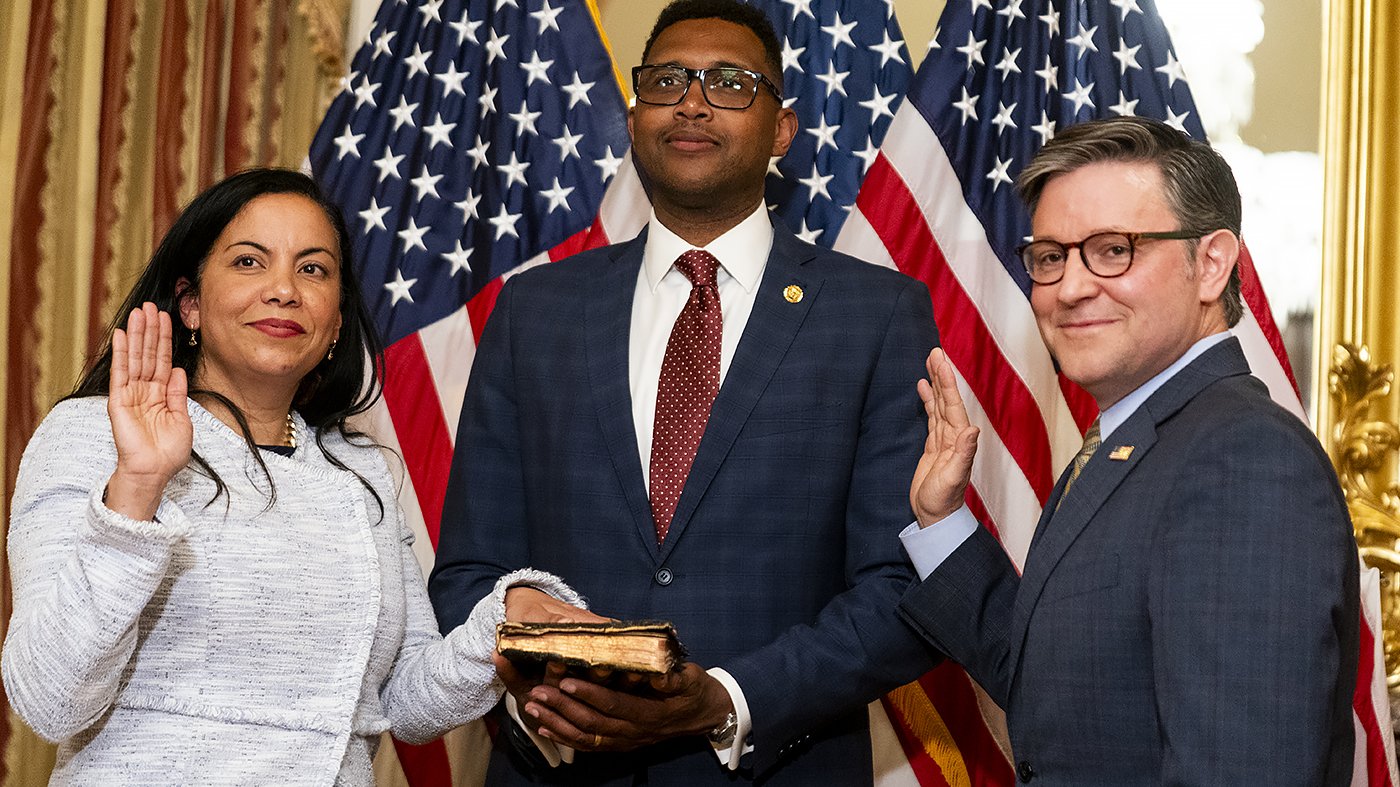
Democratic Rep. Analilia Mejia of New Jersey took the oath of office on Monday, formally claiming a House seat and further constricting the already narrow Republican majority in the chamber. Her swearing-in reduces the GOP's margin to 217-214, with one independent member caucusing with Republicans, placing intense pressure on Speaker Mike Johnson's ability to pass legislation.
A Progressive Addition to the House
Mejia secured her position by defeating Republican Joe Hathaway in a special election last week to fill the vacancy left by former Rep. Mikie Sherrill, who resigned in November after being elected governor of New Jersey. Mejia previously served as a senior aide to Sen. Bernie Sanders during his 2020 presidential campaign, signaling the continued influence of progressive politics within the Democratic caucus.
The ceremonial reading of the election results on the House floor prompted a standing ovation for the new congresswoman. Rep. Chris Smith, the dean of New Jersey's delegation, formally requested that Speaker Johnson administer the oath. After taking the oath, Mejia received another enthusiastic reception from Democratic colleagues, some of whom chanted "Si, se puede"—"yes, you can" in Spanish—before Johnson called the chamber back to order.
Personal History and Political Context
In brief remarks after being sworn in, Mejia framed her election as a milestone. "My presence in this chamber is in many ways an unlikely reality," she stated. "I am the daughter of a Dominican factory worker and a Colombian seamstress who knew struggle. And yet, I stand before you, representing the great 11th Congressional District of New Jersey." She described the moment as a "privilege and an honor" and thanked her constituents and colleagues for their support.
Her arrival has immediate consequences for the House's balance of power. With the GOP now holding a mere three-seat majority, Speaker Johnson faces a nearly impossible task in maintaining party discipline. He can afford to lose only one vote from his conference on any party-line measure, a reality that complicates upcoming debates on reauthorizing Section 702 of the Foreign Intelligence Surveillance Act and funding the Department of Homeland Security. This razor-thin margin echoes the challenges faced by previous speakers and highlights the frustrations some Republicans have voiced about their party's legislative efficacy.
Vacancies and the Road Ahead
Three other House seats remain empty, adding further uncertainty to the chamber's math. The vacancies include those left by former Reps. Eric Swalwell (D-Calif.) and Tony Gonzales (R-Texas), who both resigned last week following allegations of sexual misconduct, and the seat of the late Rep. Doug LaMalfa (R-Calif.), who died in January. Special elections to fill these seats could again alter the majority's fragile calculus.
For Mejia, the work is just beginning. She must immediately return to the campaign trail to secure the Democratic nomination for a full term in the June 2 primary. She faces challenges from former Morristown Mayor Donald Cresitello, tech engineer Joseph B. Lewis II, and Chatham Councilman Justin Strickland. Her special election victory was seen as a sign of progressive momentum, a dynamic she will seek to capitalize on in the coming months.
The political environment remains highly charged, with public opinion shaping strategy on both sides of the aisle. Recent polling shows a majority of Americans view the Trump administration's immigration enforcement as excessively aggressive, while other surveys indicate persistent economic concerns among voters. Against this backdrop, every seat—and every vote—carries extraordinary weight as the 118th Congress approaches a series of high-stakes deadlines.