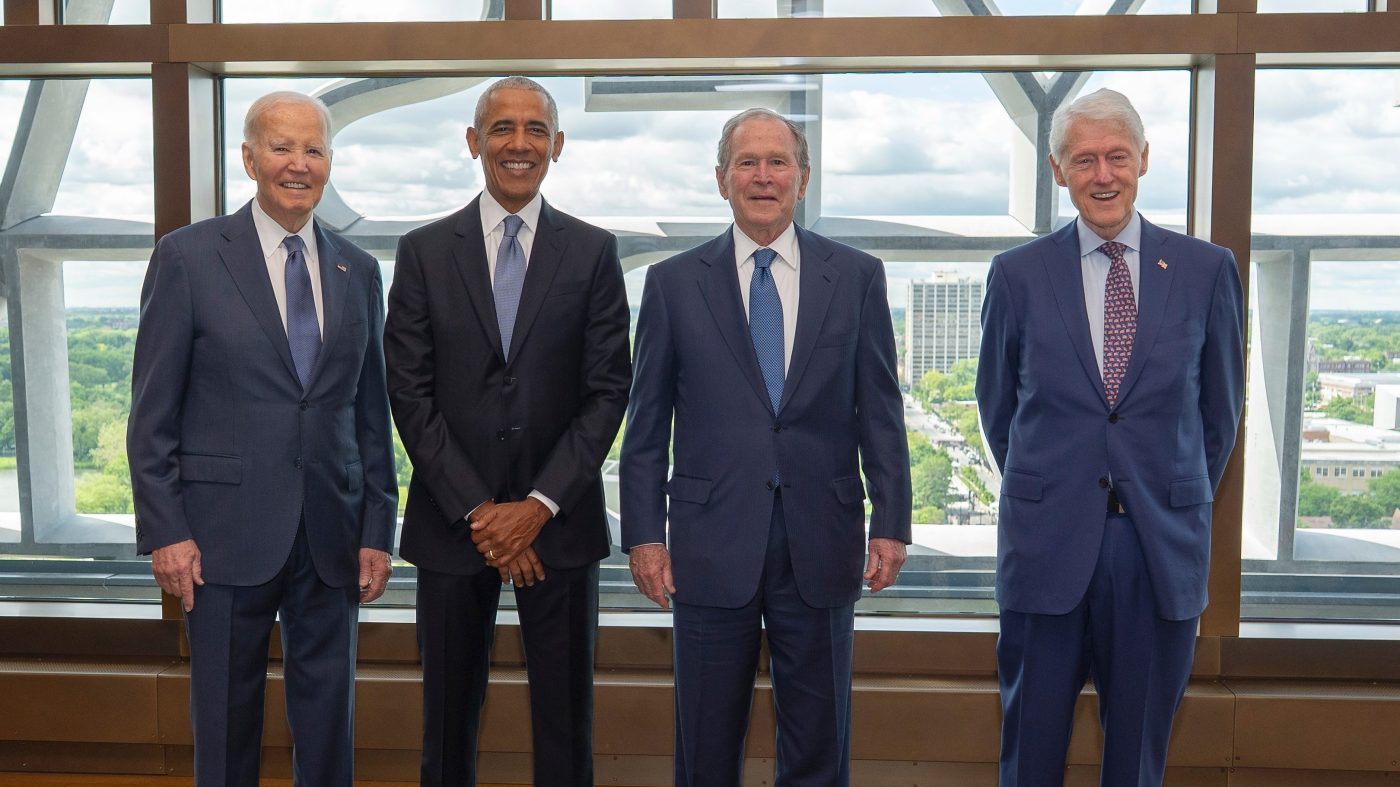
Four former presidents—Joe Biden, Barack Obama, George W. Bush, and Bill Clinton—marked the nation's 250th birthday on Saturday with messages that, despite their political differences, converged on a central theme: American democracy is an ongoing project that demands active stewardship from each generation.
Obama, in a social media post, described the United States as “a constant work in progress,” urging Americans to carry forward the unfinished work of their predecessors. “Every generation must take up the unfinished work of the last and carry it further — protecting what’s right, fixing what’s wrong, and making our union a little more perfect,” he wrote, adding that this imperative is “more important than ever.”
Biden echoed that sentiment, framing the Declaration of Independence as a promise the Founding Fathers made—a promise that Americans have spent more than 250 years trying to fulfill. “Now it’s our turn. There’s nothing guaranteed about our democracy,” he wrote on X. “We have to fight for it, defend it, and earn it. Over and over, year after year. That’s not a burden. That’s what it means to be an American.” He acknowledged the nation has not fully lived up to its founding ideals but insisted the principle has not been abandoned. “I don’t believe we’re as divided as we’re told we are,” Biden added.
Bush, the only Republican among the four, stressed the importance of civic participation. When asked what will ensure America’s future success, he said, “It requires Americans to vote, to be involved in the democratic process.” Acknowledging that voters may not always like election outcomes, he called the ability to determine the country’s direction “a powerful freedom.” His remarks come amid persistent, baseless claims from President Trump about election integrity, which have eroded trust in the electoral system.
Clinton delivered the most pointed critique of the current political climate. “Today, we celebrate this milestone amid another period of deep division, renewed questions about America’s future and role in the world,” he wrote, warning of “threats to our own institutions and to our democracy itself.” Without naming Trump directly, Clinton accused those in power of weaponizing the government and judicial system while attempting to “rewrite history.” Still, he struck an optimistic note: “There is still nothing wrong with America that cannot be cured by what’s right with America.”
The reflections come against a backdrop of declining faith in American institutions. Recent polls show fewer Americans view democracy as central to U.S. identity, and majorities express dissatisfaction with how democratic processes are functioning. The semiquincentennial has also highlighted deep divisions over the nation's founding ideals, with partisan gaps in how Americans perceive the country's trajectory.
Each former president, in his own way, called on citizens to see the country's democratic experiment as unfinished—and worth fighting for. As Obama put it, “250 years later, that’s more important than ever.”