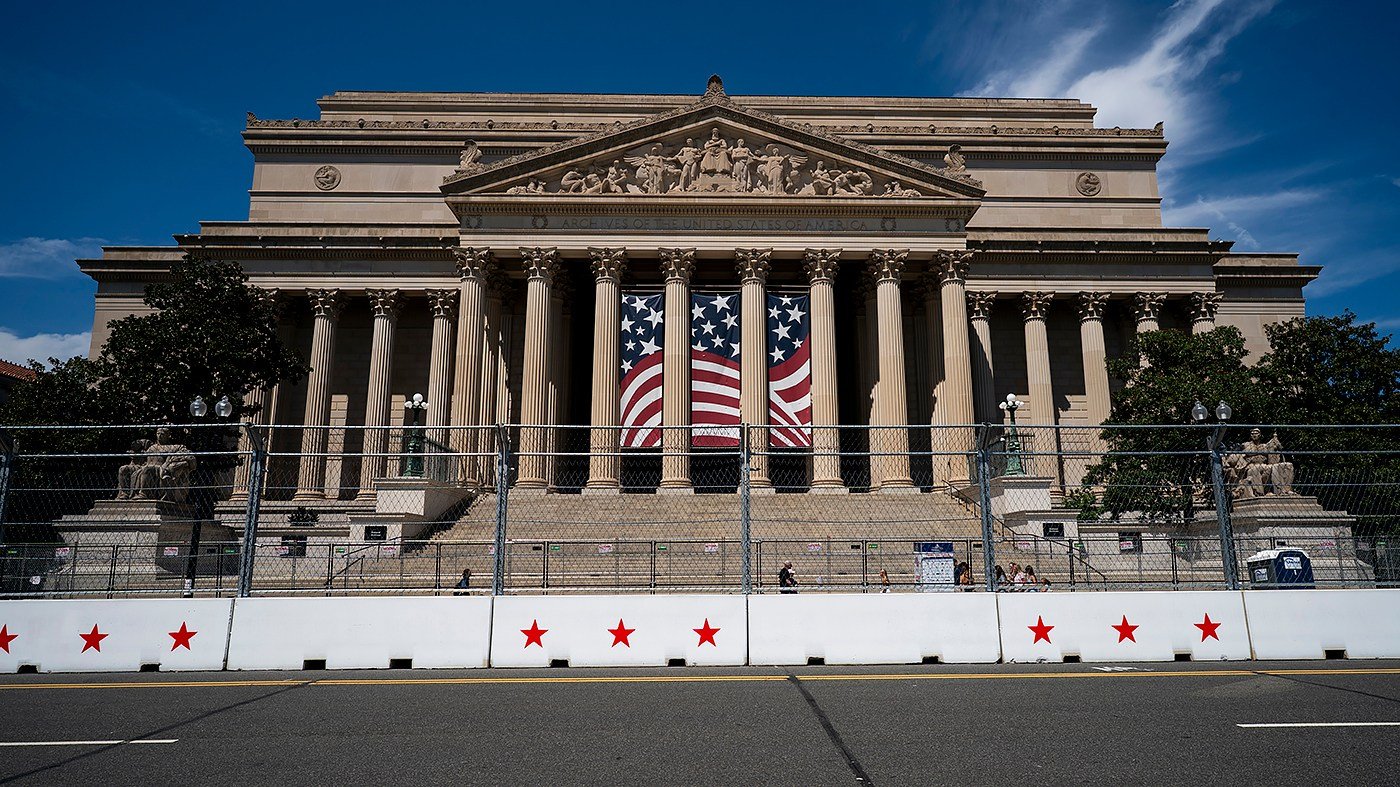
Six former top officials from the National Archives and Records Administration (NARA) are pressing a federal appeals court to strike down the Trump administration's effort to evade a long-standing presidential records law, warning that doing so would endanger national security and historical accountability.
In an amicus brief submitted Wednesday to the U.S. Court of Appeals for the D.C. Circuit, the former archivists—who served under both Republican and Democratic presidents—contested the administration's assertion that the Presidential Records Act (PRA) of 1978 improperly encroaches on executive branch independence. The filing supports a lawsuit brought by historians and transparency groups, which the Department of Justice (DOJ) has appealed after a lower court ruled in favor of the plaintiffs.
The signatories include former archivists Trudy Huskamp Peterson, John W. Carlin, David Ferriero, Debra Steidel Wall, Colleen Shogan, and William Bosanko, along with former NARA general counsel Gary M. Stern. Their brief argues that the PRA is a constitutional exercise of congressional authority and that undermining it would have severe consequences for presidential recordkeeping.
The legal dispute stems from an April DOJ memo concluding that the PRA "unconstitutionally intrudes on the independence and autonomy" of the executive branch and exceeds Congress's legislative powers. That memo triggered the lawsuit, and in May, U.S. District Judge John Bates ruled that White House staff must preserve official records while the case proceeds, determining the PRA was likely constitutional. The DOJ then appealed to the D.C. Circuit, where oral arguments are scheduled for Oct. 16.
The PRA, enacted in 1978 in the wake of the Watergate scandal, mandates that presidents and their staffs retain White House records and transfer them to the National Archives upon leaving office. The law applies to nonpersonal records created by the president, vice president, and entities that "solely advise and assist" the executive. The former archivists argue that the law is critical to ensuring transparency and preventing the destruction of evidence that could be vital to investigations or historical understanding.
The law has been central to recent controversies, most notably the 2023 case in which President Trump was accused of unlawfully keeping classified documents from his first term at his Mar-a-Lago residence. He was indicted on 40 felony counts for alleged mishandling of those records, but the case was dismissed after his reelection in 2024. That episode underscores the practical stakes of the current litigation, as a ruling against the PRA could set a precedent that allows future presidents to withhold or destroy records with impunity.
The former archivists' brief emphasizes that the PRA does not infringe on executive power but rather codifies a routine recordkeeping function that has been accepted for decades. They argue that the administration's position would create a dangerous loophole, potentially allowing presidential records to be treated as personal property or shielded from public disclosure, thereby eroding public trust and hindering oversight.
The White House and DOJ did not immediately respond to requests for comment on the filing. The case has drawn attention from political observers, as it intersects with broader debates over executive authority and accountability. The D.C. Circuit's decision, expected later this year, could have far-reaching implications for how presidential records are managed, particularly in an era of increasing digital communication and classified information handling.
As the legal battle unfolds, the former archivists' intervention adds a powerful voice from those who have overseen the nation's archival system. Their warning that the administration's stance "endangers national security" resonates with ongoing concerns about the proper handling of sensitive materials. The outcome of this case will likely shape the boundaries of presidential power and the public's right to know for years to come.